If you spent last week on the bench, in a limited role, or waiting for your chance to make an impact, Monday is not a reason to feel stuck. It is a fresh opportunity to get better.
Starting spots are not always earned through one dramatic moment. More often, they come from consistent improvements that coaches can see: a faster first step, sharper cuts, better balance, stronger finishes, and the ability to make reliable plays when the game speeds up.
At Athletic Republic Knoxville, the Acceleration Program is designed to help athletes build those qualities through science-based training, specialized technology, and hands-on coaching. The goal is not simply to work harder. It is to help you move better, perform more efficiently, and become the athlete your coach can trust in important moments.
Starting Spots Are Earned Through Game-Ready Athleticism
Coaches want athletes who can consistently help the team. Depending on the sport and position, that may mean:
- Reaching the ball or space first
- Creating separation from a defender
- Closing down an opponent
- Changing direction without losing balance
- Exploding out of a stance or cut
- Maintaining speed late in a game
- Staying healthy and dependable throughout the season
These abilities all connect to athleticism. Athleticism is more than being naturally fast or strong. It involves how well your brain and body work together to accelerate, decelerate, react, jump, cut, and recover.
That is why the Acceleration Program goes beyond running laps or completing random drills. Training is organized around the movement qualities that transfer to competition, including speed, agility, power, coordination, stamina, and injury prevention.
The result is a more complete athlete: not just an athlete who can perform one impressive drill.
A Science-Based Approach to Getting Faster
The Student Athlete Training program at Athletic Republic Knoxville uses a small-group, trainer-led format. Athletes train with individualized attention while following progressive protocols based on their current abilities, sport, goals, and areas for improvement.
Training may include:
- High-speed treadmill work
- Sprint and acceleration mechanics
- Agility and change-of-direction drills
- Plyometrics and explosive power training
- Strength and stability work
- Sport-specific movement patterns
- Video feedback and performance analysis
This science-based structure matters because every athlete has a different starting point. One athlete may have good top-end speed but struggle with the first few steps. Another may accelerate well but lose too much speed while cutting. Someone else may have plenty of effort but need better body control, coordination, or lower-body power.
Rather than giving every athlete the exact same workout, certified trainers can identify where improvement is needed and build training around it.
1. Faster Acceleration Helps You Win the First Few Steps
In many sports, the first few steps can determine who gets to the play first.
A football player needs to explode off the line. A basketball player may need to beat a defender to an open lane. A soccer player might need to reach a through ball or close space quickly. A baseball or softball player may need to react and get moving before the ball is past them.
The Acceleration Program focuses on the mechanics behind those first steps, including:
- Starting position
- Body angle
- Arm drive
- Knee drive
- Stride frequency
- Force production
- Efficient foot placement
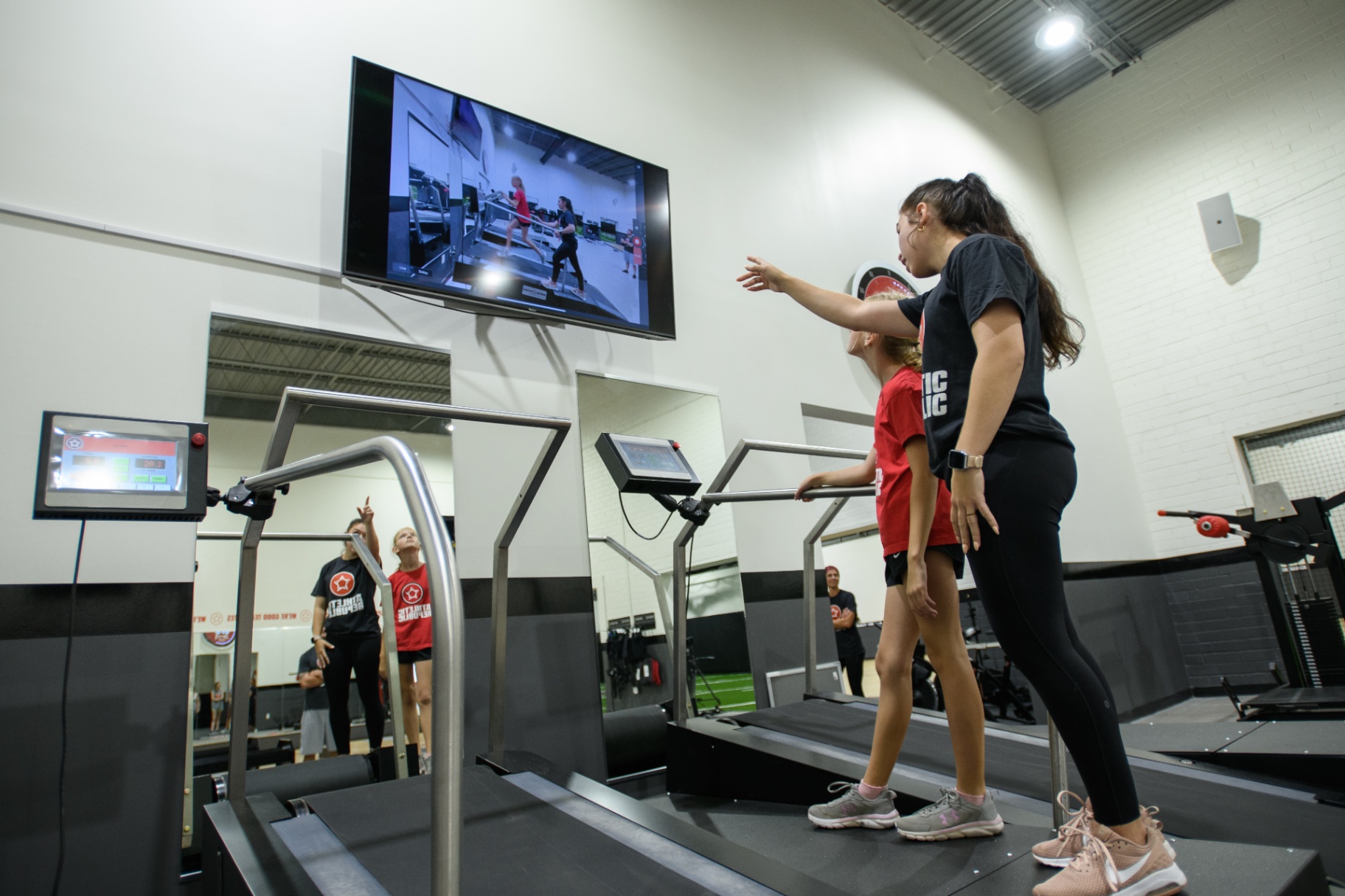
Athletic Republic Knoxville’s specialized high-speed treadmills provide a controlled environment for athletes to work on running mechanics and efficiency. Trainers can coach technique in real time, while video feedback helps athletes see what they are doing: not just what they think they are doing.
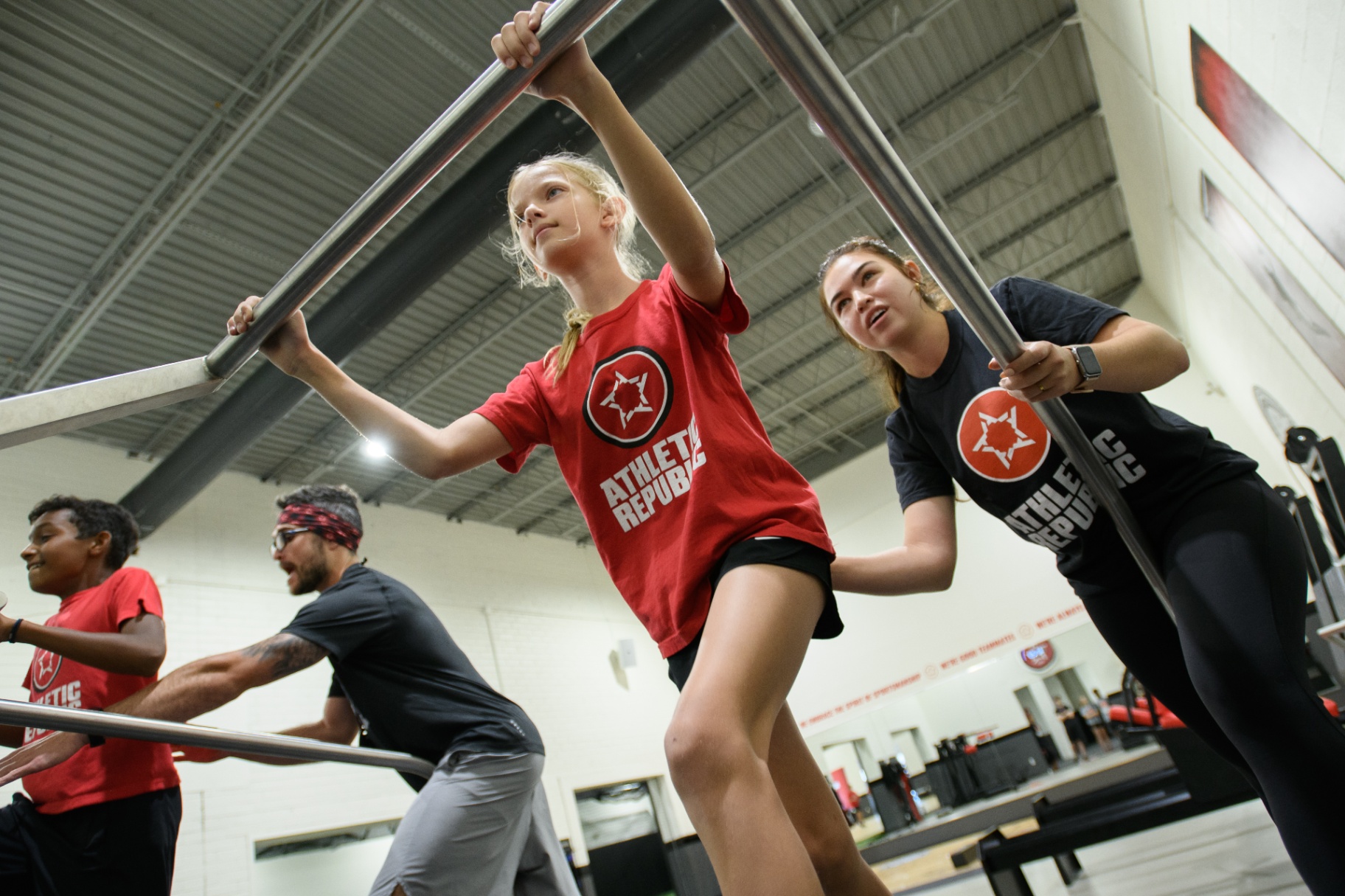
The goal is not to tell an athlete to simply “run harder.” It is to teach the body how to apply force in the right direction and waste less energy with every stride.
A better first step can help you get into position sooner, create separation, close distance, and make plays that were previously just out of reach. Those are the kinds of improvements coaches notice.
2. Better Agility Helps You Stay in the Play
Sports rarely happen in a straight line. Athletes must stop, start, shuffle, cut, pivot, react, and accelerate again: sometimes within just a few seconds.
That is why agility is such an important part of earning more playing time.
The Acceleration Program develops agility through progressive drills that challenge athletes to:
- Decelerate under control
- Lower their center of gravity
- Plant and push in a new direction
- Maintain balance through a cut
- React to visual or movement cues
- Re-accelerate after changing direction
These skills can make a difference in defensive slides, route running, pursuit angles, transitions, loose-ball situations, and one-on-one matchups.
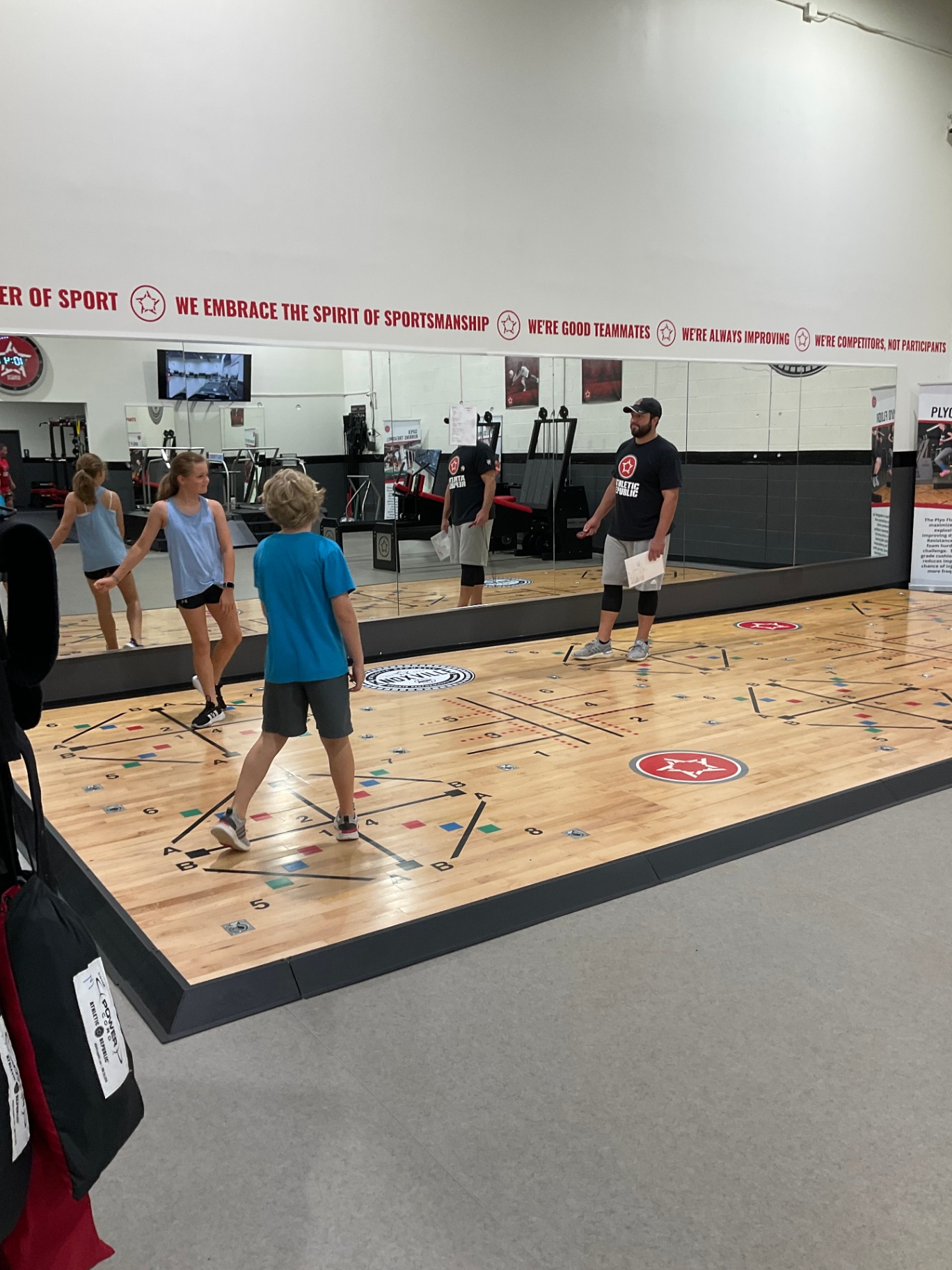
One important part of agility training is learning how to brake. Many athletes focus only on how quickly they can move forward, but the ability to slow down efficiently is what allows you to change direction without taking extra steps or losing control.
When an athlete can stop, plant, and go again with confidence, movement becomes faster and more dependable. That can help a coach trust the athlete in pressure situations.
3. Explosive Power Turns Strength Into Action
Strength is useful, but sports require athletes to apply strength quickly.
Explosive power helps athletes sprint, jump, push off, change direction, and compete through contact. The Acceleration Program develops power through age-appropriate strength training, plyometrics, and coordinated movement.
Athletes may work on movements that improve:
- Lower-body force production
- Jumping and landing mechanics
- Hip, knee, and ankle coordination
- Core stability
- Single-leg balance
- Explosive first-step movement
The purpose is not to add exercises just to make a workout harder. Each movement should support better performance and safer mechanics.
For example, learning to land with control can help an athlete absorb force more effectively. Improving single-leg stability can support cutting and sprinting. Developing lower-body power can help an athlete jump higher, accelerate faster, or maintain stronger body positioning during competition.
Training in an 18,000-Square-Foot Knoxville Facility
Athletes at Athletic Republic Knoxville have room to train, move, and improve inside an 18,000-square-foot facility in Knoxville.
That space includes specialized equipment and training areas designed for athletic development, including:
- High-speed Super Running Treadmills
- Indoor turf
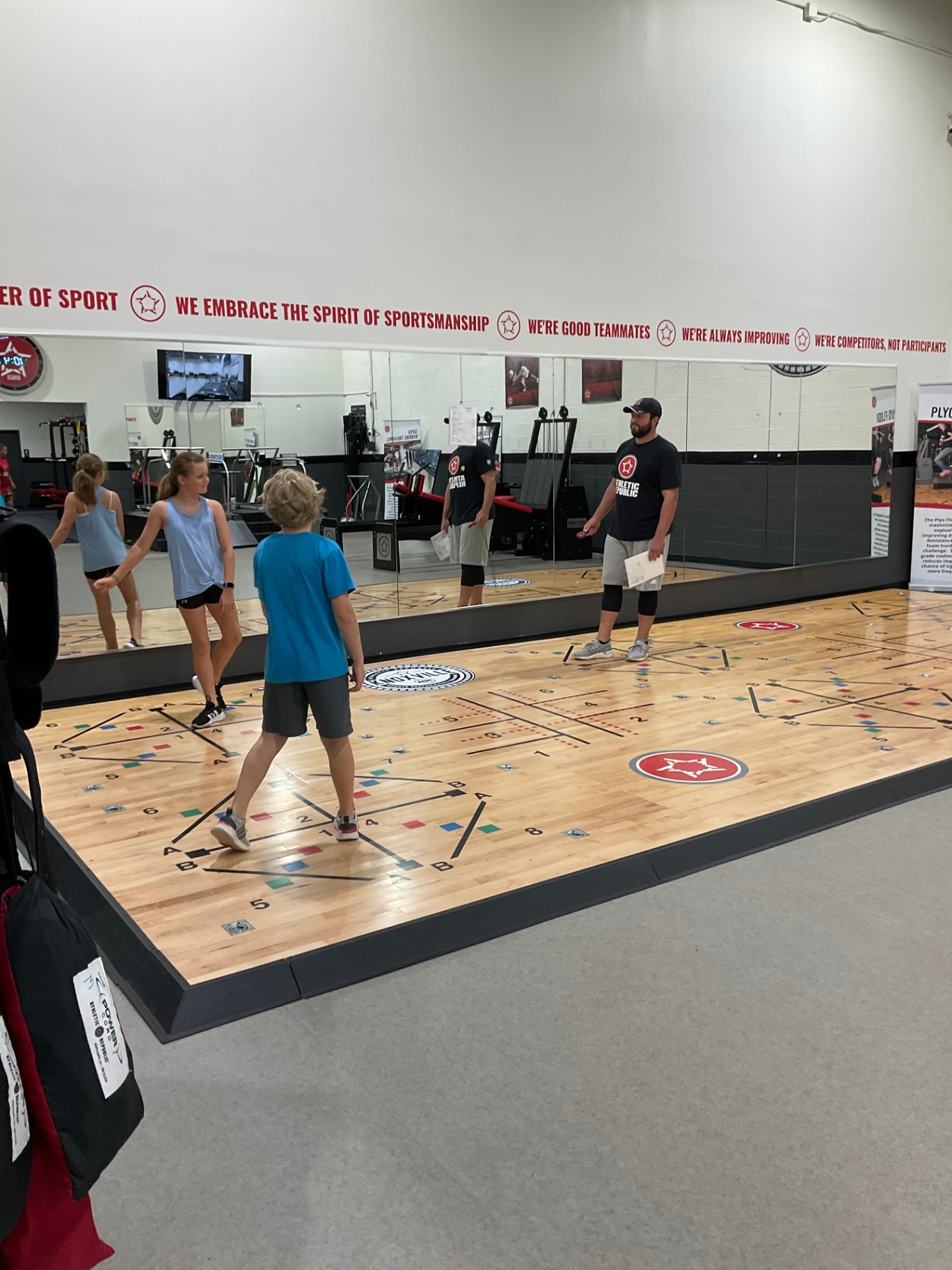
- Marked agility surfaces
- Plyometric equipment
- Strength-training areas
- Mirrors for movement feedback
- Technology for video and performance analysis

A large, purpose-built environment allows athletes to work on multiple areas of performance during the same training journey. You can develop running mechanics on the treadmills, practice changes of direction on the agility floor, and build power and coordination through strength and plyometric work.
Just as important, the facility is filled with coaches and athletes working toward meaningful goals. That supportive environment can make training feel challenging without feeling intimidating.
Progress Is Measured, Not Guessed
One of the biggest advantages of a science-based training program is that progress can be evaluated.
Athletic Republic Knoxville uses testing and performance feedback to help identify strengths, weaknesses, symmetry, and areas for improvement. Depending on the athlete and program, training may connect to performance markers such as:
- Short-distance acceleration
- Change-of-direction ability
- Jumping or explosive power
- Running efficiency
- Movement quality
- Balance and coordination
Testing is not about labeling an athlete or comparing them unfairly to someone else. It creates a starting point and helps trainers make better decisions.
For parents, measurable progress provides a clearer picture of how training is helping. For athletes, it creates specific goals to work toward. Instead of only saying, “I want to get faster,” an athlete can focus on improving the first step, controlling a cut, increasing power, or becoming more consistent under fatigue.
Those improvements can eventually show up in practices, game film, and opportunities to contribute.
How to Start This Week Strong
If you are sitting on the bench, do not assume your role is permanent. If you are already starting, do not assume your position is guaranteed. Every week brings another opportunity to improve the qualities that help athletes earn trust.
Start with a simple mindset:
- Identify one area that is limiting your performance.
- Train it with a clear purpose.
- Listen to coaching feedback.
- Track your progress.
- Bring your improvements back to practice and competition.
The Acceleration Program can help athletes ages 9 through college develop the speed, agility, power, and confidence needed to compete for bigger opportunities. It does not promise a starting spot: no training program can: but it gives athletes a structured path toward becoming more prepared, more athletic, and more dependable.
Your Next Opportunity Starts Now
Monday is a new week. That means a new chance to show up differently, train with purpose, and take another step toward the role you want.
Whether your goal is earning your first start, getting more playing time, returning to competition stronger, or preparing for the next level, Athletic Republic Knoxville can help you build the physical tools behind better performance.
Schedule a free trial class and discover how science-based training, personalized coaching, and an 18,000-square-foot performance facility can help you make this week count.