If your athlete is spending more time on the bench than they would like, the answer usually is not “work harder” and hope for the best.
The better question is: What specific physical qualities need to improve, and how can we measure that progress?
That is the approach behind the Acceleration program at Athletic Republic Knoxville. Built for youth, teen, college, and competitive athletes, the program combines baseline testing, biomechanical assessment, individualized programming, advanced equipment, and regular retesting.
The goal is not to promise a starting spot. No training facility can make that promise. Playing time depends on many factors, including team needs, coaching decisions, sport-specific skill, consistency, and opportunity.
What Athletic Republic Knoxville can do is help an athlete become more prepared when that opportunity arrives.
Starting With Data Instead of Guesswork
Every athlete walks in with a different starting point.
One athlete may have plenty of strength but struggle to apply it quickly. Another may be fast in a straight line but lose balance while cutting. A third may have good coordination on one side but show a movement or power difference between the left and right sides.
That is why Acceleration begins with baseline testing.
The initial evaluation helps trainers understand an athlete’s current abilities and identify areas that may be limiting performance. Depending on the athlete and training goals, this can include observations and measurements related to:
- Short-distance acceleration
- Sprint mechanics
- Jumping and explosive power
- Change-of-direction ability
- Balance and body control
- Movement symmetry
- Strength and power output
- Coordination and proprioception
This information gives the training team something much more useful than a general label like “not fast enough.” It helps answer more specific questions:
- Is the athlete producing enough force?
- Are they applying that force in the right direction?
- Are they losing time during the first few steps?
- Can they decelerate under control?
- Are they able to re-accelerate after a cut?
- Is one side of the body doing more work than the other?
Those details shape the program.
The Biomechanics Behind Better Movement
Speed and agility are not just about effort. An athlete can work extremely hard and still waste motion if their posture, foot placement, arm action, or force application is not efficient.
That is where biomechanical coaching becomes important.
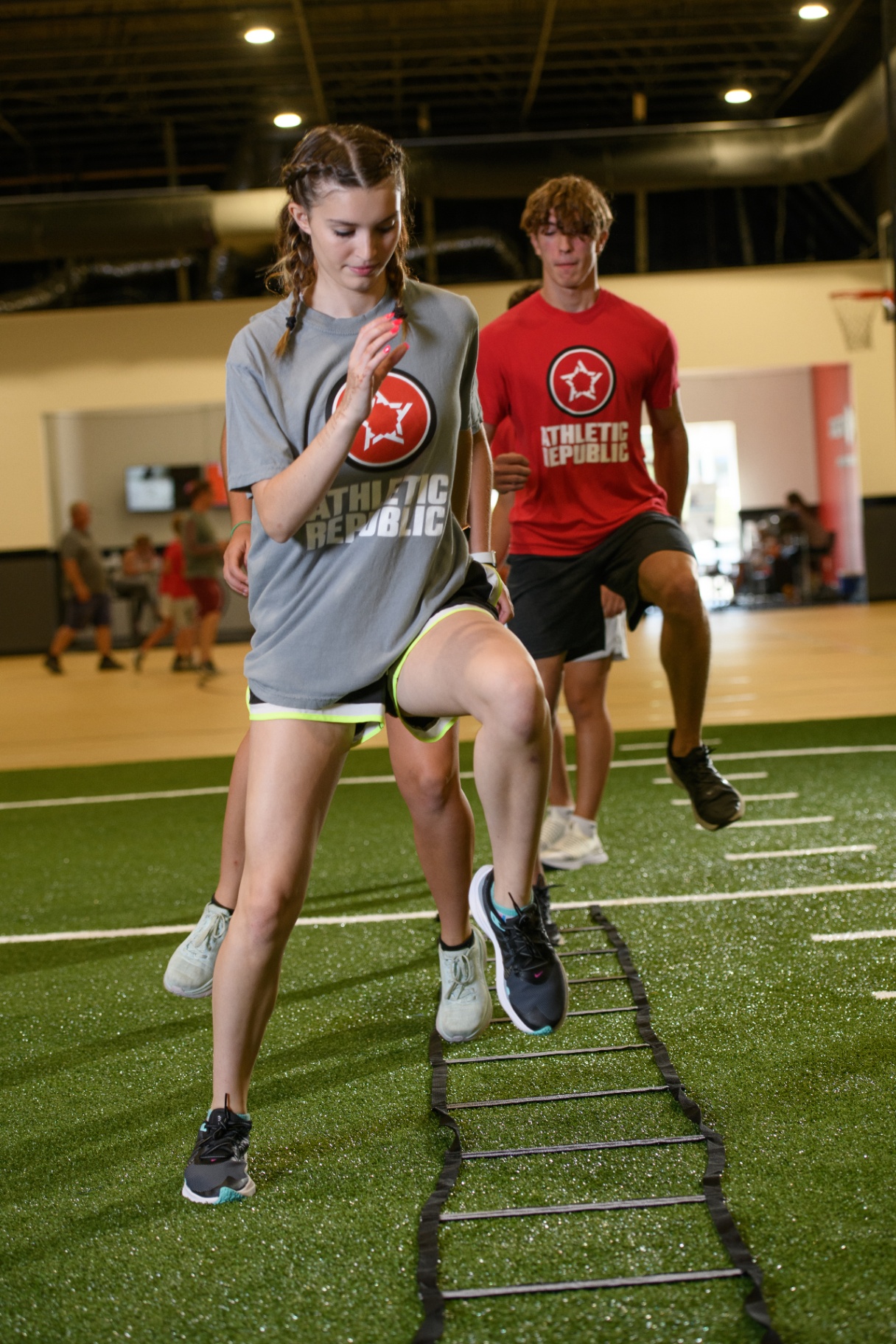
In the Acceleration program, certified trainers watch how an athlete moves, not just how much they move. They may evaluate sprint posture, knee drive, hip position, stride length, stride frequency, arm swing, and foot contact. They also look at how the athlete stops, changes direction, and gets moving again.
For example, an athlete who stands too upright during acceleration may have trouble creating the forward angle needed to drive out of a start. An athlete who allows the knees or hips to collapse during a cut may lose speed and control. An athlete who takes extra steps before changing direction may be giving an opponent valuable time.
These are coachable skills.
The goal is to help athletes move with better timing and less wasted energy so they can accelerate, brake, cut, and react more efficiently during competition.
Training in an 18,000 Square Foot Facility
The setting matters, too.
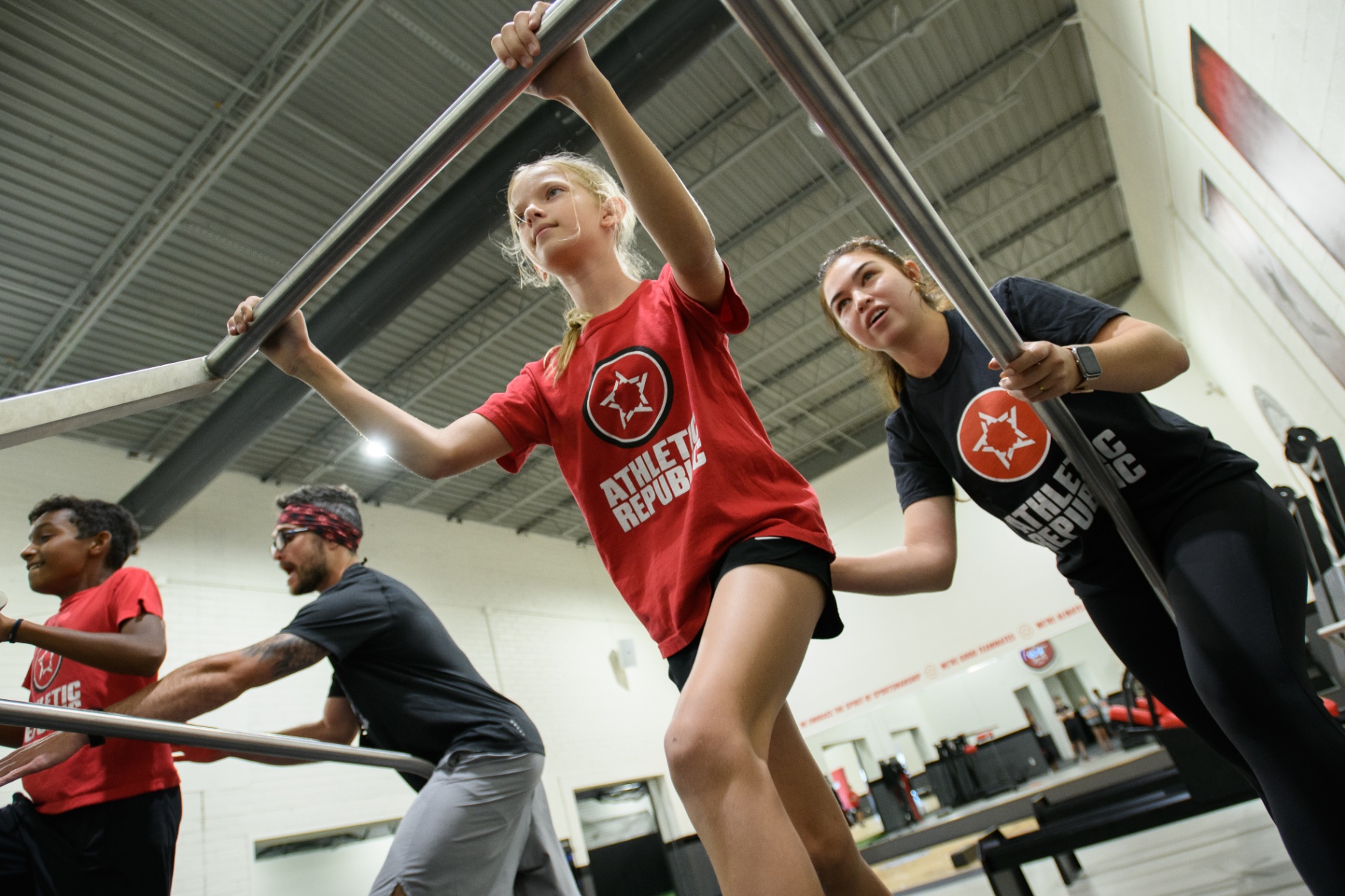
Athletic Republic Knoxville’s 18,000 square foot facility gives athletes room to train multiple qualities in the same session. Instead of trying to force every goal into one type of workout, trainers can move athletes through different training environments designed for different adaptations.
High-Speed Treadmills for Running Mechanics
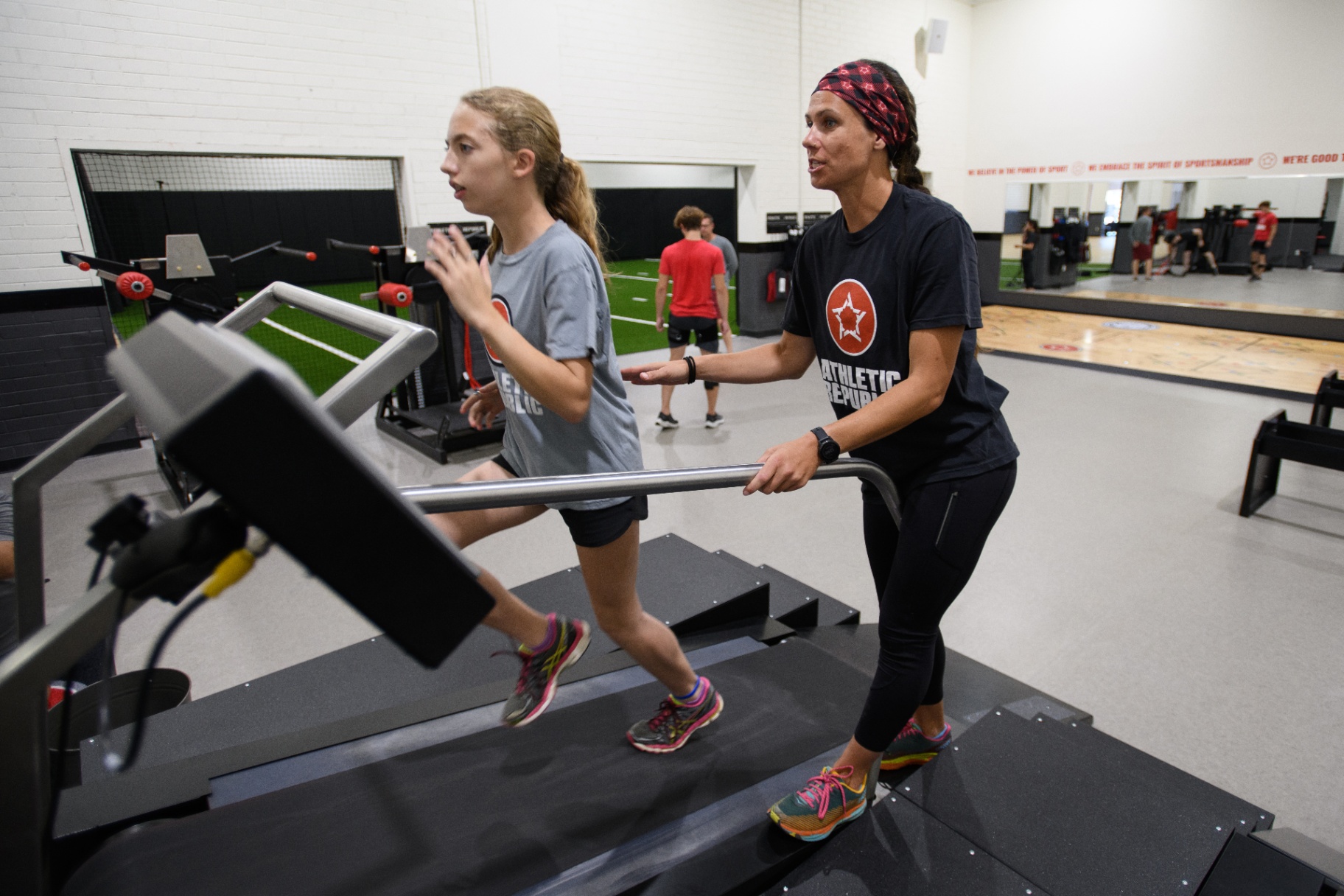
The specialized high-speed treadmills allow athletes to work on running mechanics in a controlled environment. Trainers can coach posture, foot placement, knee drive, and rhythm while the athlete is moving at an appropriate challenge level.
This can be especially helpful for athletes who need to improve their sprinting form but are not yet able to maintain that form consistently on a field.
The treadmill environment also makes it easier for trainers to provide immediate feedback. Athletes can feel the difference between reaching, overstriding, and stepping down underneath the body. They can learn how a stronger body position or more active arm action changes the way they move.
The work is not about simply running until exhausted. It is about teaching the athlete to run more effectively.
Plyometric Flooring for Explosive Power
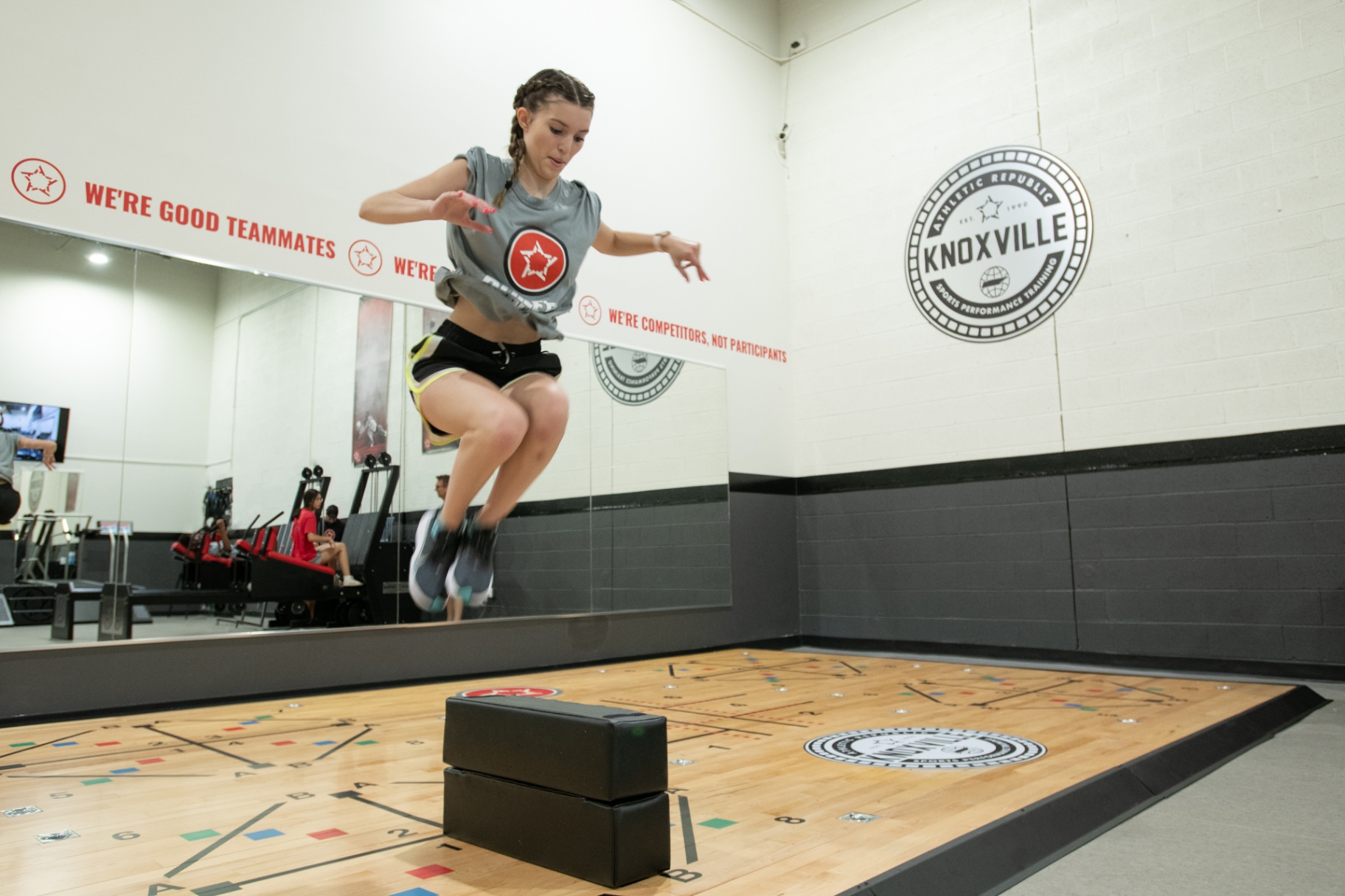
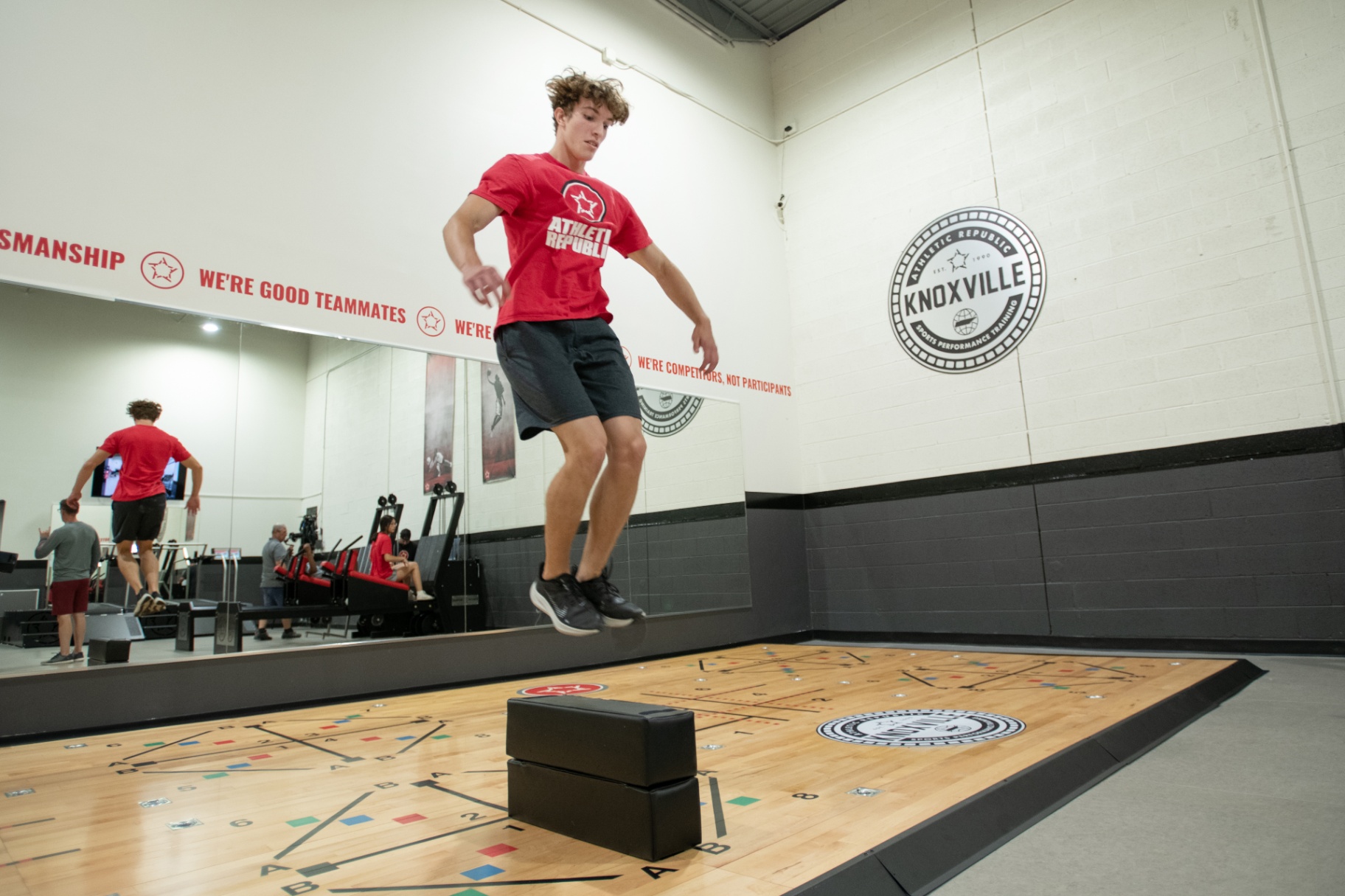
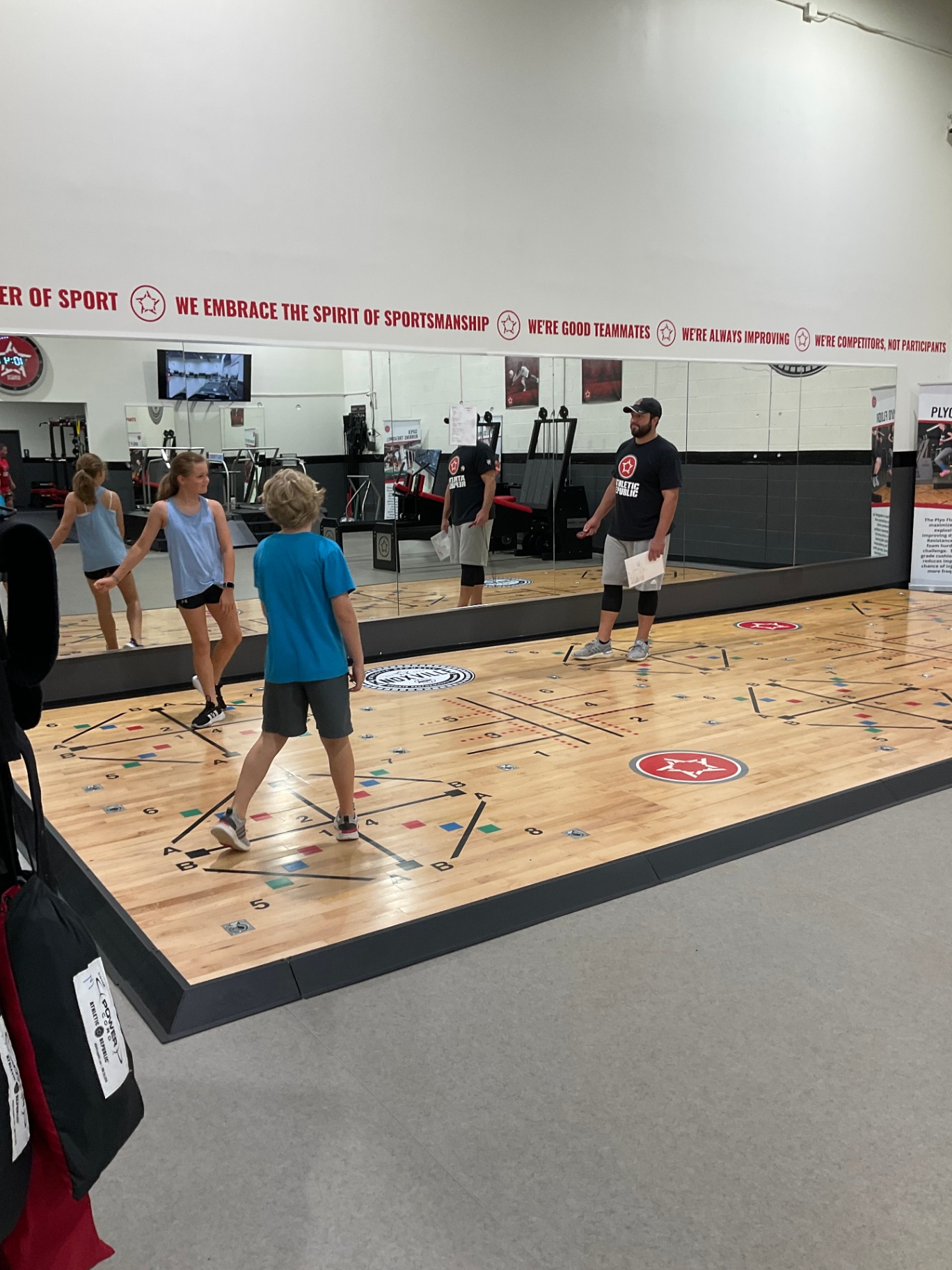
The dedicated plyometric floor is used for jumping, landing, footwork, and movement patterns that challenge an athlete to produce force quickly.
Power is different from strength alone. An athlete may be strong in a slow movement but still need to improve how quickly they can express that strength. Plyometric training helps address that quality through controlled jumping, landing, and rebounding exercises.
Trainers can adjust the exercise based on the athlete’s age, sport, training experience, and movement ability. The emphasis is on producing force while maintaining alignment, balance, and control.
That combination matters in sports. A basketball player needs to jump and land repeatedly. A soccer player needs to push off and change direction. A baseball or softball athlete needs to create force through the ground and transfer it efficiently. A football player needs to accelerate through contact and regain position quickly.
Resistance Work for Acceleration and Body Control
Resistance work adds another layer to the program.
Using tools such as cords and other resistance equipment, trainers can challenge athletes to accelerate, decelerate, and maintain body position while working against load. This can help athletes learn how to apply force with purpose rather than simply moving fast without control.
Resistance also gives trainers another way to individualize a session. The load, distance, movement pattern, and rest period can be adjusted based on the athlete’s goals and current readiness.
That is a major difference between a structured performance program and a one-size-fits-all workout.
Individualized Programming for the Athlete in Front of Us
Two athletes on the same team may both want to earn a starting role, but they may not need the same training.
One may need more work on acceleration mechanics. Another may need improved lateral stability. A third may need to build power while managing a previous injury or a demanding in-season schedule.
The Acceleration program uses the athlete’s testing results, sport, position, training history, and goals to guide programming. Certified trainers can modify the volume, intensity, exercise selection, rest periods, and progressions as the athlete develops.
This also helps prevent a common mistake: confusing more training with better training.
Effective development requires the right challenge at the right time. Athletes need enough intensity to create adaptation, but they also need recovery and appropriate progression. The goal is to build performance without creating unnecessary fatigue or increasing injury risk.
Retesting: How Progress Is Measured
Training should not be based on feelings alone.
An athlete may feel quicker, more confident, or more coordinated, and those changes matter. But retesting gives the athlete and trainer a clearer picture of what has changed.
At the end of a training block, athletes can be evaluated again using relevant portions of the original assessment. Trainers can compare results related to speed, power, agility, symmetry, and movement quality.
That comparison helps answer questions such as:
- Did short-distance acceleration improve?
- Is the athlete producing more power?
- Has movement symmetry changed?
- Can the athlete change direction with better control?
- Is sprint mechanics more consistent?
- Has the athlete improved without unnecessary increases in fatigue?
Retesting also helps determine what comes next. If an athlete improves in one area but still has a limitation in another, the next training block can focus on that need.
Progress is not always a dramatic personal record. Sometimes it looks like cleaner mechanics, better control, stronger repeat efforts, or the ability to maintain technique late in a session. Those improvements can matter when an athlete is competing for a limited number of minutes.
Preparing for the Moment the Opportunity Comes
A starting spot is earned through more than speed.
Coaches also notice reliability, decision-making, sport-specific skill, effort, communication, and how an athlete responds to coaching. But improved athleticism can help an athlete make a stronger case when those other qualities are already developing.
A faster first step may help an athlete close space. Better deceleration may help them stay in front of an opponent. Improved balance may help them remain effective through contact. More explosive power may help them win a jump, create separation, or reach a ball that previously felt out of range.
That is the purpose of science-based training: not to chase random exercises, but to develop physical qualities that transfer to the demands of sport.
At Athletic Republic Knoxville, athletes train in a supportive environment with certified trainers, specialized equipment, and a process built around assessment and measurable progress. The program is designed to help athletes understand what they are working on, why it matters, and how improvement is tracked.
If your athlete is ready to move from hoping for an opportunity to preparing for one, learn more about student-athlete training at Athletic Republic Knoxville or explore the full sports performance training program. You can also schedule a free trial class and see how the process works in person.
No guarantees. No shortcuts. Just a smarter plan to help your athlete become more ready, more confident, and more capable when the next chance arrives.