When coaches decide who earns meaningful playing time, they are not only looking for the athlete who can run the fastest in a straight line.
They are watching who can slow down under control, change direction efficiently, and get moving again before the competition does.
That is where the Athletic Republic Knoxville Acceleration Program makes a difference.
In sports such as soccer, basketball, football, lacrosse, softball, and tennis, athletes rarely move in a perfectly straight line. They sprint, shuffle, backpedal, stop, react, cut, and accelerate again: often within just a few steps. The ability to control those transitions can separate an athlete who is ready for a bigger role from one who is still waiting for an opportunity.
Inside Athletic Republic Knoxville’s 18,000-square-foot training facility, athletes develop these skills through science-based protocols, certified coaching, and purposeful movement progressions designed for real competition.
Speed Is More Than How Fast You Run
Straight-line speed is important. It can help an athlete win a footrace, close space, or create separation.
But game speed is more complicated.
An athlete may reach top speed while chasing a ball, defending an opponent, or running into open space. Then the situation changes. The athlete has to brake, lower their center of gravity, plant, and redirect. If that transition is slow or unstable, the advantage disappears.
That is why the Acceleration Program focuses on more than sprinting. The program develops:
- First-step acceleration
- Lateral movement
- Backward and diagonal movement
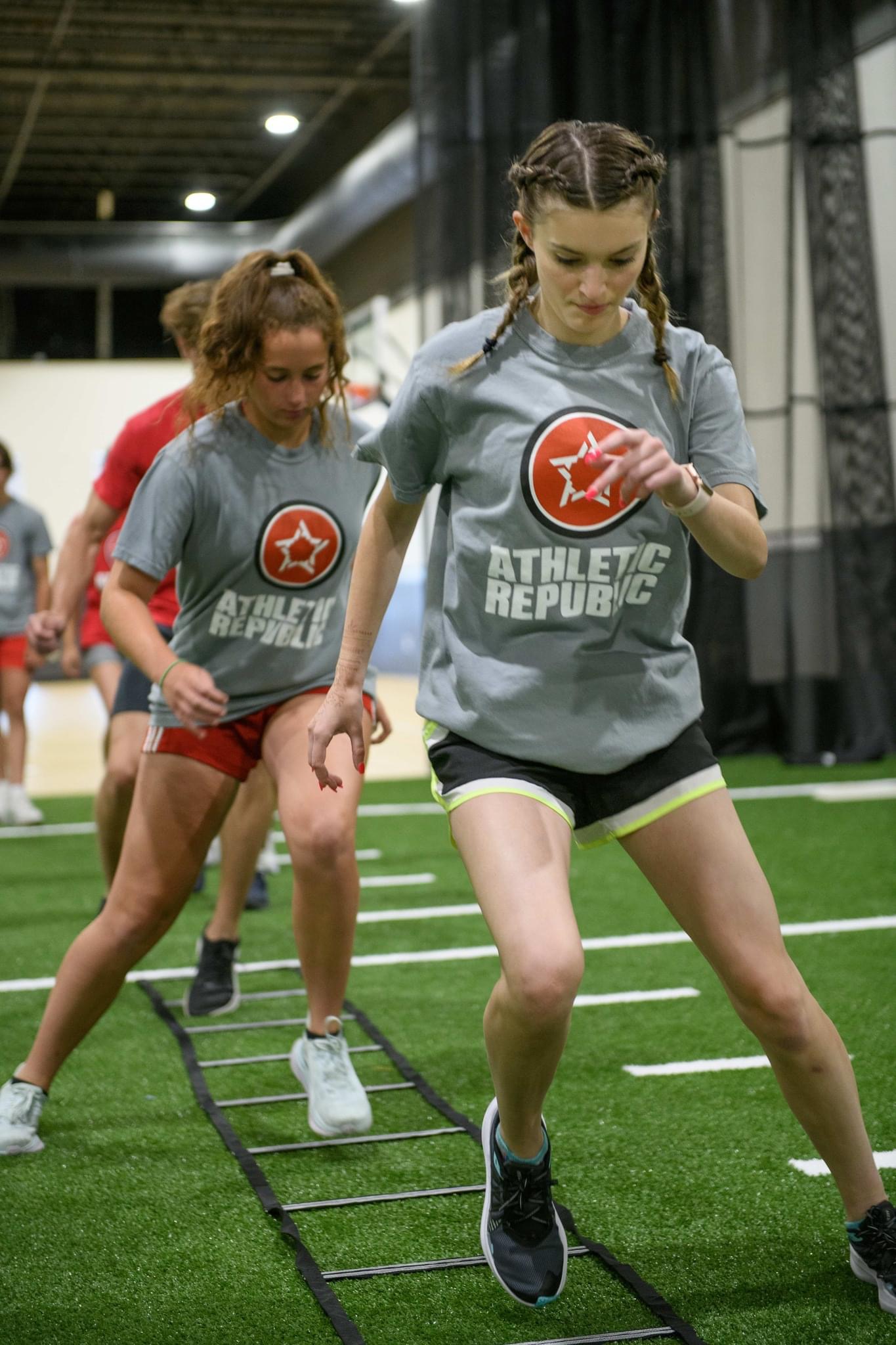
- Foot speed and coordination
- Dynamic balance and body control
- Deceleration and stopping mechanics
- Change-of-direction ability
- Reactive agility
- Re-acceleration after a cut
The result is an athlete who can move with greater control in every direction: not simply run quickly in a straight line.
The Skill Most Athletes Forget to Train: Stopping
Most athletes enjoy the feeling of acceleration. It feels explosive, competitive, and fast.
Stopping is different. It requires patience, body awareness, strength, and control.
Every time an athlete plants to change direction, the body must absorb force before producing force in a new direction. That braking phase is called deceleration. It is a major part of athletic movement, yet it is often overlooked in traditional training.
At Athletic Republic Knoxville, athletes learn to decelerate with purpose instead of simply trying to stop as quickly as possible.
Coaches may focus on cues such as:
- Lowering the hips before the plant
- Keeping the chest controlled over the legs
- Taking shorter steps while slowing down
- Maintaining a strong, athletic base
- Avoiding the knee collapsing inward
- Planting in a position that allows the athlete to push into the next direction
- Keeping the head and eyes up to stay aware of the play
These details matter. A rushed plant can cause an athlete to lose balance, take extra steps, or struggle to get back into the play. A well-trained plant allows the athlete to stop, redirect, and accelerate without wasting motion.
Cutting Safely Starts with Body Control
A hard cut should not feel like falling into a new direction. It should feel like a controlled transfer of force.
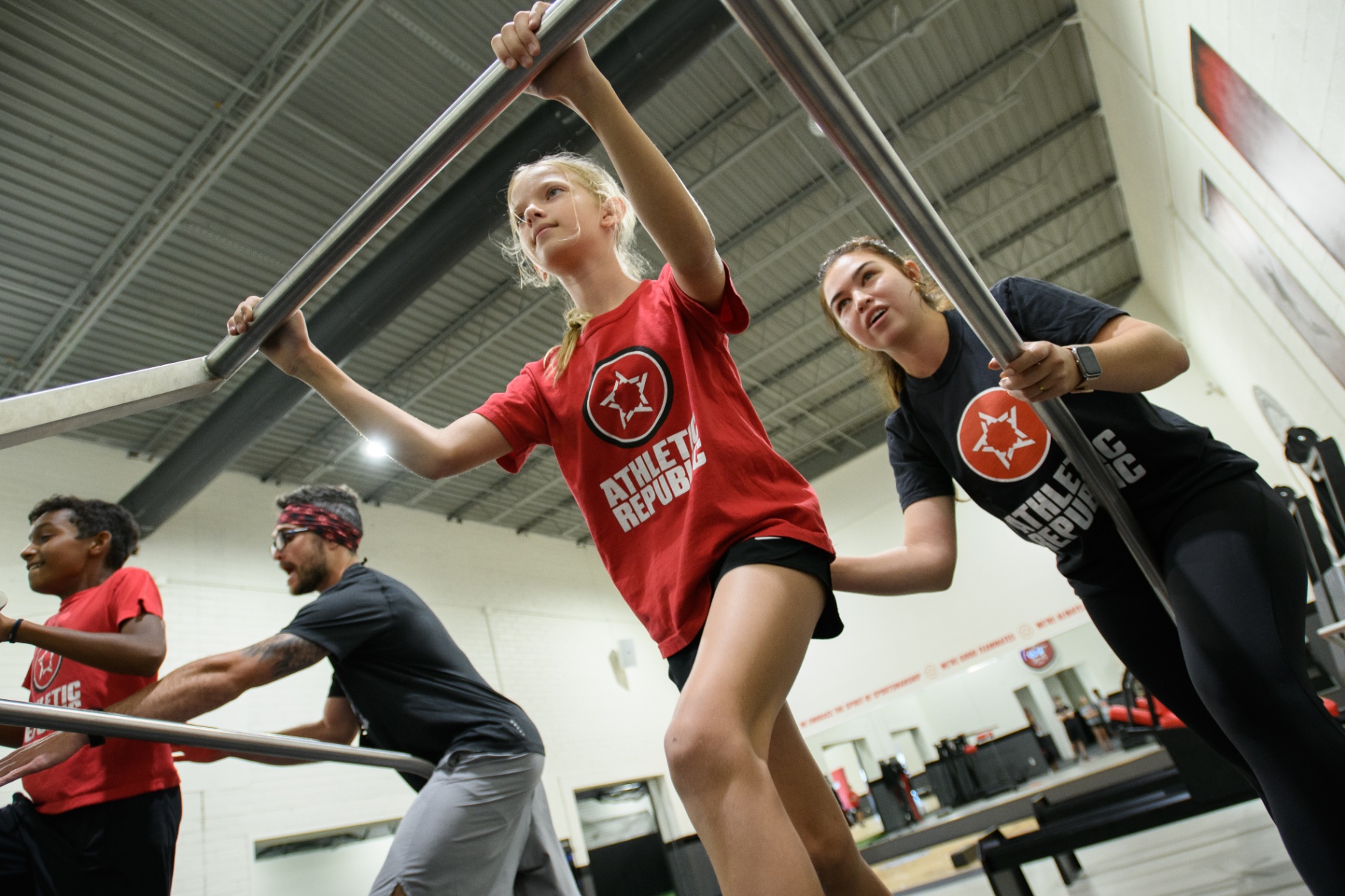
Athletes in the Acceleration Program progress through drills that teach them how to absorb force and use it effectively. Early exercises may involve controlled shuffles, balance holds, or simple “stick” drills. As technique improves, athletes can progress to faster cuts, sharper angles, and reactive movements.
A typical progression may include:
- Move and stick: The athlete shuffles or bounds, plants, and holds the position for a moment.
- Move, plant, and return: The athlete learns to redirect back toward the starting point.
- Shuffle-cut-sprint: The athlete brakes, changes direction, and accelerates into open space.
- Planned cone patterns: The athlete learns to control multiple cuts in sequence.
- Reactive movement: A coach or visual cue determines the next direction, requiring the athlete to see, decide, and move.
This progression helps athletes build skill before adding maximum speed. It also gives certified trainers the opportunity to monitor form and adjust the challenge based on the individual athlete.
The goal is not to make every athlete perform the same drill in the same way. The goal is to help each athlete improve movement quality at the right pace.
Multi-Directional Agility Has to Look Like the Sport
A cone drill can be useful, but athletes also need to learn how to respond when the next movement is not predictable.
In competition, an athlete does not always know whether an opponent will cut left or right. A ball may change direction. A teammate may open space unexpectedly. A coach may call for a quick transition. The athlete has to react while moving at speed.
That is why the Acceleration Program includes movement in multiple directions and, when appropriate, reactive elements. Athletes may respond to a trainer’s command, mirror a partner, or move toward a designated target. These challenges connect physical movement with perception and decision-making.
Research published in the Journal of Sports Science & Medicine found that repeated multi-directional sprint training improved change-of-direction speed and reactive agility in young, highly trained soccer players. The study is a useful reminder that agility is not simply an inherited trait. It is a skill that can be developed with consistent, purposeful practice.
Why the 18,000-Square-Foot Facility Matters
Training movement quality requires room to move.
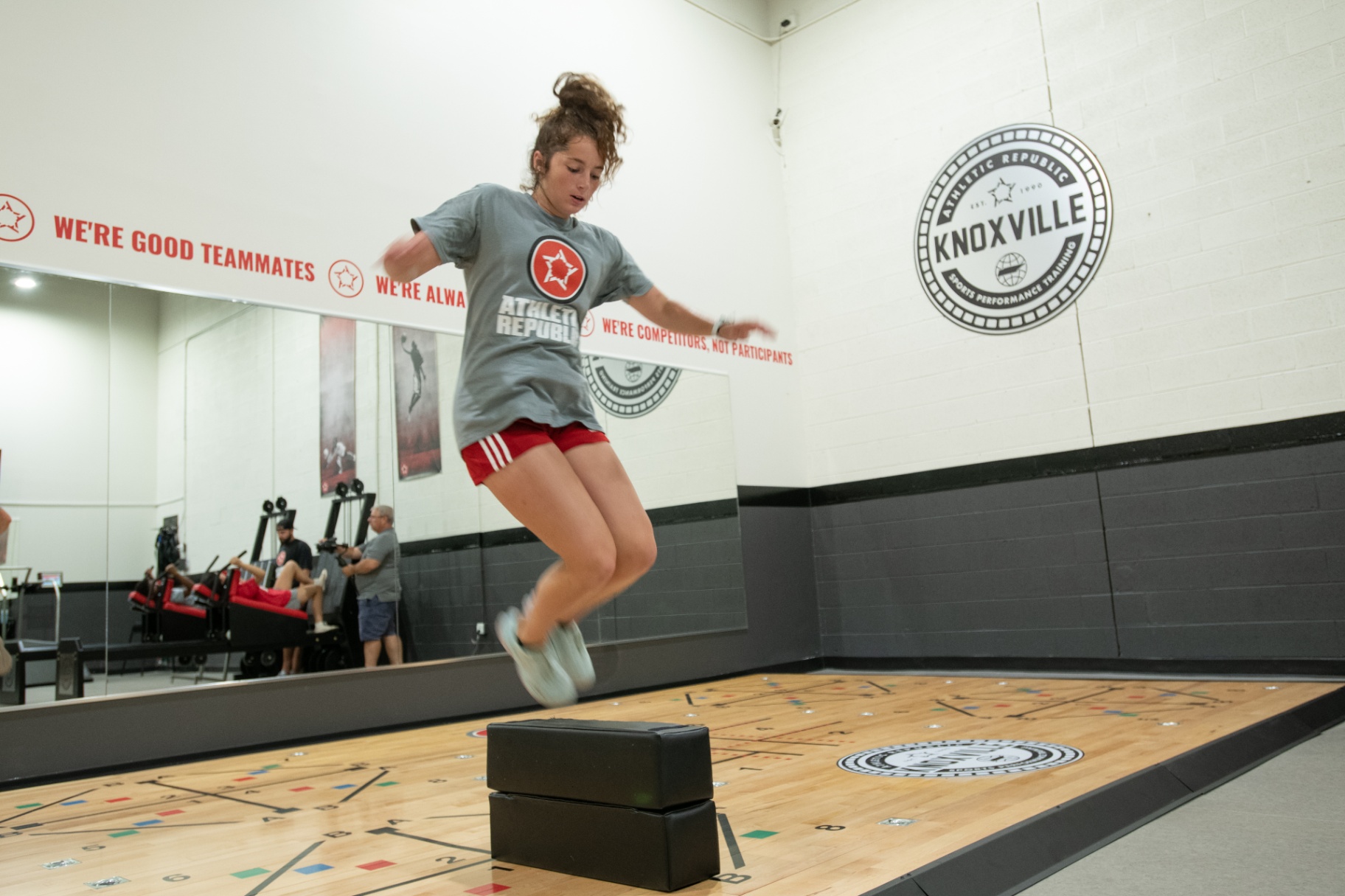
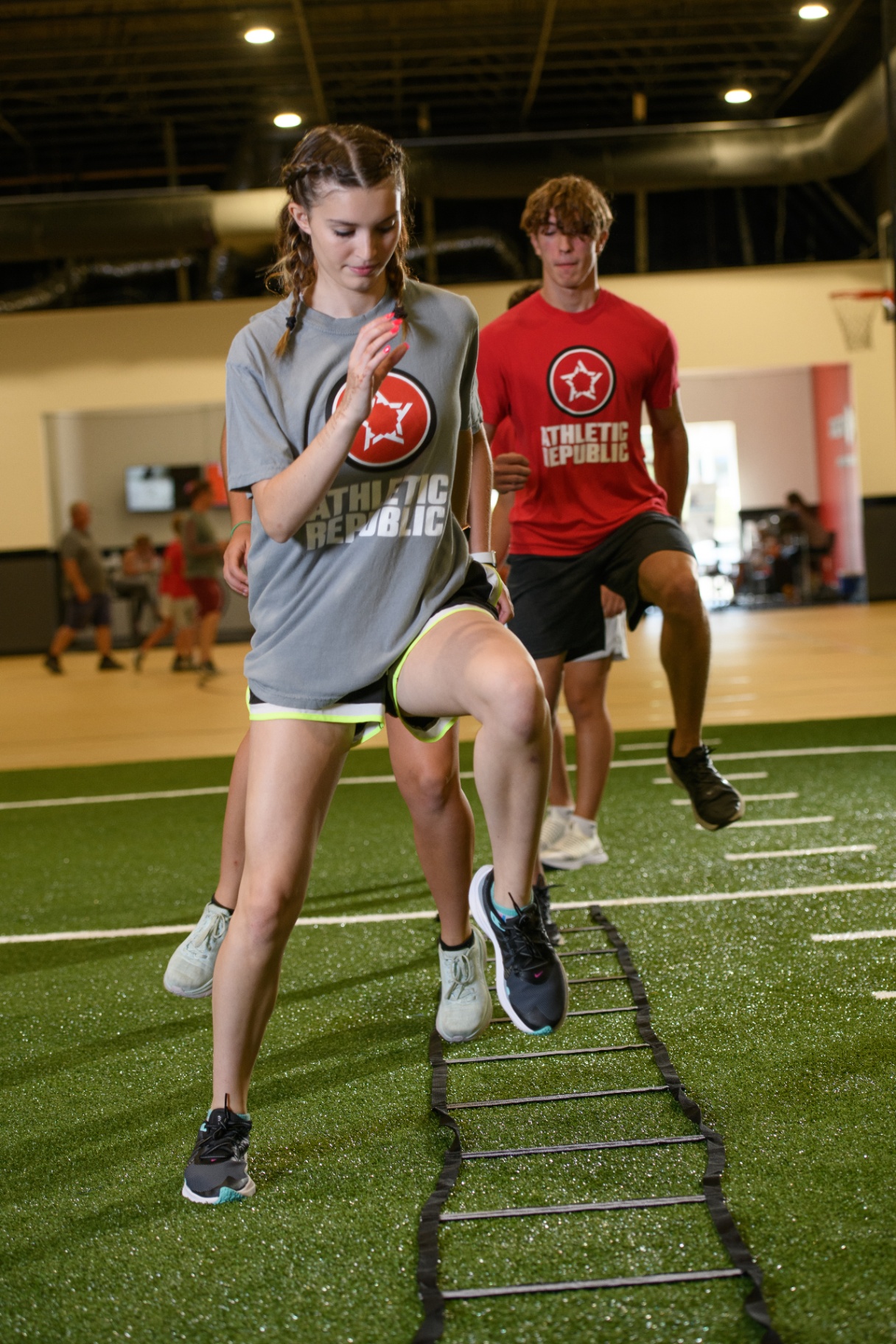
Athletic Republic Knoxville’s 18,000-square-foot facility gives athletes space to work on short bursts, lateral patterns, acceleration, deceleration, strength, plyometrics, and sport-specific movement without being limited to a small workout area.
That space also makes it possible to create different training stations within one session. An athlete may work on foot speed, transition into a deceleration drill, and then perform a power exercise while receiving feedback from a trainer.
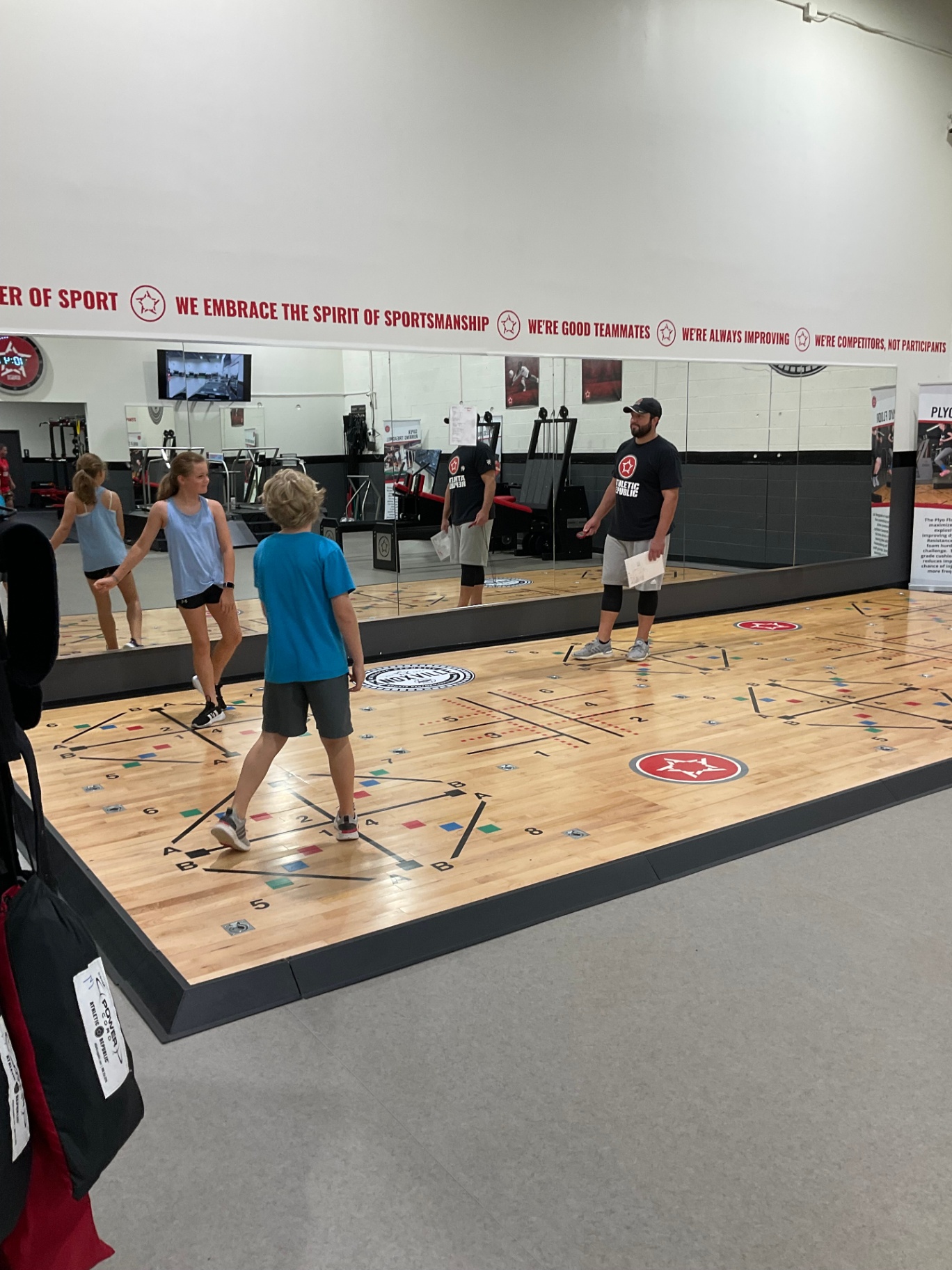
The facility includes specialized performance equipment, marked training surfaces, mirrors, and technology that help athletes see and feel how they move. This environment supports the science-based protocols used throughout the Acceleration Program.
Athletic Republic Knoxville also uses initial and follow-up testing to evaluate areas such as symmetry, movement quality, and performance. Testing does not define an athlete. It gives the athlete and trainer a clearer starting point and a way to track progress over time.
Power Helps You Leave the Cut
Stopping well is only half of the movement.
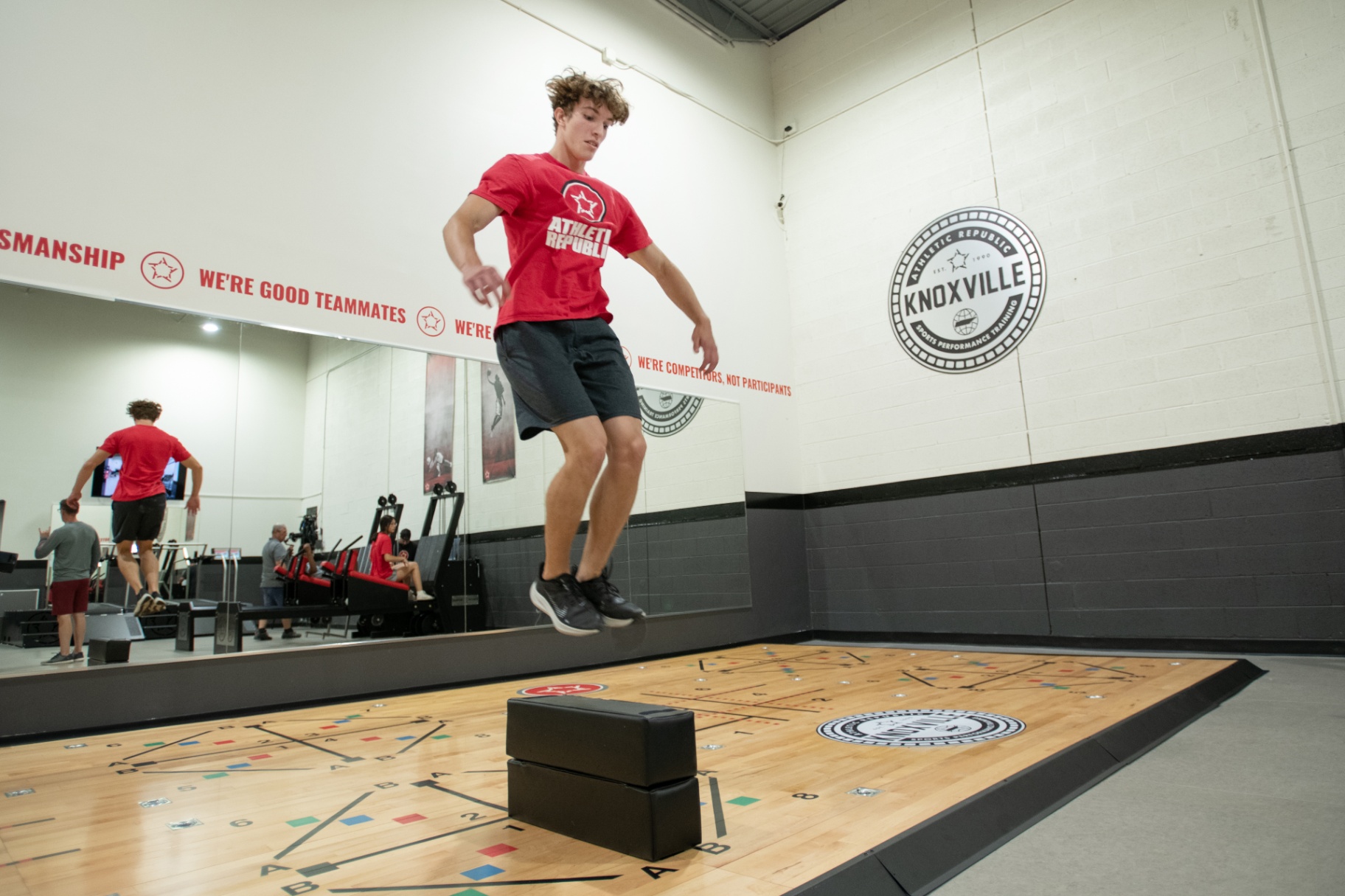
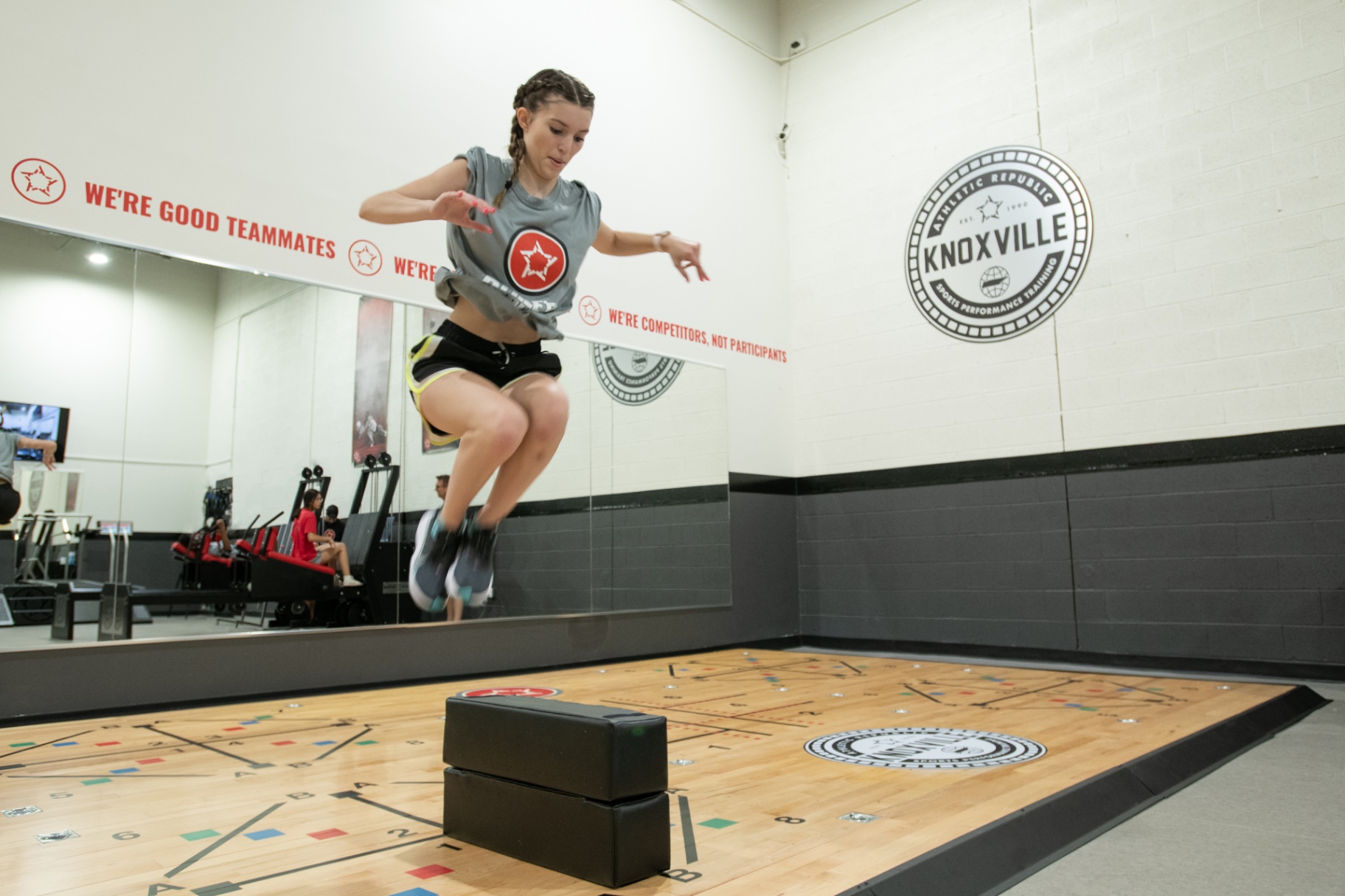
After an athlete brakes and changes direction, they need the strength and power to get moving again. That is why the Acceleration Program combines agility and deceleration work with plyometrics and strength training.
Plyometric exercises teach athletes to produce force quickly. They can help develop:
- Explosive push-off
- Lower-body power
- Landing control
- Coordination
- Reactive strength
- The ability to transition from absorbing force to producing force
These exercises are introduced progressively and coached carefully. The emphasis is on quality movement: not simply jumping higher or completing more repetitions.
A powerful cut is not always the most dramatic one. Often, it is the one that allows an athlete to stay balanced, push efficiently, and reach the next space before an opponent can respond.
What Coaches Notice on Game Day
An athlete may not always realize how much improved deceleration and agility are helping them. The changes often show up in small moments:
- Getting into defensive position faster
- Closing down an opponent without overcommitting
- Creating separation after a sharp cut
- Reaching a loose ball first
- Staying balanced through contact
- Recovering quickly after a missed step
- Making a play late in a possession or point
- Repeating quality movements even when tired
These moments build trust.
Coaches want athletes who can execute consistently, make smart decisions, and stay composed when the pace of play changes. An athlete who can accelerate, stop, cut, and re-accelerate efficiently becomes more reliable in more situations.
That reliability can lead to more opportunities.
Build the Movement Skills That Create Opportunities
Earning a starting spot does not happen because of one workout or one impressive sprint. It comes from building a complete athletic foundation over time.
The Athletic Republic Knoxville Acceleration Program gives athletes a structured environment to develop speed, power, agility, coordination, stability, and confidence. With trainer-led instruction and science-based progressions, athletes learn not only how to move faster: but how to control their bodies when the game demands an immediate change.
The next time you watch a high-level athlete create space or shut down an opponent, pay attention to what happens after the sprint. The advantage may come from the stop, the plant, and the first step in the new direction.
That is the work happening inside Athletic Republic Knoxville every day.
Learn more about Student Athlete Training at Athletic Republic Knoxville or schedule a free trial workout at the 18,000-square-foot Athletic Republic Knoxville facility.