Sitting on the bench can be frustrating.
You may know you can contribute. You may be working hard at practice. You may even be close to earning more playing time: but your coach still needs to see a difference when the game speeds up.
That difference often comes down to athleticism: the ability to accelerate quickly, change direction under control, react to what is happening around you, and repeat explosive efforts without losing efficiency.
That is where the Acceleration Program at Athletic Republic Knoxville can help.
Designed for competitive youth, middle school, high school, college, and advanced athletes, Acceleration uses science-based training protocols to develop the speed, power, agility, coordination, and confidence that can help athletes compete for a starting spot.
It is not a shortcut, and no training program can guarantee a lineup decision. But with consistent effort and the right plan, athletes can build the physical tools coaches notice on the field or court.
Starting Spots Are Earned Through Game-Changing Athleticism
Coaches make decisions based on many factors, including skill, attitude, game awareness, consistency, and teamwork. Athleticism is another important part of the equation.
A faster first step can help a basketball player get past a defender. Better lateral movement can help a soccer defender close space. More explosive power can help a volleyball player reach higher at the net. Improved acceleration can help a baseball or softball player get to a ball sooner.
These moments can change how a coach sees an athlete.
The Acceleration Program focuses on movement qualities that translate across sports, including:
- First-step acceleration
- Linear and top-end speed
- Lateral quickness
- Change of direction
- Deceleration and body control
- Reactive agility
- Explosive power
- Balance and coordination
- Running efficiency
- Sport-specific movement patterns
The goal is not simply to complete more drills. The goal is to help athletes move better, make faster decisions, and perform more confidently when the pressure is on.
A Science-Based Plan Starts with the Athlete
Generic workouts can be easy to find. A personalized performance plan is much harder to create: and much more useful.
At Athletic Republic Knoxville, athletes begin with testing and assessment to identify current strengths, areas for improvement, movement patterns, and performance goals. Trainers use that information to develop an appropriate roadmap rather than assuming every athlete needs the same workout.
Athletes may be evaluated in areas such as:
- Speed and running mechanics
- Agility and change-of-direction ability
- Explosive power
- Symmetry and balance
- Strength and stability
- Mobility and coordination
- Sport-specific movement demands
This information helps trainers determine where an athlete may be losing performance.
For example, an athlete may be quick once they get moving but struggle with the first three steps. Another may have excellent straight-line speed but lose balance when cutting. Someone else may generate force well but need to improve the speed at which they apply it.
Those athletes do not need identical programs. The Acceleration approach helps identify the difference and train accordingly.
Training Speed Means More Than Running Fast
Speed is a skill. It involves posture, foot placement, stride length, stride frequency, knee drive, hip position, arm action, and the ability to apply force to the ground efficiently.
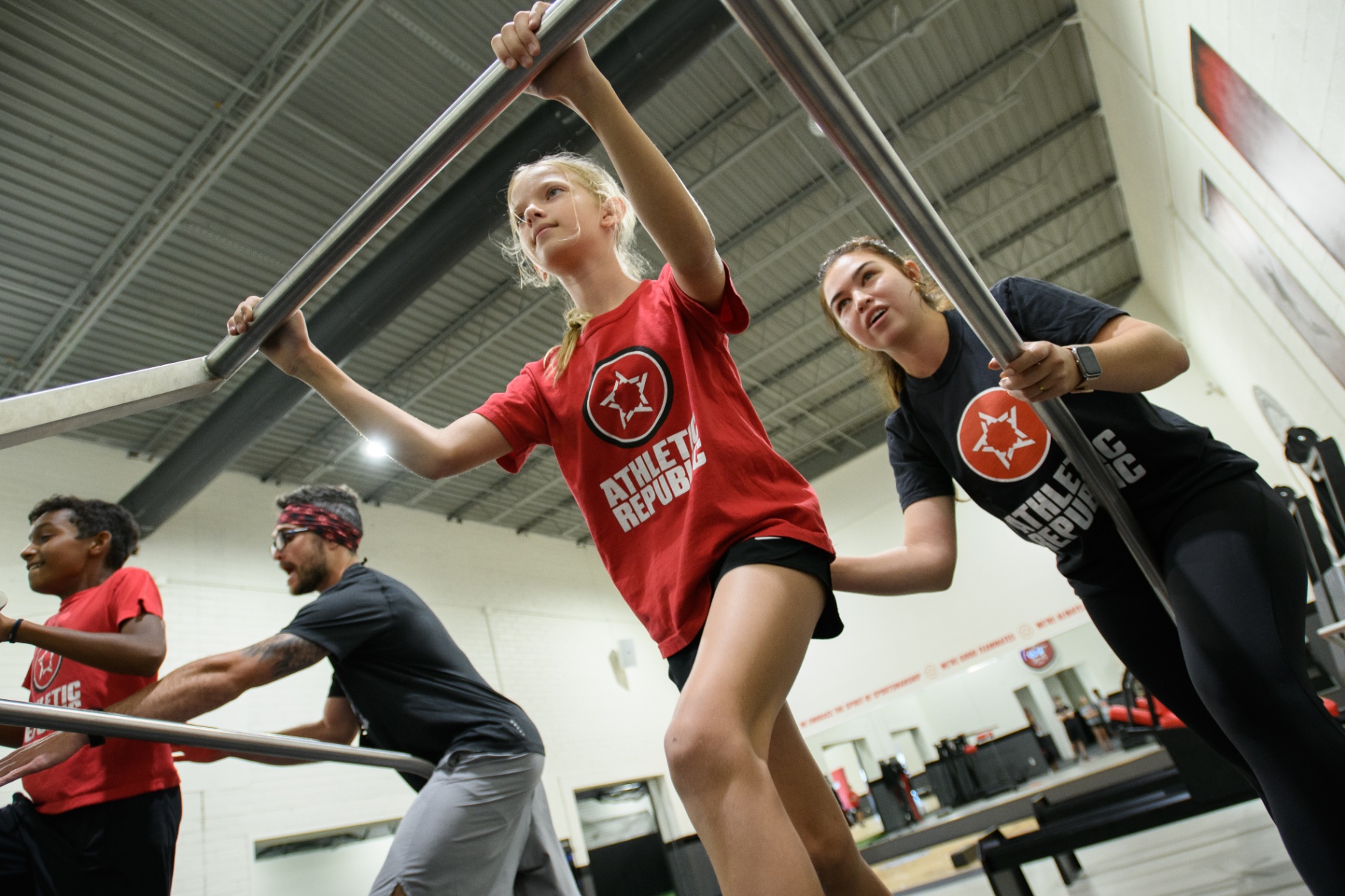
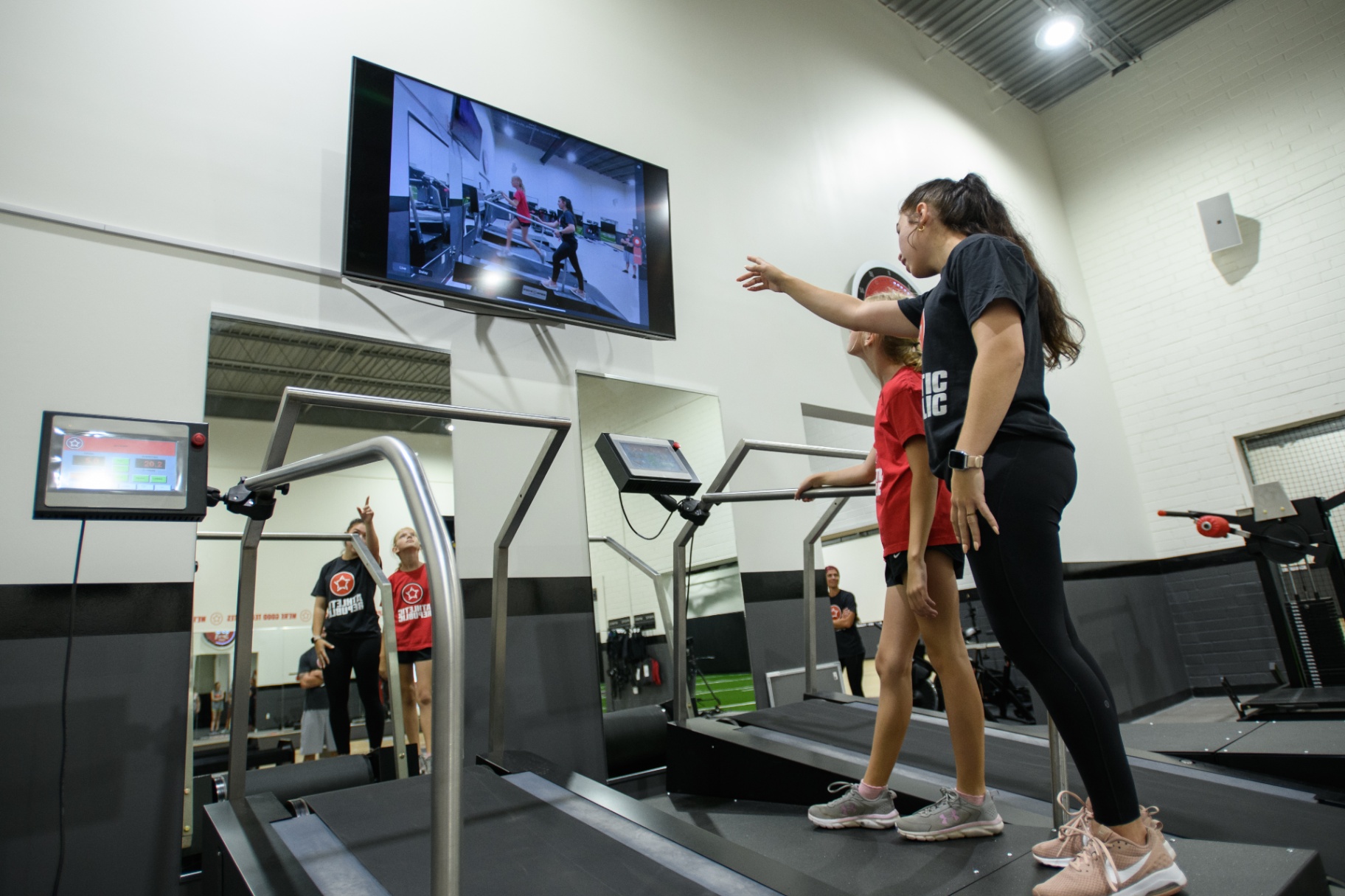
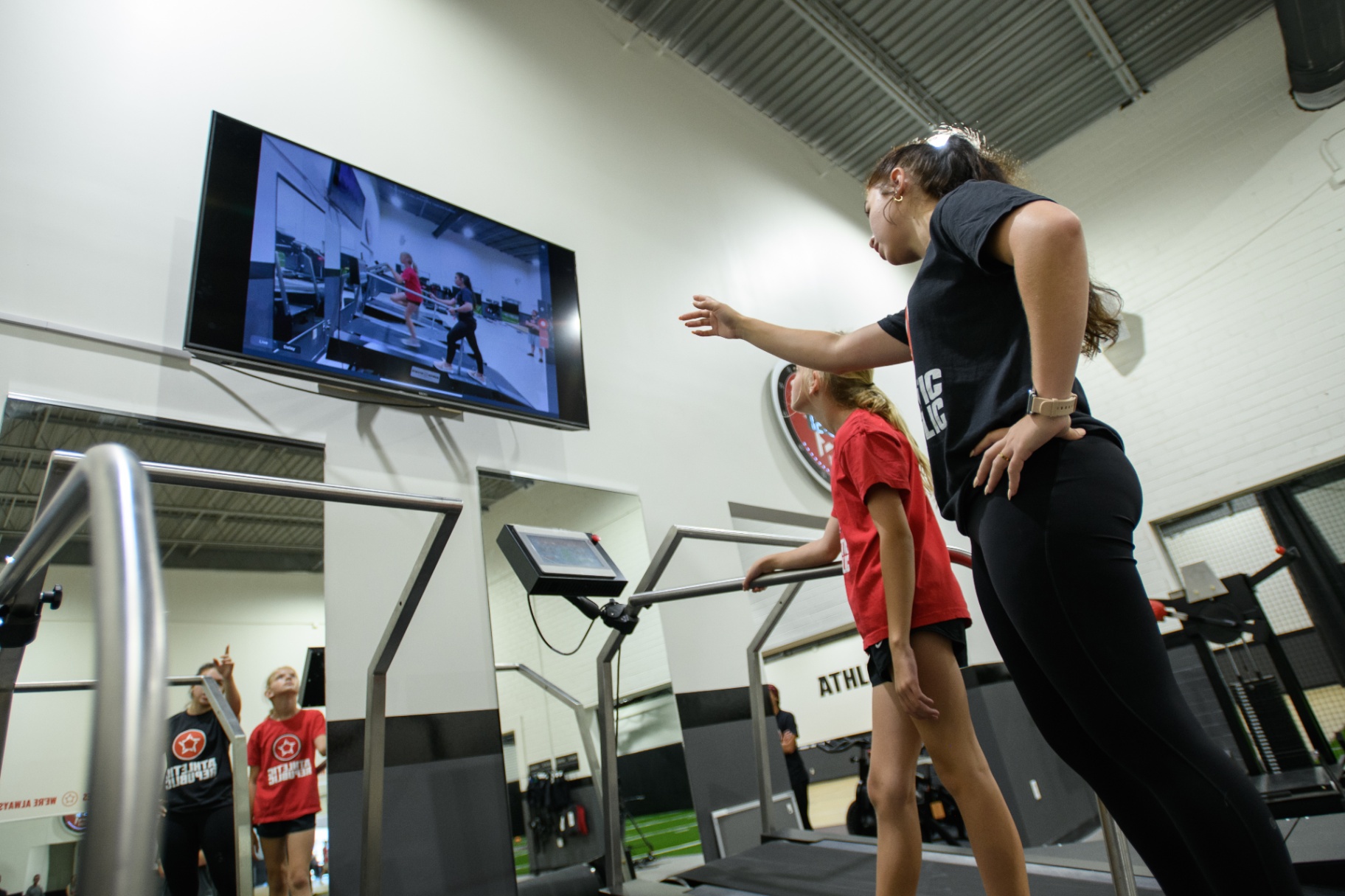
In the Acceleration Program, trainers break down these details and help athletes understand how their bodies move. Specialized treadmill training and real-time feedback can make mechanics easier to see and feel.
An athlete may discover that they are overstriding, leaning incorrectly, or wasting energy through unnecessary movement. Small adjustments can help create a smoother and more powerful sprint.
The program can also challenge athletes with carefully controlled speed and incline work. This allows trainers to develop running efficiency while maintaining close supervision and appropriate progressions.
Better mechanics matter because speed must show up repeatedly: not just once in a test. A starter needs to sprint, recover, cut, and sprint again throughout a game.
Agility Helps Athletes Win the Next Moment
Many sports are decided by what happens after the first movement.
Can you stop under control? Can you plant and cut without standing up? Can you react to an opponent? Can you transition from moving backward to moving forward? Can you stay balanced while changing direction?
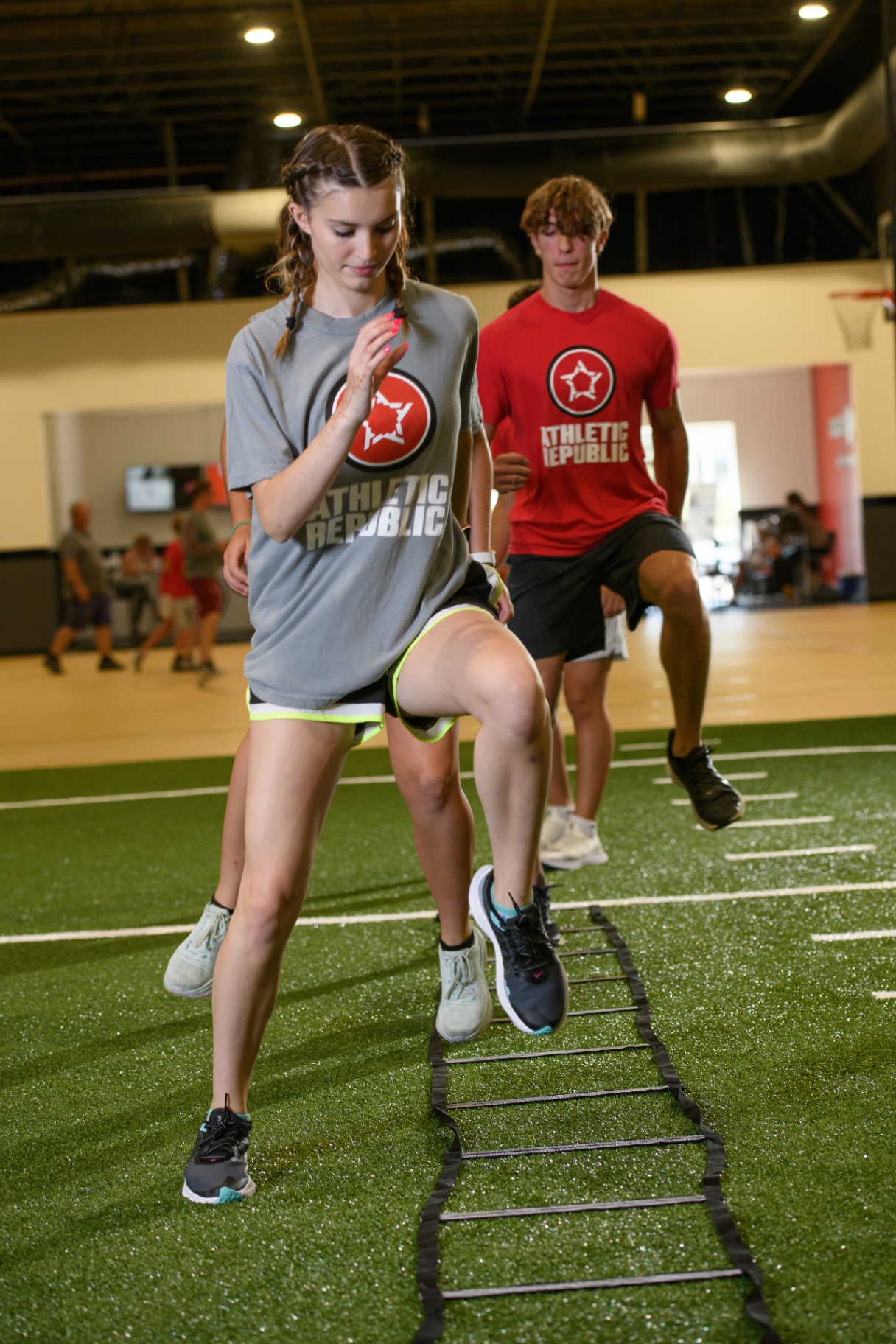
Acceleration training addresses these demands through multi-directional movement, deceleration, coordination, and reactive agility drills.
Athletes may work on:
- Lateral shuffles
- Backpedaling and re-acceleration
- Diagonal movement
- Reaction-based changes of direction
- Single-leg stability
- Controlled stops and cuts
- Sport- and position-specific patterns
This type of training can help an athlete become more reliable in game situations. It is one thing to look quick during a planned drill. It is another to respond quickly when a play develops differently than expected.
For bench-sitting athletes, that responsiveness can become a valuable opportunity. When a coach needs someone who can defend, press, cover ground, recover, or create separation, the athlete who moves confidently and efficiently is more prepared to answer that call.
Power Turns Strength into Action
Strength is important, but athletic performance also depends on how quickly an athlete can use that strength.
Power is the ability to produce force rapidly. It contributes to sprinting, jumping, throwing, cutting, and accelerating into contact or open space.
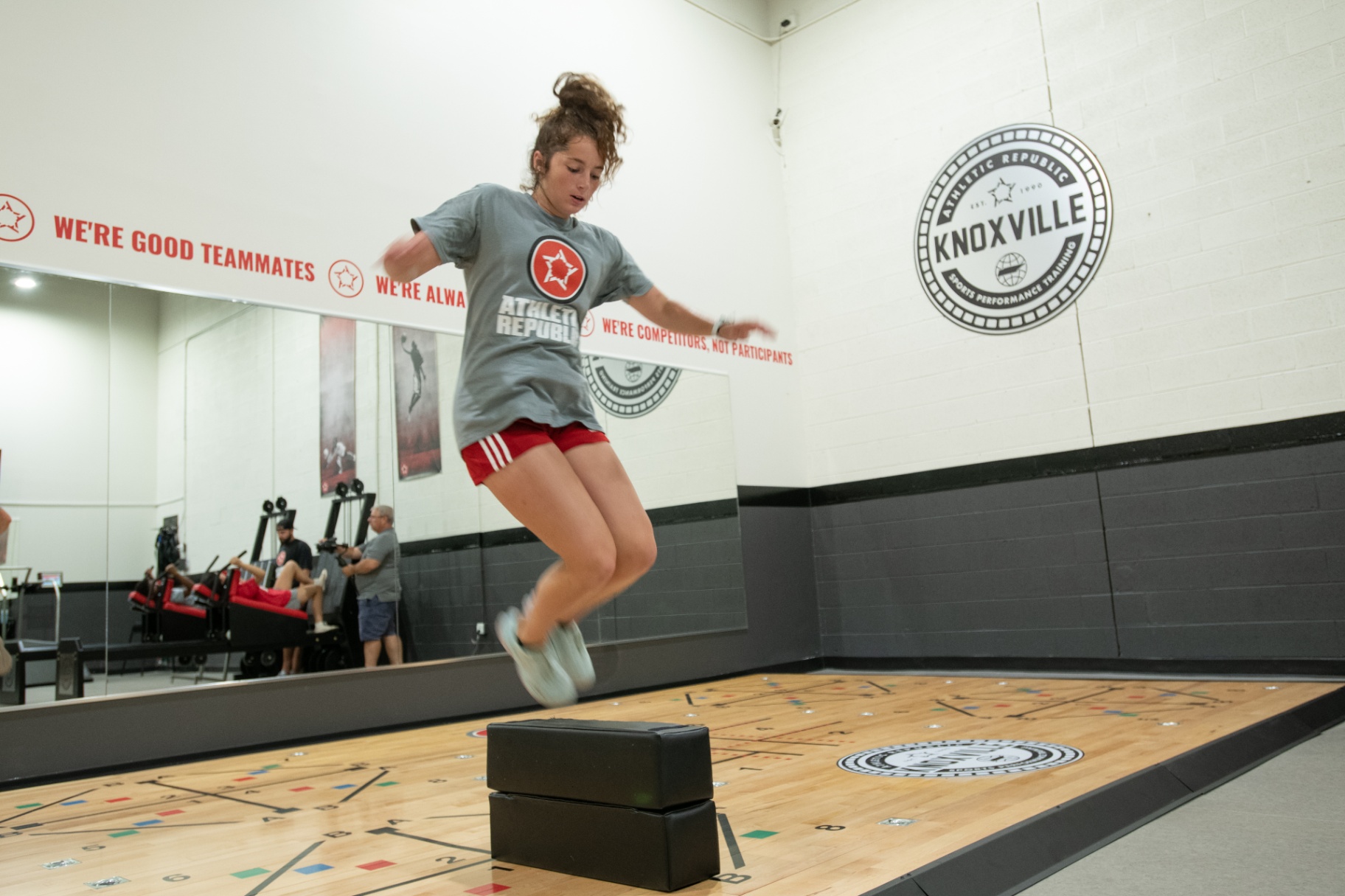
The Acceleration Program combines appropriate strength work with plyometrics and movement-based training to help athletes develop functional power. Exercises may challenge the stretch-shortening cycle: the body’s ability to absorb force and quickly produce force again.
That can help athletes become more explosive in movements such as:
- Jumping for a rebound
- Driving out of a three-point stance
- Pushing off to change direction
- Accelerating after a cut
- Getting separation from an opponent
- Exploding toward a loose ball

The emphasis is on quality movement, proper progression, and training that supports the athlete’s sport. Athletes are not asked to chase fatigue for its own sake. They are coached to produce better movement and better effort.
An 18,000-Square-Foot Facility Built for Performance
The training environment matters.
Athletic Republic Knoxville’s 18,000-square-foot facility gives athletes room to sprint, jump, cut, train on specialized equipment, and work through sport-specific movement patterns. It is designed for more than traditional gym workouts.
The facility includes space and tools that support a complete performance program, including:
- Indoor turf for acceleration and agility work
- Specialized high-speed treadmills
- Plyometric training equipment
- Strength and resistance tools
- Video feedback technology
- Areas for movement analysis and coaching
That variety helps trainers build sessions around the athlete’s needs. An athlete working on running mechanics may spend time on a specialized treadmill. Another may need to focus on deceleration, lateral movement, or explosive jumping. The facility allows these elements to work together within one structured plan.
Just as important, athletes train in an environment where coaches are actively involved. Trainers monitor form, provide feedback, modify exercises, and help athletes understand why each part of the session matters.
Progress Is About More Than a Stopwatch
Measurable improvement is important, but earning a starting spot is not always about one number.
A stronger athlete may be able to hold position through contact. A more agile athlete may arrive at the right place sooner. A better-conditioned athlete may maintain quality movement late in a game. A more confident athlete may make the aggressive play instead of hesitating.
That is why progress can include:
- Faster sprint or shuttle times
- More efficient running mechanics
- Improved jump and power measurements
- Better symmetry and body control
- Cleaner changes of direction
- Stronger movement late in practice or competition
- Increased confidence during tryouts and games
Athletes should also track the habits that support performance: showing up consistently, listening to coaching, recovering properly, and applying new movement skills during team practices.
The goal is to take what is developed in training and bring it to competition.
For Athletes: and the Parents Supporting Them
Parents often see the frustration before anyone else does. They hear about limited playing time, tough tryouts, and the feeling that an athlete is being overlooked.
The most helpful response is not always “work harder.” Many athletes are already working hard. They may need better direction, more objective feedback, and a training plan that meets them where they are.
At Athletic Republic Knoxville, certified trainers work with athletes in a supportive, small-group environment. The focus is on helping each athlete improve while building confidence and a stronger understanding of how their body performs.
That process takes time. Athletes may not earn a starting role immediately, but they can control their preparation, effort, and development.
Ready to Compete for Your Spot?
If you are a youth, high school, or college athlete who wants to become faster, more agile, and more explosive, the Acceleration Program can help you build the tools needed for your next level.
Start by learning more about Student Athlete Training or explore Sports Performance Training at Athletic Republic Knoxville.
You can also schedule a free class or contact Athletic Republic Knoxville at (865) 855-3278.
Your starting spot will be decided by your coach. Your preparation starts with you.