Sitting on the bench can be frustrating: especially when you know you can help your team.
You may understand the plays, work hard in practice, and bring a great attitude every day. But sometimes, a coach is looking for a little more athleticism before handing you a starting role: a faster first step, sharper cuts, better balance, or the ability to repeat explosive efforts late in the game.
That’s where focused performance training can make a real difference.
At Athletic Republic Knoxville, the Acceleration Program helps athletes develop the speed, agility, power, and movement skills that translate directly to competition. It is not about promising a starting spot or taking shortcuts. It is about giving athletes a structured way to improve the qualities coaches notice: and helping them become more prepared when their opportunity arrives.
Starting spots are often won in small moments
A starting position is rarely decided by one spectacular play. More often, coaches notice the athlete who consistently:
- Wins the first few steps to the ball
- Creates separation from a defender
- Recovers quickly after changing direction
- Stays balanced when cutting or stopping
- Gets into position faster
- Continues making strong plays late in the game
- Responds well when the pace gets faster
Those moments depend on more than sport-specific skill. They require athleticism: the ability to move efficiently, produce force quickly, control your body, and react when the game changes.
An athlete may already have strong technical skills but still be losing opportunities because they are a step late. The Acceleration Program is designed to address that part of performance through intentional, science-based training.
What makes the Acceleration Program different?
Extra conditioning can make an athlete tired. Effective performance training should make an athlete better.
The Acceleration Program uses evidence-based protocols to develop key performance qualities in a progressive way. Rather than giving every athlete the same routine, certified trainers consider the athlete’s age, sport, goals, current ability, and movement needs.
Training may focus on:
- Linear acceleration and sprint mechanics
- First-step quickness
- Top-end speed
- Lateral movement
- Deceleration and change of direction
- Explosive power
- Coordination and balance
- Repeated high-intensity efforts
That combination matters because game speed is rarely just straight-line speed. A basketball guard needs to accelerate, stop, slide, and react. A soccer player may need to sprint into space, brake for a cut, and chase down a loose ball. A football player may need to explode from a stance, separate from an opponent, and maintain speed through a route.
The goal is not simply to run faster in a controlled drill. The goal is to help athletes move better when the situation is unpredictable and competitive.
Building a faster first step
A quick first step can change an athlete’s role.
It can help a defender stay in front of an opponent. It can help a baseball or softball player get out of the box faster. It can help a soccer player reach a 50/50 ball first. It can help a football receiver create space at the line. It can give a basketball player the burst needed to attack an open lane.
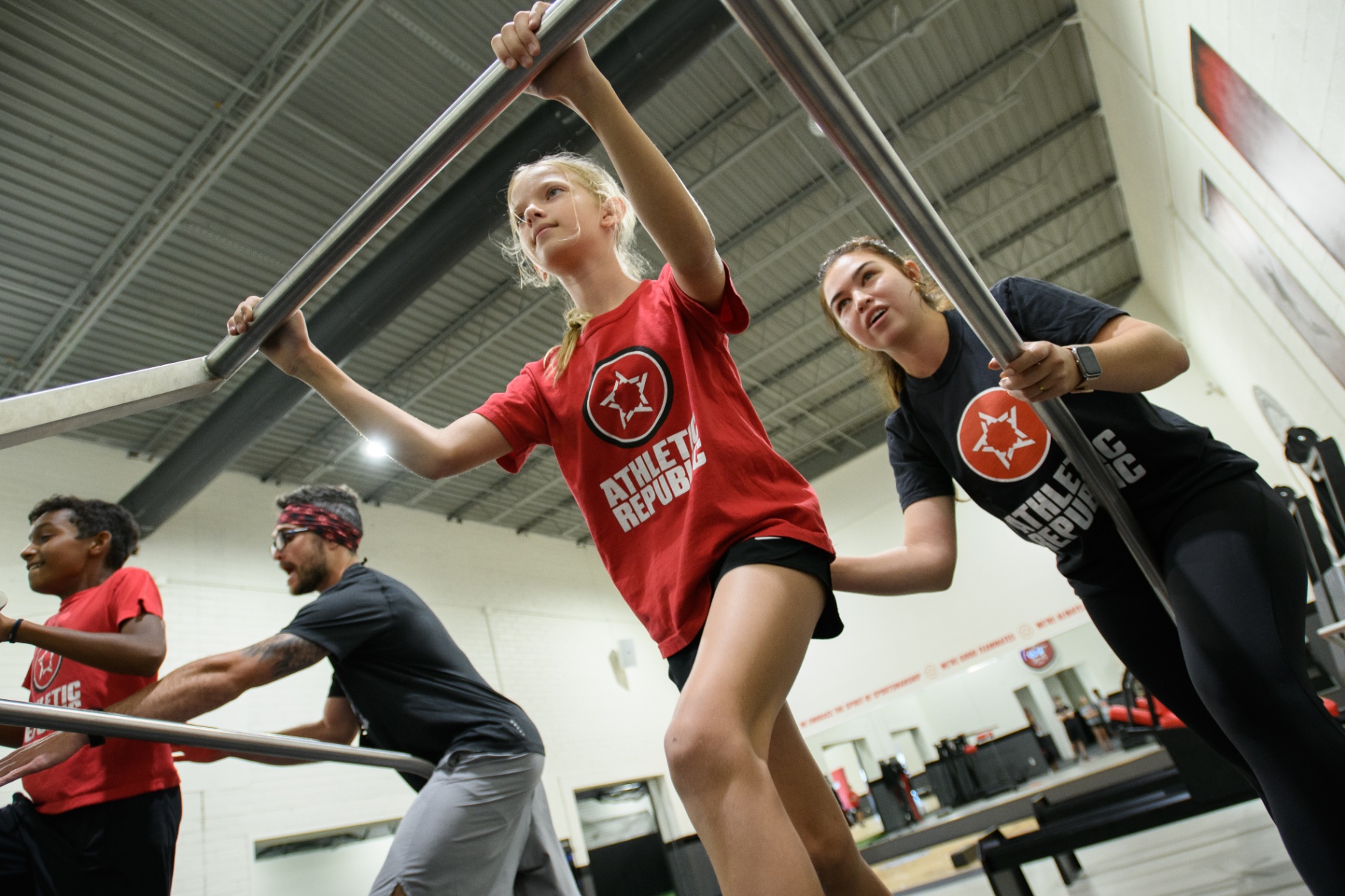
The Acceleration Program develops this first-step ability by improving how athletes apply force to the ground. Trainers work on posture, body position, knee drive, foot placement, and the timing of each movement.
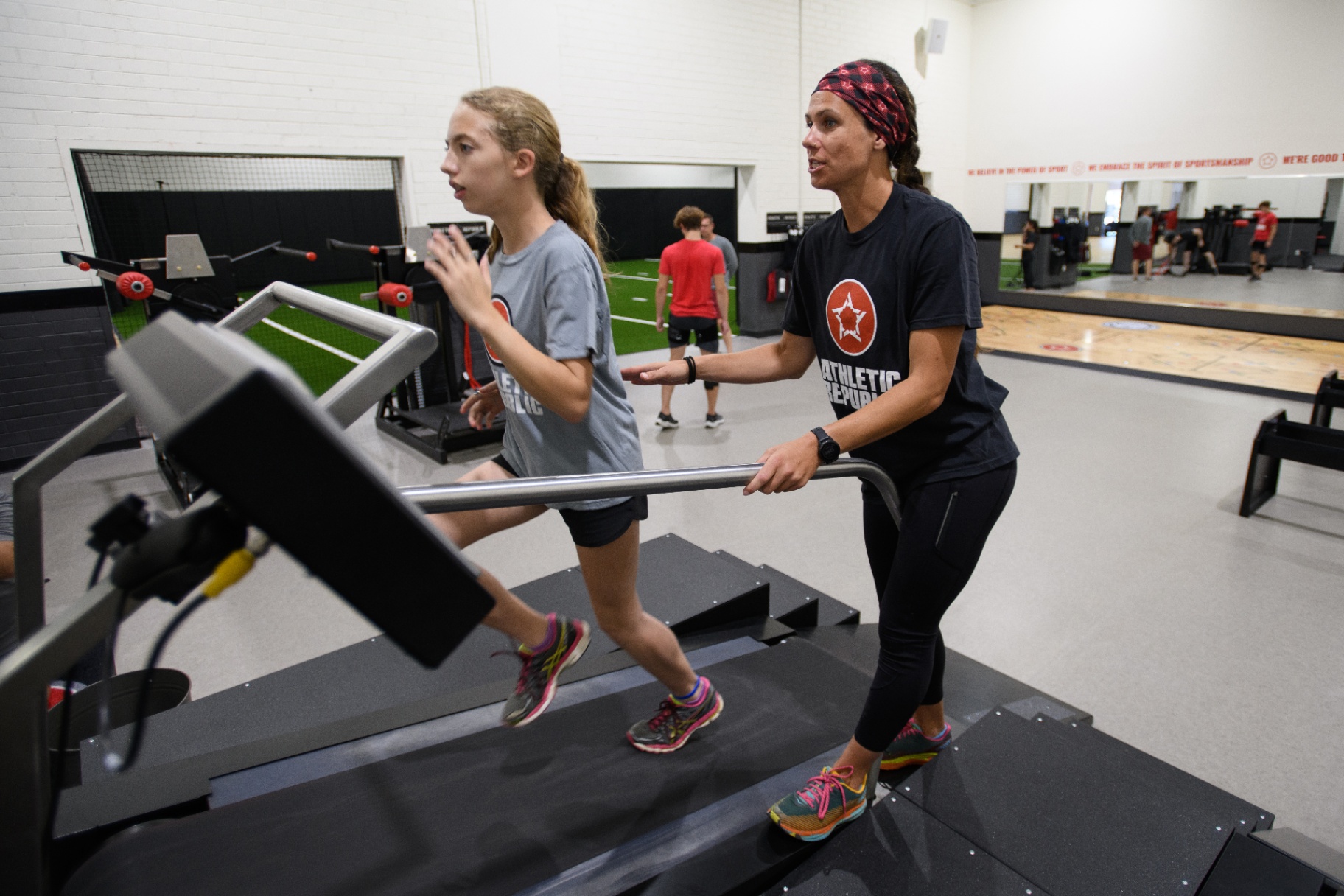
Athletes also train on specialized high-speed treadmills, including the Super Running Treadmill shown above. These tools allow trainers to challenge speed and running mechanics in a controlled environment while helping athletes learn what efficient movement feels like.
The process is progressive. Athletes are not simply pushed to run as fast as possible from day one. They learn how to move with control, then build speed as their mechanics and confidence improve.
Agility is more than fast feet
A lot of athletes assume agility means moving their feet quickly through a ladder. Foot speed is useful, but true agility involves much more:
- Reading what is happening
- Braking under control
- Planting in a strong position
- Redirecting force
- Accelerating into the next movement
That is why the program includes multidirectional work on turf and other specialized training surfaces. Athletes practice shuffling, cutting, sprinting, backpedaling, and reacting to coaching cues.
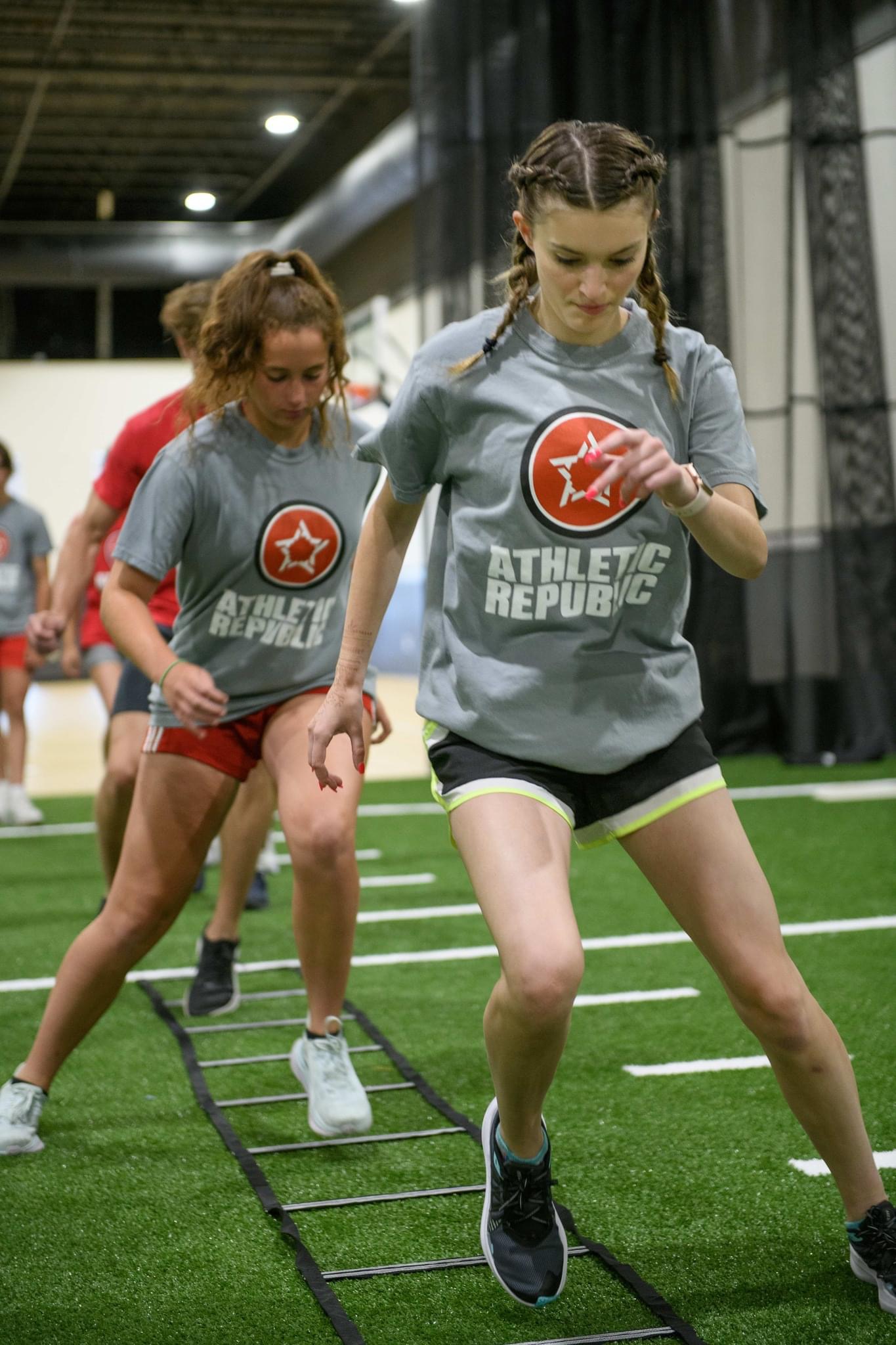
For younger athletes, these movements are taught through clear progressions. They may begin by learning to move, plant, and hold their position. From there, they can advance to moving, cutting, and returning to the starting point before progressing to more reactive drills.
This approach helps athletes develop body control before adding more speed and complexity. That matters for performance and for confidence. When athletes trust their ability to stop and redirect, they can play more aggressively instead of hesitating.
Developing the power behind speed
Speed and agility depend on power.
An athlete needs to produce force quickly to accelerate. They need to absorb force to decelerate. They need to transfer force through the hips, legs, and core to jump, sprint, cut, and re-accelerate.
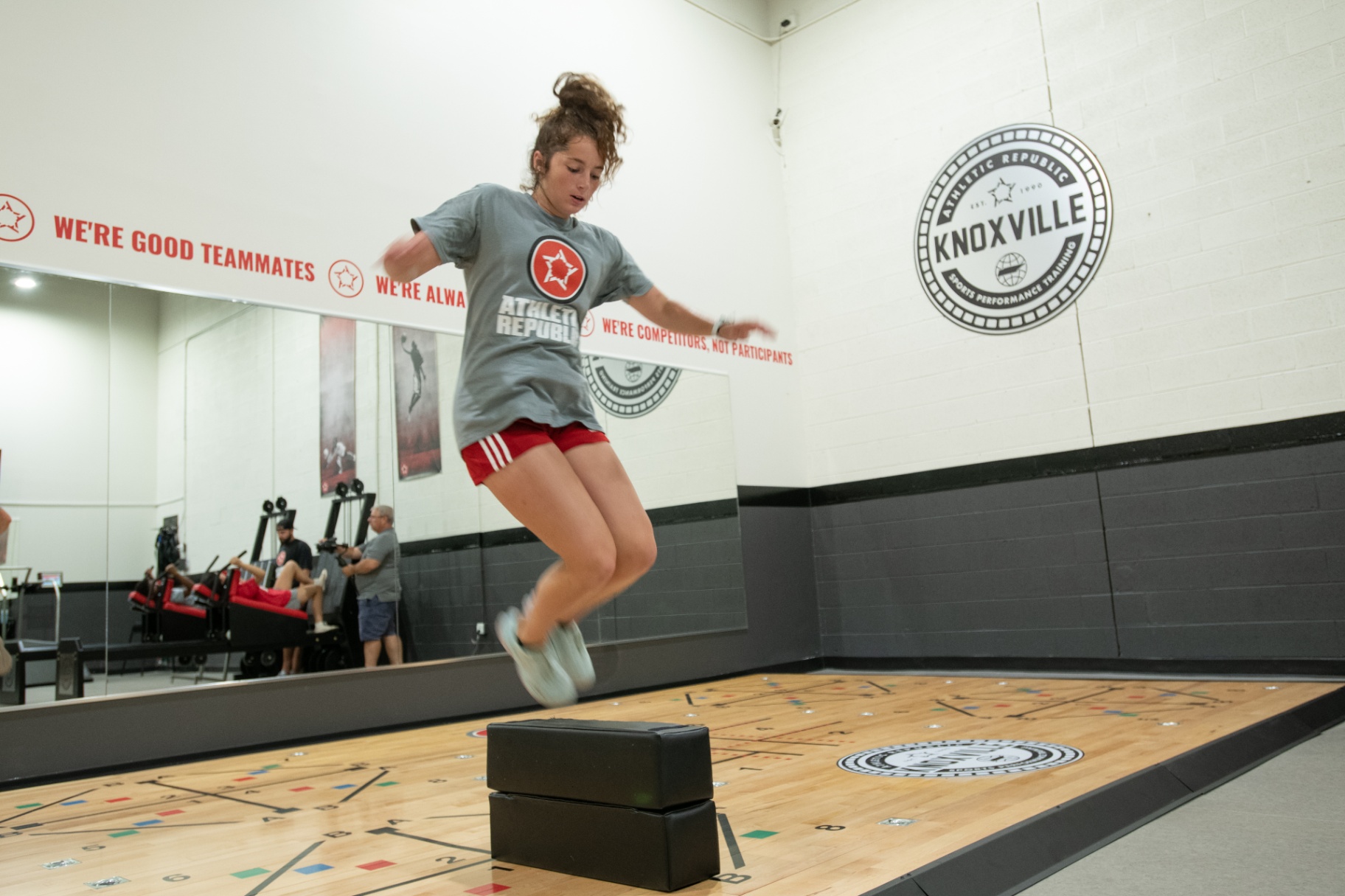
The Acceleration Program integrates explosive movements and plyometric training to help athletes improve these qualities. Box jumps and other power-based exercises challenge athletes to apply force quickly while landing with control.

For parents, this is an important distinction. The goal is not to have young athletes lift or train like adults. The goal is age-appropriate development that teaches them how to move well and produce athletic power safely.
For athletes, the benefit shows up in practical ways: a more explosive jump, a stronger push out of a cut, or the ability to accelerate again after slowing down. Those improvements can help an athlete become more useful in more situations: and versatility is something coaches value.
Why the 18,000-square-foot facility matters
The training environment makes a difference.
Athletic Republic Knoxville’s 18,000-square-foot facility gives athletes room to train speed, agility, and power without being limited to a small workout area. The space allows for turf-based movement drills, high-speed treadmill work, plyometrics, and small-group coaching in one performance-focused setting.
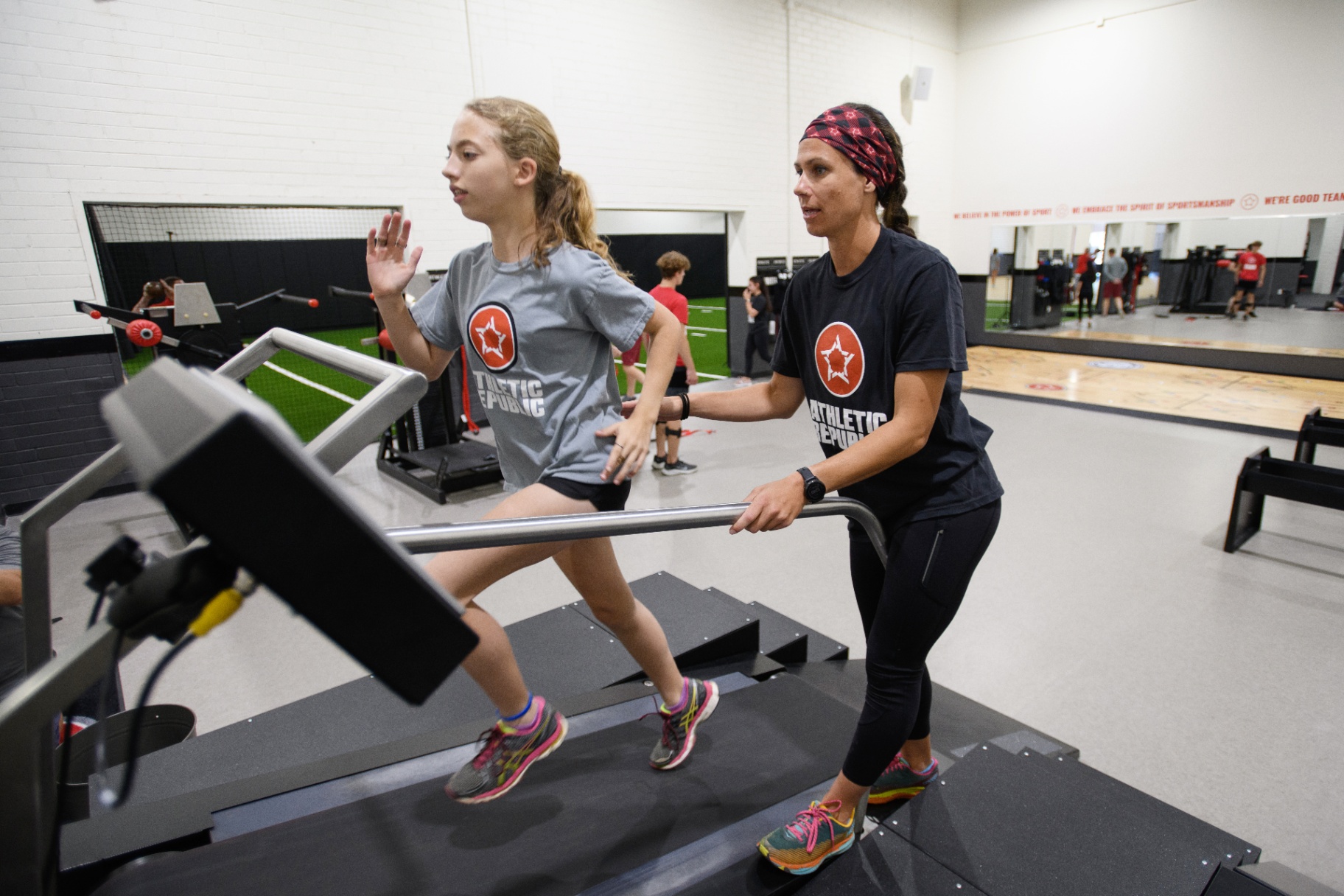
This is not a crowded general gym where athletes are left to guess what to do next. Trainers can observe movement closely, make adjustments, and organize training around the athlete’s objectives.
That personal attention is especially valuable for bench-sitting athletes. The issue is not always obvious. One athlete may need better acceleration mechanics. Another may need to improve lateral control. Someone else may have the speed but struggle to repeat it throughout a game.
A science-based program helps identify those needs and create a clearer plan.
Turning progress into confidence
Physical improvement and confidence often reinforce each other.
When an athlete sees that a sprint feels smoother, a cut feels more controlled, or a drill becomes faster, they begin to trust their preparation. They may communicate more on the field, attack open space more decisively, or compete harder for a loose ball.
That confidence does not come from pretending to be ready. It comes from doing the work and understanding the progress.
Parents can support this process by focusing on controllable actions rather than demanding immediate results. Instead of asking, “Are you starting yet?” try asking:
- What did you improve this week?
- Which movement feels easier now?
- What are you working toward next?
- How can we help you stay consistent?
A starting spot may take time, and it is never guaranteed. But consistent improvement gives athletes a stronger foundation when coaches evaluate effort, athleticism, and game impact.
Your opportunity starts before game day
The athletes who earn more playing time are not always the biggest, oldest, or most naturally gifted. Many are the athletes who keep improving the details that make them reliable under pressure.
The Acceleration Program at Athletic Republic Knoxville helps athletes work on those details through focused speed, agility, and power training. In a supportive environment, they can build the physical tools and confidence needed to compete for a larger role.
Whether your athlete is preparing for tryouts, working through an off-season development plan, or trying to make a bigger impact during the current season, the first step is understanding where they are now and what they need next.
Schedule a free workout for your athlete at Athletic Republic Knoxville and learn how science-based performance training can support the journey from the bench toward the starting lineup.
For more information about training options, visit our sports performance training programs or explore student-athlete training.
Your athlete does not have to stay defined by their current role. With the right plan, consistent effort, and expert coaching, they can keep earning the next opportunity.