Part of the Acceleration Program: Earning the Starting Spot series
If you’ve ever watched your athlete sit on the bench and wondered what might help them stand out, you’re not alone. Coaches have limited spots and changing game situations to manage. Increasingly, they value athletes who can do more than fill one narrow role: players who move well, adjust quickly and help the team in different situations.
That’s the idea behind positionless sports. It doesn’t mean positions no longer matter. It means athletes are often asked to be more versatile, and speed, coordination and agility can help them contribute across roles.
For a player hoping to earn more opportunities, developing those qualities can be a smart place to focus. It won’t guarantee playing time, but it can help an athlete become more prepared when a coach needs someone who can make a play.
What “positionless” means for youth athletes
In a position-based approach, athletes may be trained primarily for one defined role. A positionless approach puts more emphasis on transferable skills: moving confidently, reacting to what’s happening, and being able to contribute in more than one way.
Consider a basketball player who can defend on the perimeter, recover to help a teammate and move into space for a pass. Or a soccer player who can accelerate into an opening, slow down under control and adjust to an opponent’s movement. In either case, speed is useful, but not just in a straight line.
Real game speed includes the first few steps, balance, braking, changing direction and getting moving again. It also depends on awareness: seeing the play unfold and choosing how to respond. An athlete who can run quickly but struggles to stop, turn or stay in control may not be ready for the demands of a fast-moving game.
The National Strength and Conditioning Association’s long-term athletic development position statement emphasizes broad movement skills and development that fits the individual athlete. That’s a useful principle for positionless sports, too: build a strong athletic foundation, then connect it to the skills and decisions a particular sport requires.
Why speed can make a versatile athlete stand out
A coach filling out a lineup is thinking about the team’s needs. Who can close down space? Who can recover on defense? Who can create separation, chase down a loose ball or respond when a play breaks down?
A fast, coordinated athlete can be useful in those moments. They may be able to cover more ground, adjust to changing situations and take on opportunities that call for a quick reaction. That versatility can make them easier to fit into different lineups or game plans.
But speed alone doesn’t earn a spot. Coaches also consider sport skills, decision-making, effort, communication, reliability and how well an athlete understands their role. Training can help prepare the physical tools; it can’t replace practice, teamwork or the coach’s judgment.
That’s an important message for athletes on the bench: you don’t need to become a completely different player overnight. You can work on qualities that support your sport and give you more ways to contribute when an opportunity comes.
Speed is more than sprinting
For many athletes, “get faster” sounds like “run more sprints.” But effective speed development has several parts:
- Acceleration: Building momentum over the first steps.
- Deceleration: Slowing down with control rather than losing balance.
- Change of direction: Moving into a new direction efficiently.
- Coordination: Connecting the arms, legs and body while moving.
- Reaction: Responding to a teammate, opponent, ball or open space.
These abilities overlap, but they aren’t identical. A planned cone drill can help an athlete practice movement mechanics; reacting to a real opponent or an unexpected play adds another layer. The goal is to develop a foundation athletes can use in practice and competition, not to assume one drill automatically translates into every game situation.
Research supports speed and agility training as a useful part of athletic development. A 2025 systematic review and meta-analysis of 11 randomized trials involving 499 healthy athletes reported improvements in sprinting, change-of-direction performance and other measures following speed-agility-quickness training. Results vary from athlete to athlete, and training is only one part of performance, but the findings reinforce the value of structured, appropriate practice.
How the Acceleration program builds transferable athleticism
At Athletic Republic Knoxville, the Acceleration program is designed to develop speed, agility and overall athletic movement through a structured process, not a one-size-fits-all workout.
It starts with objective testing to establish a baseline. That gives the athlete and trainer a clearer picture of current strengths and areas to work on. From there, individualized speed and agility plans can target the athlete’s needs and progress as their skills develop.
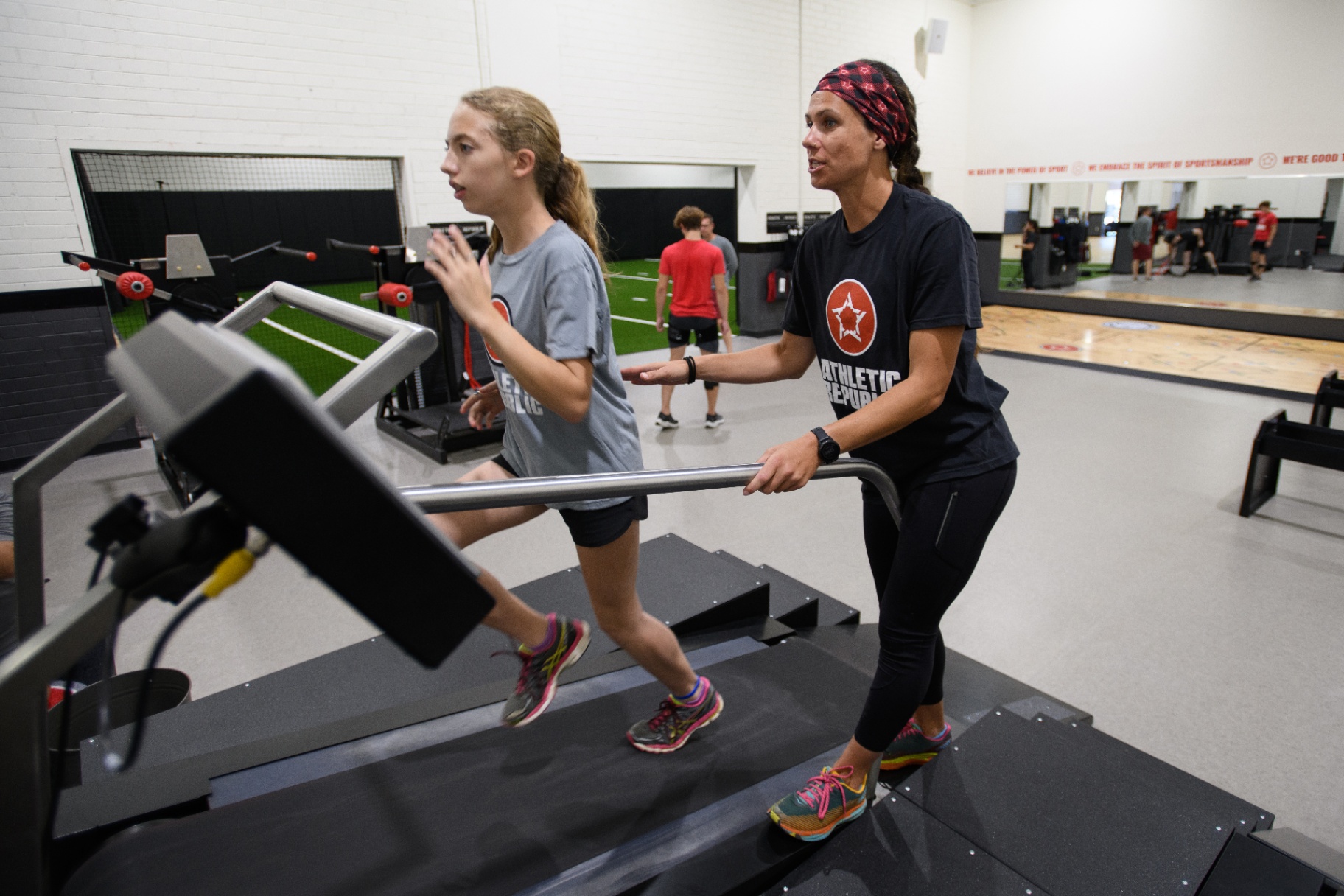
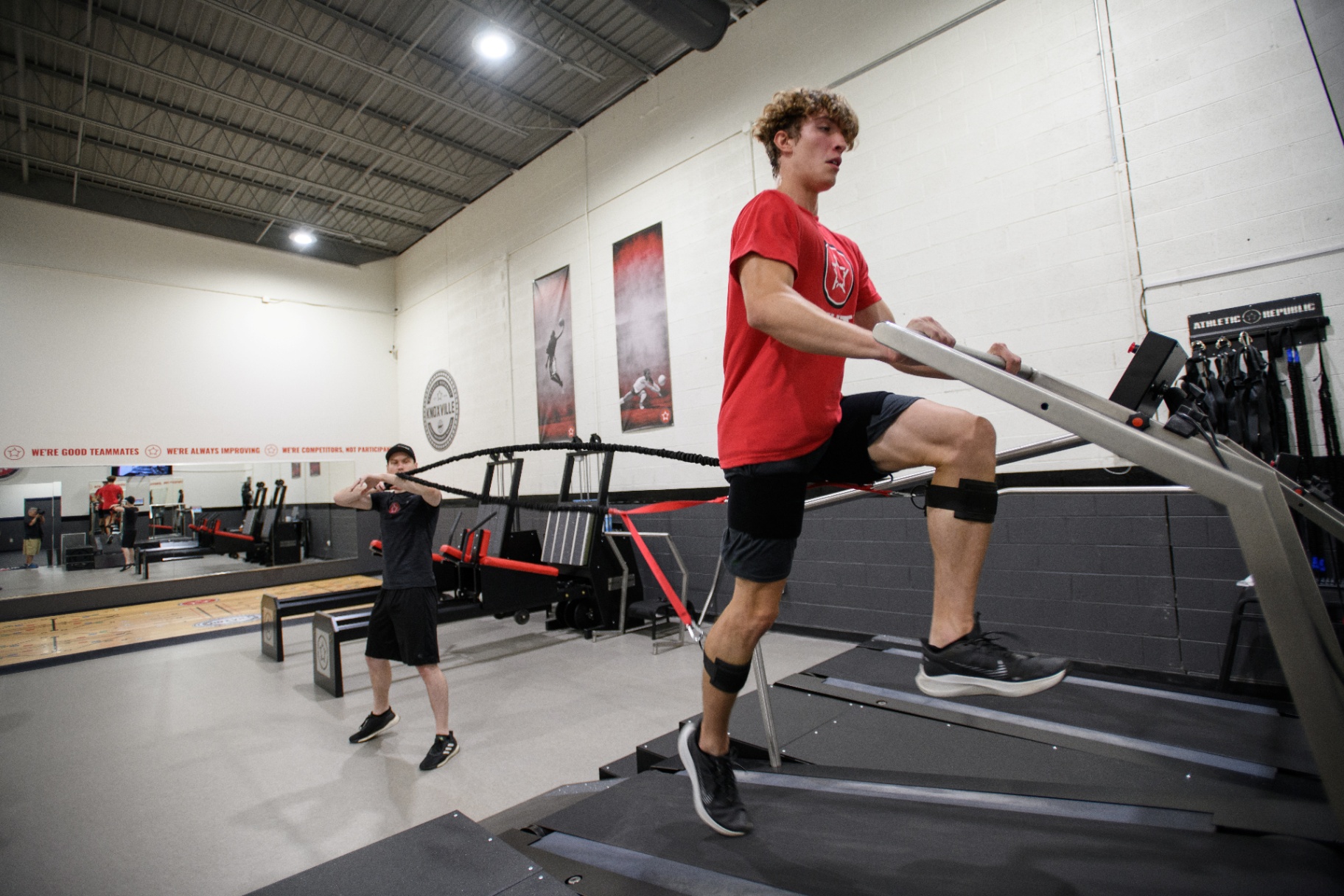
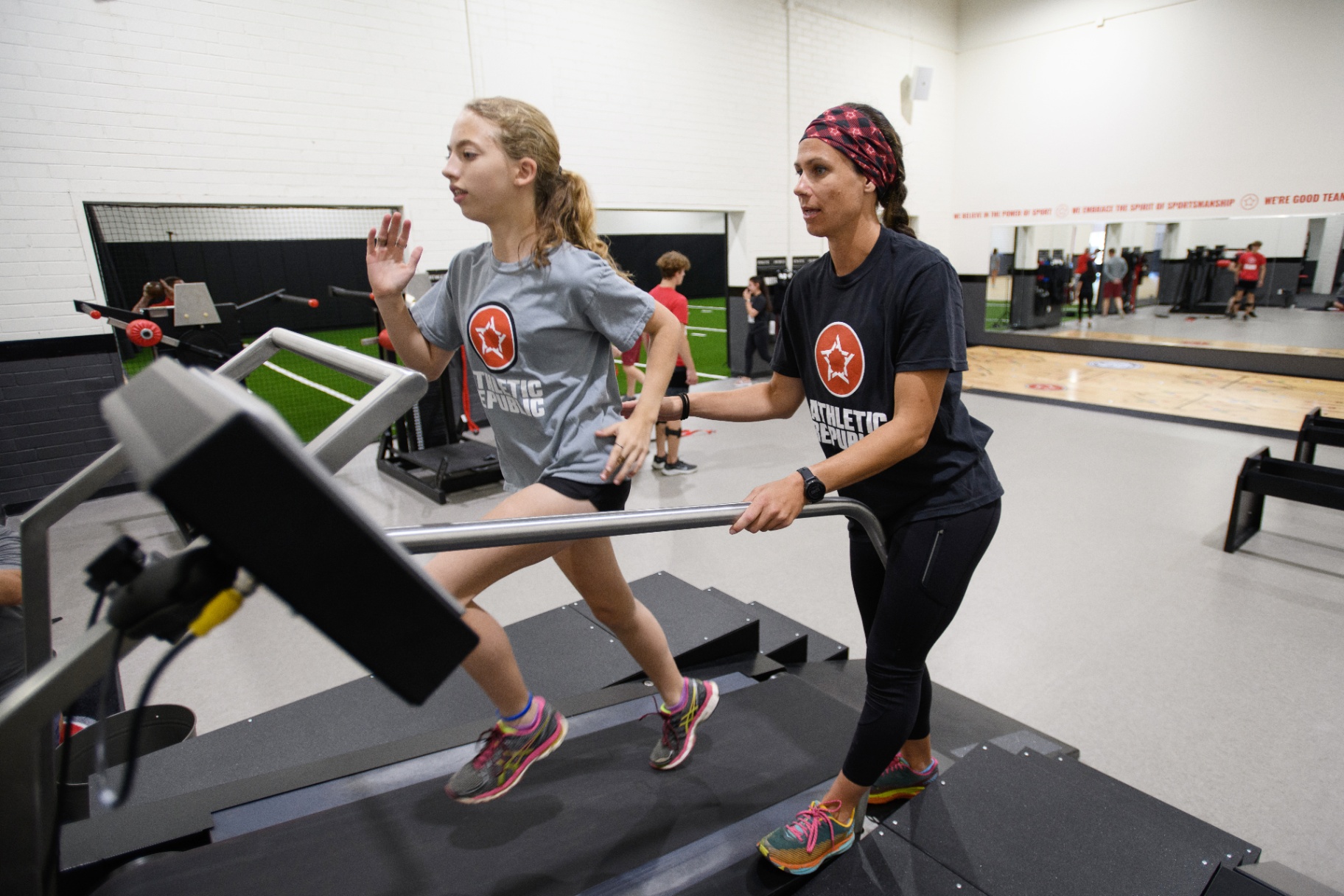
Training may use specialized equipment such as high-speed treadmills, plyometric platforms and resistance-training tools. Each has a role: treadmill work can help athletes practice running mechanics and acceleration; plyometric exercises develop explosive movement and control; resistance training supports strength for pushing, landing and changing direction. Certified trainers guide the work so athletes can focus on technique and move through appropriate progressions.

The training takes place within Athletic Republic Knoxville’s 18,000-square-foot facility, with room for athletes to work on different aspects of performance. The space and equipment support the coaching process; the plan still begins with the individual athlete and what they’re working toward.
Progress is measured over weeks, rather than guessed from how a workout felt on a single day. Testing can help show what is changing and where the athlete should focus next. Individual results and timelines differ, and development isn’t always perfectly linear, especially during periods of growth or a busy sport season. The point is consistent, purposeful work that helps athletes build skills over time.
Strong movement starts with control
The fastest route to becoming more useful on the field or court isn’t always doing more high-speed work. Athletes also need strength and control to manage the forces involved in sprinting, stopping, jumping and redirecting.
A well-rounded plan may include exercises that challenge balance, trunk control and the muscles athletes use to decelerate. Those qualities help support movement quality and can make it easier to change direction without feeling out of control.
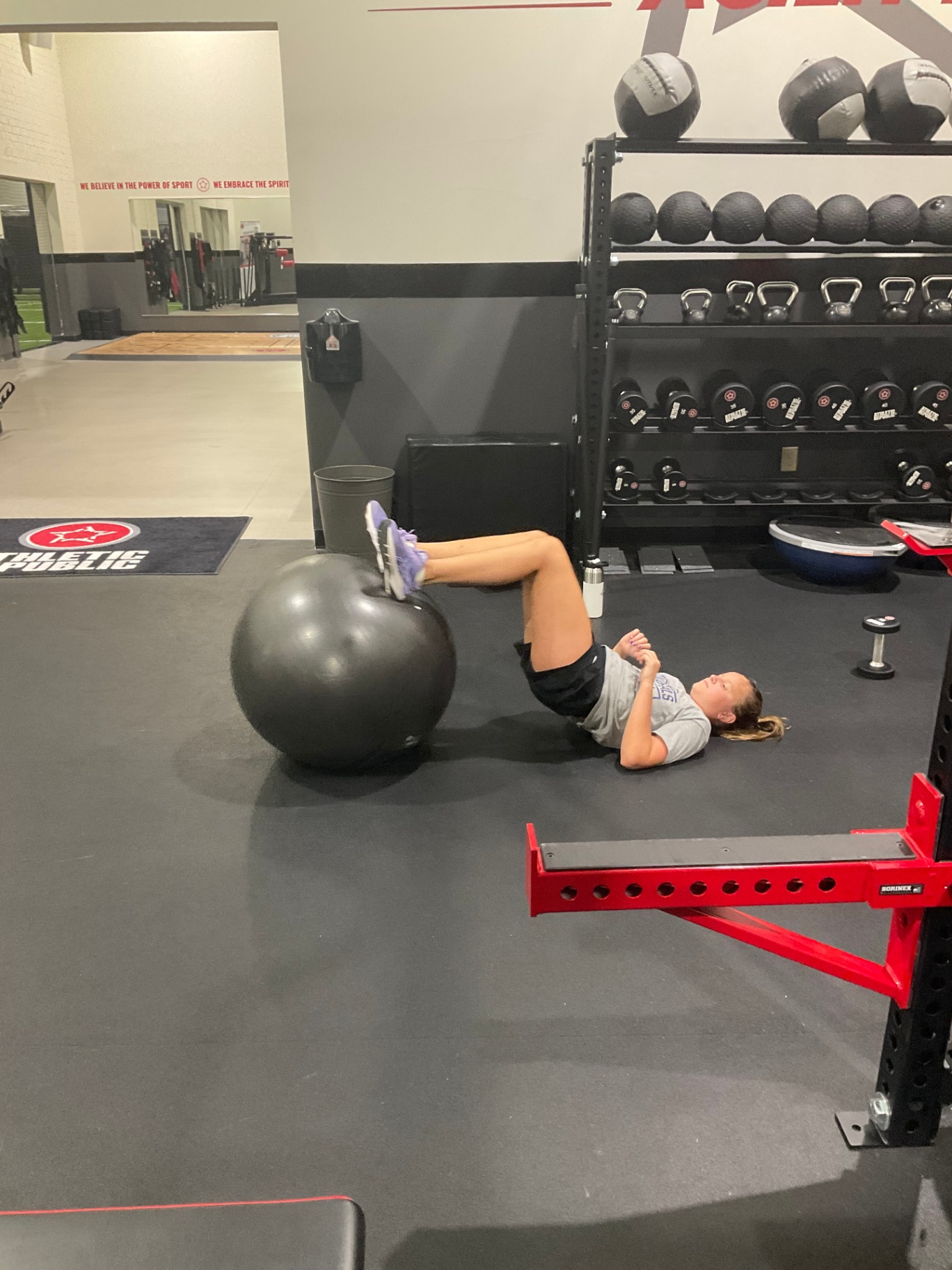
For parents, this kind of training can be reassuring: the focus isn’t simply on pushing a young athlete to go harder. It’s on helping them learn how to move well, build capacity gradually and train with guidance.
Ready for the opportunity, not promised the spot
A stronger athletic foundation can help a player feel more prepared at tryouts and practices. It may also give them more ways to respond when a coach asks them to take on a different task. But no training program can promise a starting role or control a coach’s lineup decisions.
Playing time depends on many things, including team needs, sport-specific skills, effort, experience and decisions made by the coaching staff. Training makes athletes more prepared; it doesn’t make them entitled to a particular outcome.
For athletes, that means focusing on what you can control: showing up, learning, communicating, competing and continuing to improve. For parents, it means celebrating progress and helping your athlete keep perspective while they work toward their goals.
Positionless sports reward adaptable players. Building speed, coordination and movement control can help an athlete become more ready to meet that challenge. Wherever a coach needs them.
Take the next step
Learn more about student-athlete training at Athletic Republic Knoxville and how the Acceleration program can support your athlete’s development.
Curious about the training environment? Book a free trial class and take a first step toward building speed, agility and confidence.