If you’ve ever spent an afternoon at a local park watching basketball players or at a track meet watching high jumpers, you’ve probably seen the same thing over and over: athletes jumping until they are blue in the face, hoping that one more "rep" will magically add two inches to their vertical.
We get it. The desire to fly higher is universal in sports. Whether you’re looking to throw down a dunk, block a volleyball at the net, or snag a high fly ball in the outfield, your vertical jump is a massive indicator of your overall explosive power. But here is the truth that many trainers won’t tell you: doing more reps of the same tired jump drills won't necessarily make you jump higher. In fact, if you’re doing them with poor mechanics, you’re likely just getting better at jumping low.
At Athletic Republic Knoxville, we take a different approach. We don’t just "work out"; we apply science. In our 18,000-square-foot facility, we use the laws of physics to deconstruct the jump and rebuild it for maximum height. If you want to stop guessing and start ascending, it’s time to trade in the "more is better" mindset for a "smarter is better" strategy.
The Math Behind the Leap: F = ma
To understand how to jump higher, we have to look at Newton’s Second Law: Force equals mass times acceleration (F=ma).
In the context of a vertical jump, your body is the "mass." The "acceleration" is how fast you can move that mass from a standstill into the air. To increase your vertical, you have two primary levers to pull: you can increase the amount of force your muscles produce, or you can improve your strength-to-weight ratio.
Think of it like a rocket. If you have a massive, heavy rocket but a small engine, it isn’t going anywhere. If you have a light rocket with a massive engine, you’re heading for the moon. At Athletic Republic Knoxville, we focus on building that "engine" (your legs and core) while ensuring your movement is efficient enough that you aren't fighting your own body weight. Research shows that even a small change in body composition: losing just a bit of non-functional weight while maintaining strength: can result in a double-digit percentage increase in vertical height.
The Magic of the Plyo Floor
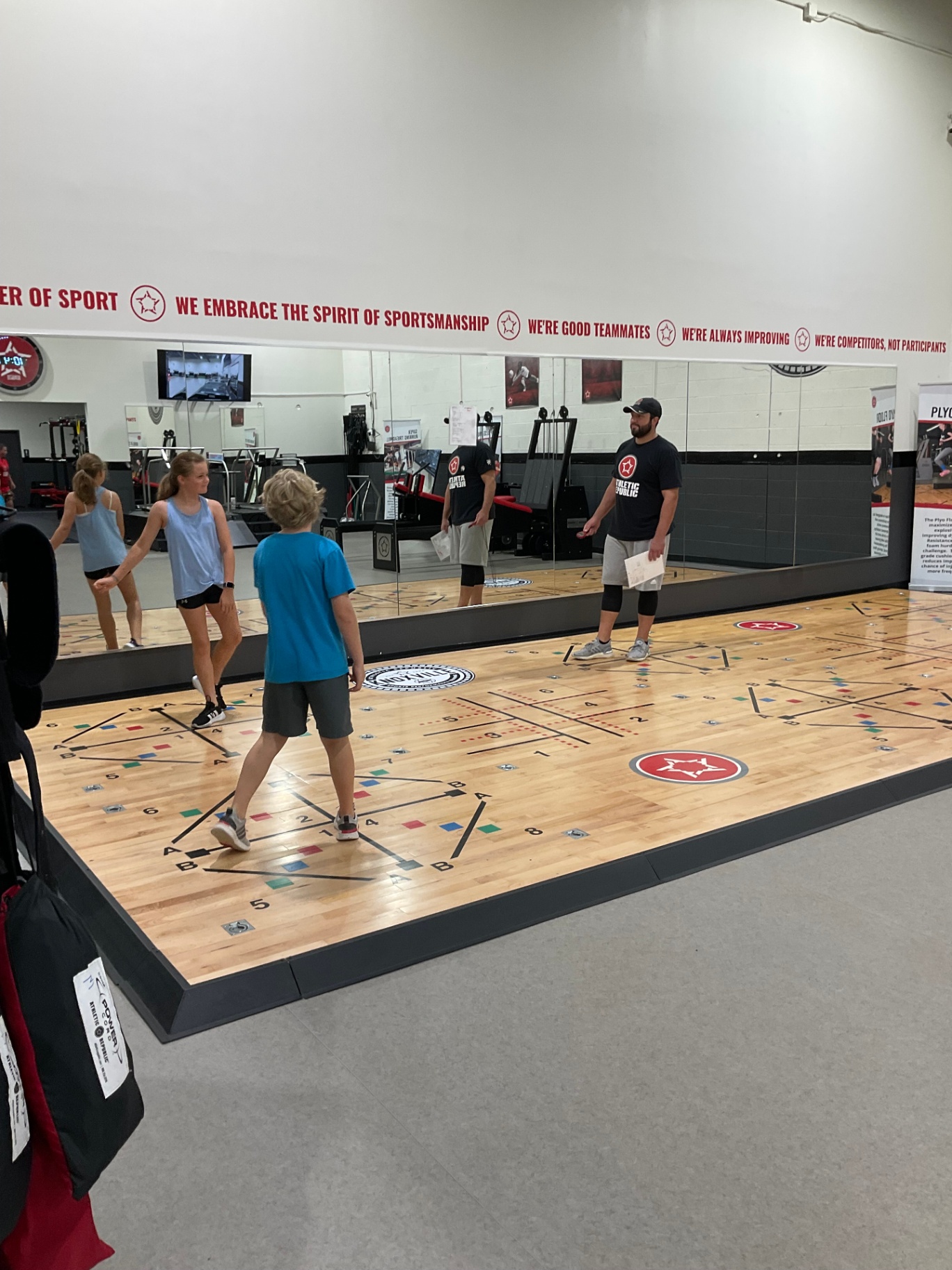
One of the most important zones in our facility is the specialized plyo floor. This isn’t just a patch of rubber; it’s a dedicated space designed for impact and energy return.
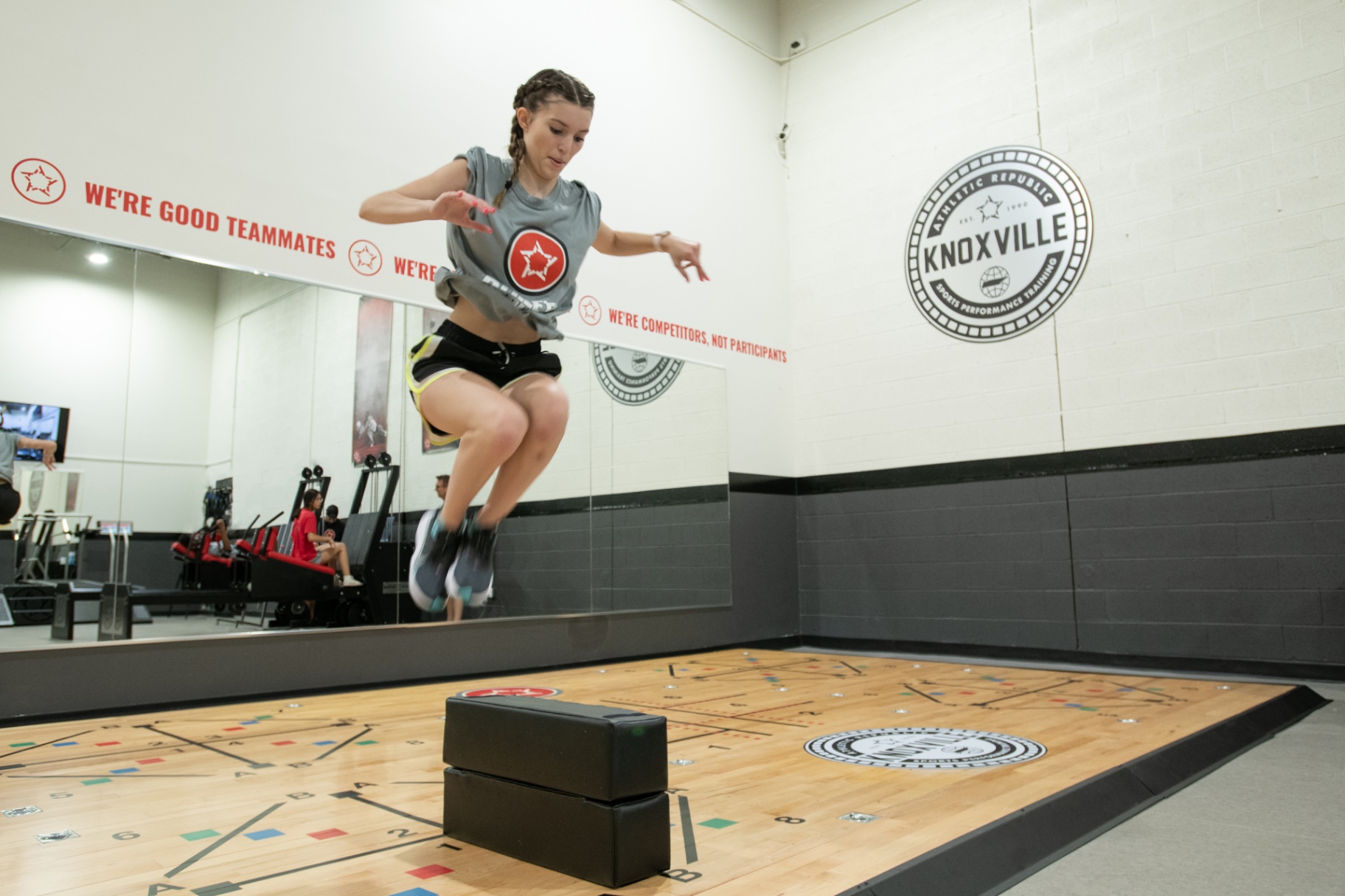
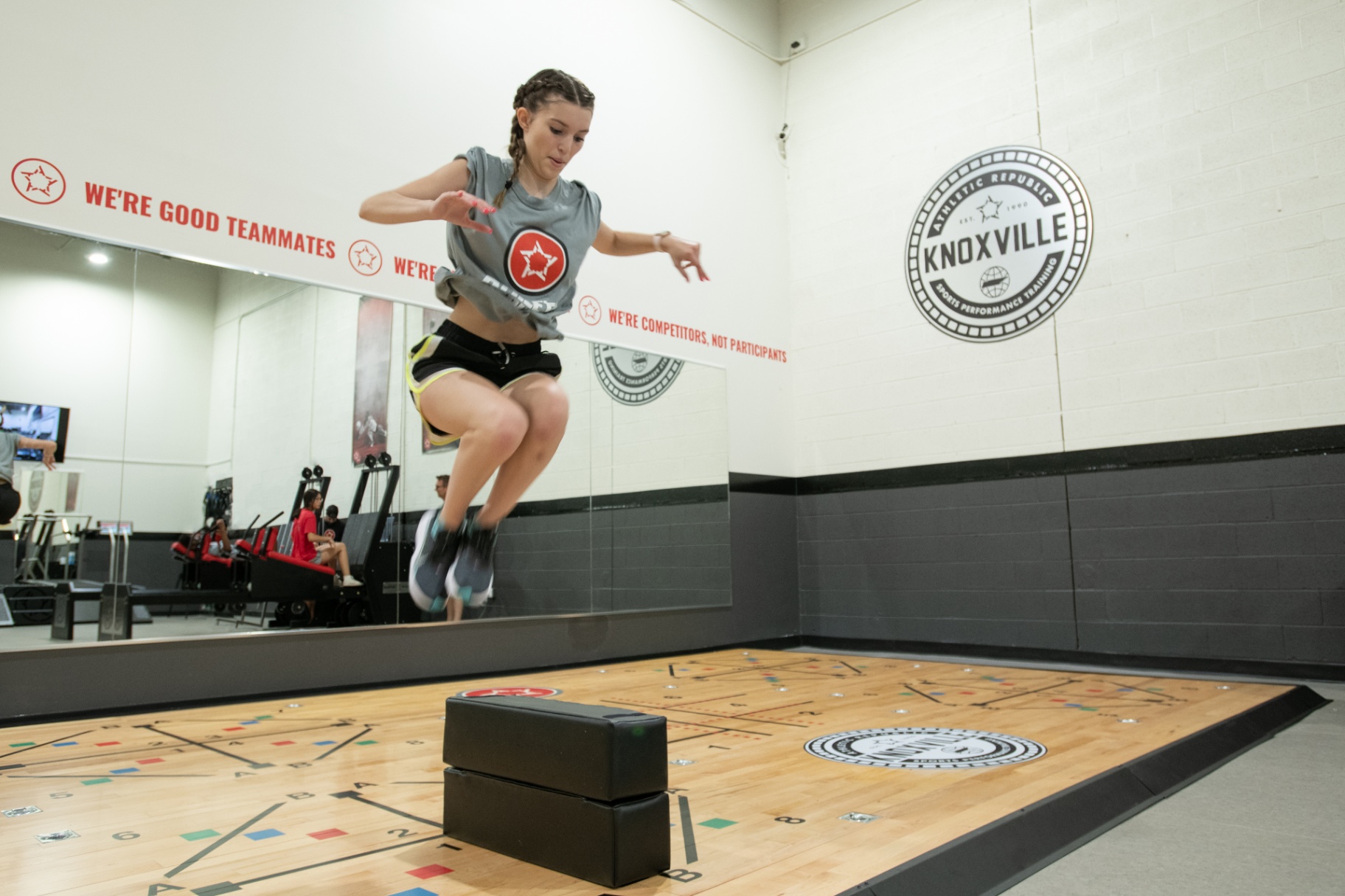
When you jump on our plyo floor, we are looking at your Stretch-Shortening Cycle (SSC). This is the "elastic" component of your muscles and tendons. Think of your muscles like a rubber band. If you stretch a rubber band and immediately let it go, it snaps back with power. If you stretch it, hold it for five seconds, and then let it go, it loses that "snap."
Many athletes spend too much time in the "loading" phase of their jump. They squat down, pause, and then try to jump. This bleeds off all that free elastic energy. On our plyo floor, we train your nervous system to transition from the downward "loading" phase to the upward "exploding" phase in a fraction of a second. This is called minimizing ground contact time, and it’s a hallmark of personalized training at Athletic Republic Knoxville.
Triple Extension: The Power Chain
If you want to maximize force, you have to use every tool in the shed. In physics terms, this means achieving "Triple Extension." This is the simultaneous straightening of your hips, knees, and ankles.
When these three joints fire in perfect synchronization, the power output is staggering. Research has shown that the power generated from a full triple extension is up to six times higher than the power generated by just the ankles alone. This is why we don't focus on "calf raises" to jump higher. We focus on the entire kinetic chain.
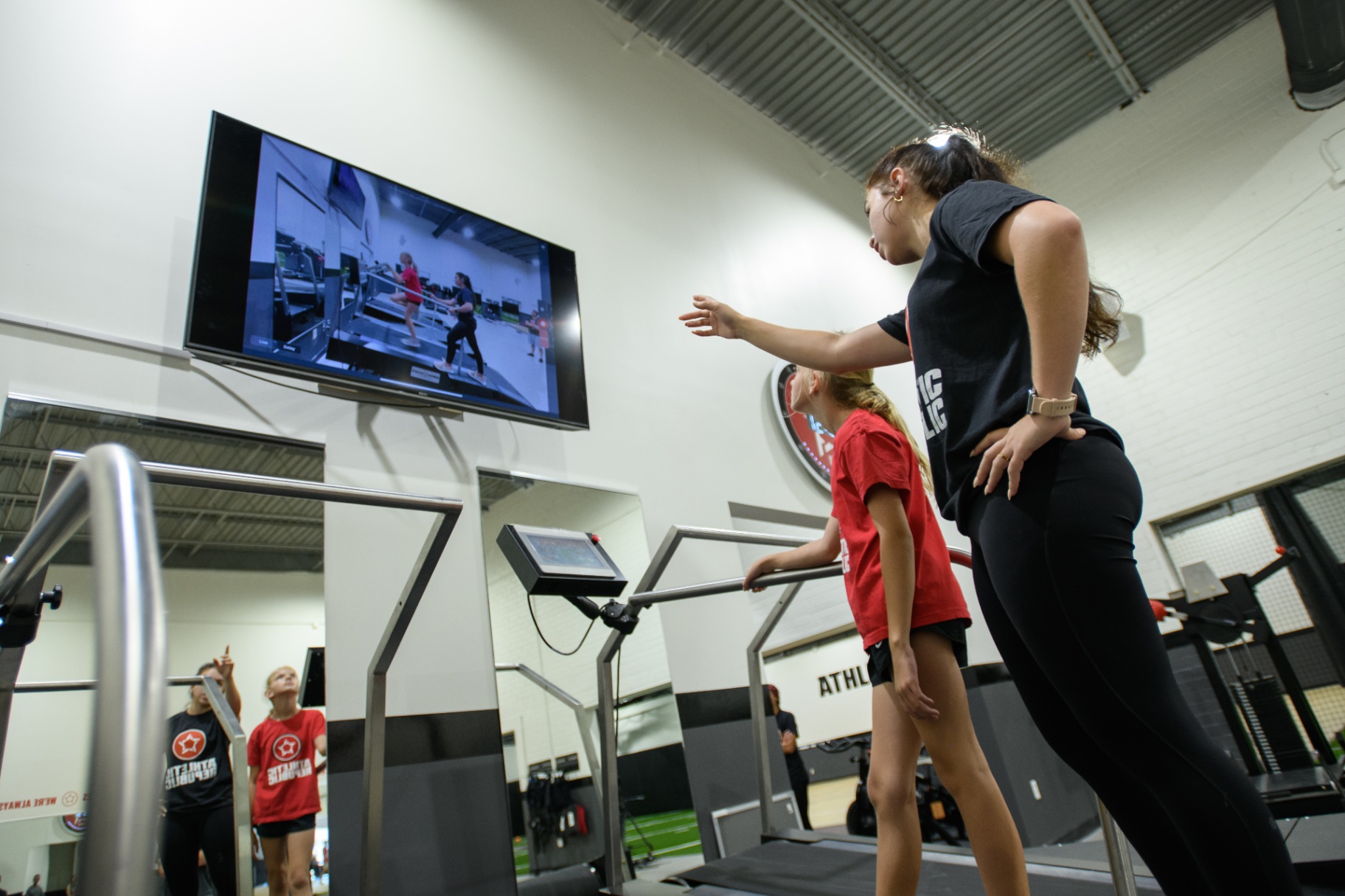
Our trainers at Athletic Republic Knoxville use real-time feedback to ensure that your hips are doing the heavy lifting. The glutes and hamstrings are the powerhouse of the vertical jump. If you aren't fully extending through the hips, you’re leaving inches on the floor.
Don't Forget the Arms (Newton’s Third Law)
It sounds simple, but many athletes treat their arms like they’re just along for the ride. In reality, your arm swing is a critical component of the physics of jumping.
According to Newton’s Third Law, for every action, there is an equal and opposite reaction. When you aggressively swing your arms upward, your body exerts a downward force into the ground. The ground then pushes back with equal force, helping to propel you upward. Furthermore, a strong arm swing shifts your center of gravity higher before your feet even leave the turf. By perfecting the timing of your arm swing, you can add 10% or more to your total vertical height instantly.
Why 18,000 Square Feet Matters
You might wonder why we need such a massive facility. It’s because true sports performance training in Knoxville requires space to move at full speed.
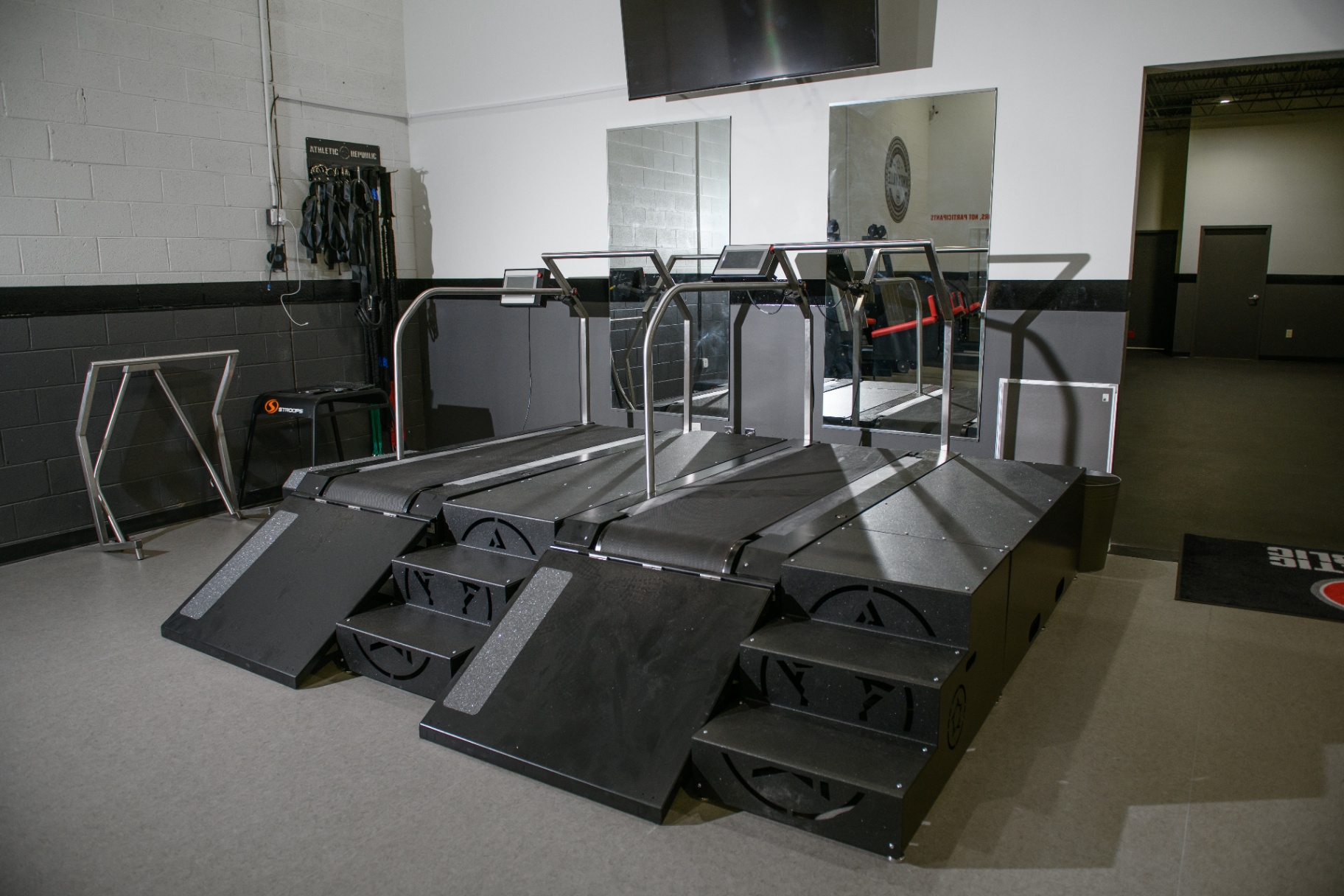
In our 18,000-square-foot facility, we have designated zones for every aspect of the jump. We have the space for long-approach jumps, specialized equipment for eccentric loading, and the room to ensure safety. When you’re training for explosive power, you can’t be cramped in a corner of a traditional "big box" gym. You need clear lanes, high ceilings, and specialized surfaces that protect your joints while you’re pushing your limits.
Youth Training: Starting with the Right Foundation
For our younger athletes, the focus isn't just about jumping high today; it's about building the mechanics that will keep them jumping high for a decade. We avoid high-impact, high-volume repetitions that can lead to "jumper's knee" or other overuse injuries. Instead, we focus on landing mechanics.
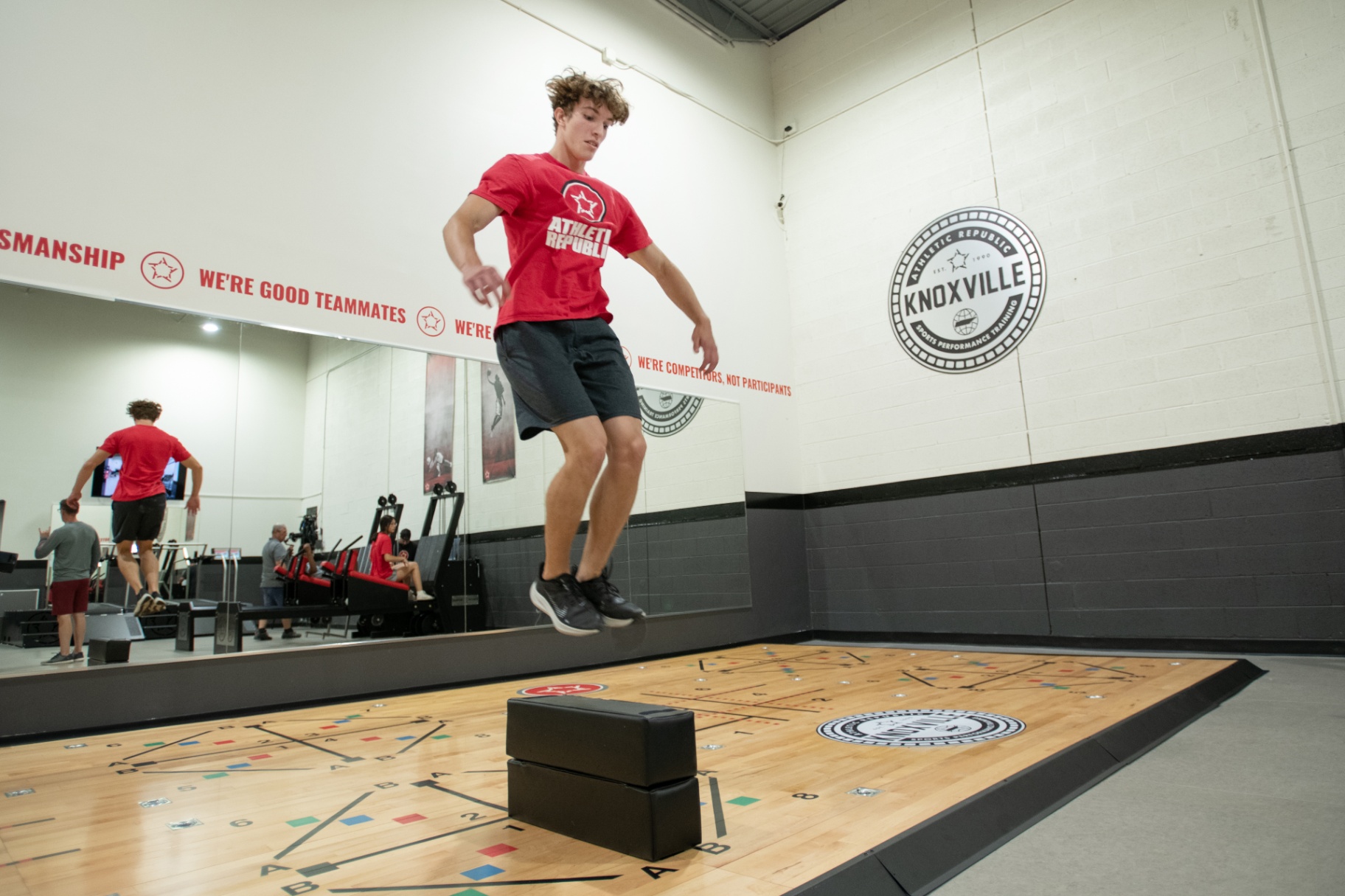
Physics tells us that what goes up must come down. If you can’t absorb the force of your landing, your brain will actually "limit" how high it allows you to jump as a protective mechanism. By teaching youth athletes how to land softly and distribute force through their muscles rather than their joints, we "unlock" their body’s willingness to jump higher. It’s a foundational part of our student-athlete training program.
The "Brake" System: Eccentric Strength
Most people only think about the upward part of the jump (the concentric phase). But the "downward" part (the eccentric phase) is where the energy is stored. Think of it like a car. If you have a Ferrari engine but bicycle brakes, you’re never going to feel comfortable driving at 100 mph.
Your body works the same way. We use specialized training protocols to improve your "eccentric braking" strength. This allows you to descend into your jump quickly and stop that downward momentum instantly, converting it into upward lift. Without strong "brakes," your body will naturally slow down the descent to protect itself, which kills your power.
Why Experience Matters
At Athletic Republic Knoxville, we’ve seen thousands of athletes walk through our doors. We know that every body is different. Some athletes are "quad dominant," while others rely too much on their lower back. Some have great strength but slow "twitch" fiber response.
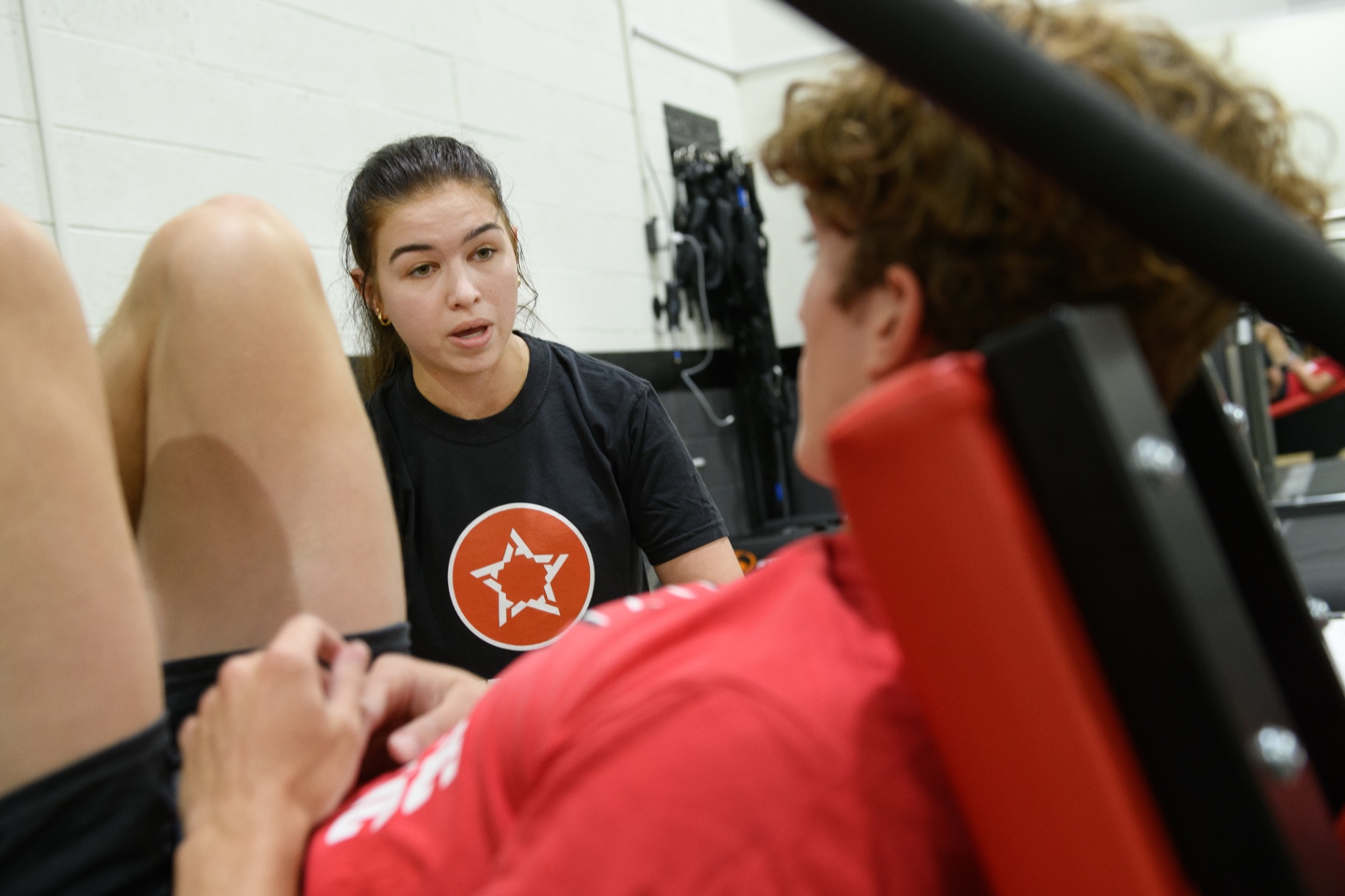
Our trainers act as the bridge between the physics of the movement and the athlete’s performance. We use technology and visual feedback to show you exactly where your energy is leaking. Maybe your knees are caving in (valgus collapse), or maybe you’re jumping forward instead of straight up. Whatever the "leak" is, we find it and fix it. This is why we are widely considered more than just a gym.
Putting It All Together
Increasing your vertical jump isn't a mystery; it’s a mechanical puzzle. By focusing on the strength-to-weight ratio, mastering the triple extension, utilizing the arm swing, and training the stretch-shortening cycle on a professional-grade plyo floor, you can see gains that "more reps" could never provide.
If you’re ready to see what the science of sport can do for your game, come visit us. Let's get you on the floor, analyze your mechanics, and start building a more explosive you. Whether you’re a high school star looking for an edge or an adult athlete trying to stay at the top of your game, the physics are the same: and we have the keys to unlock them.
Ready to take flight? See you at the facility!