If your middle-school athlete wants to get stronger, you may have a very reasonable question: Is strength training safe while they’re still growing?
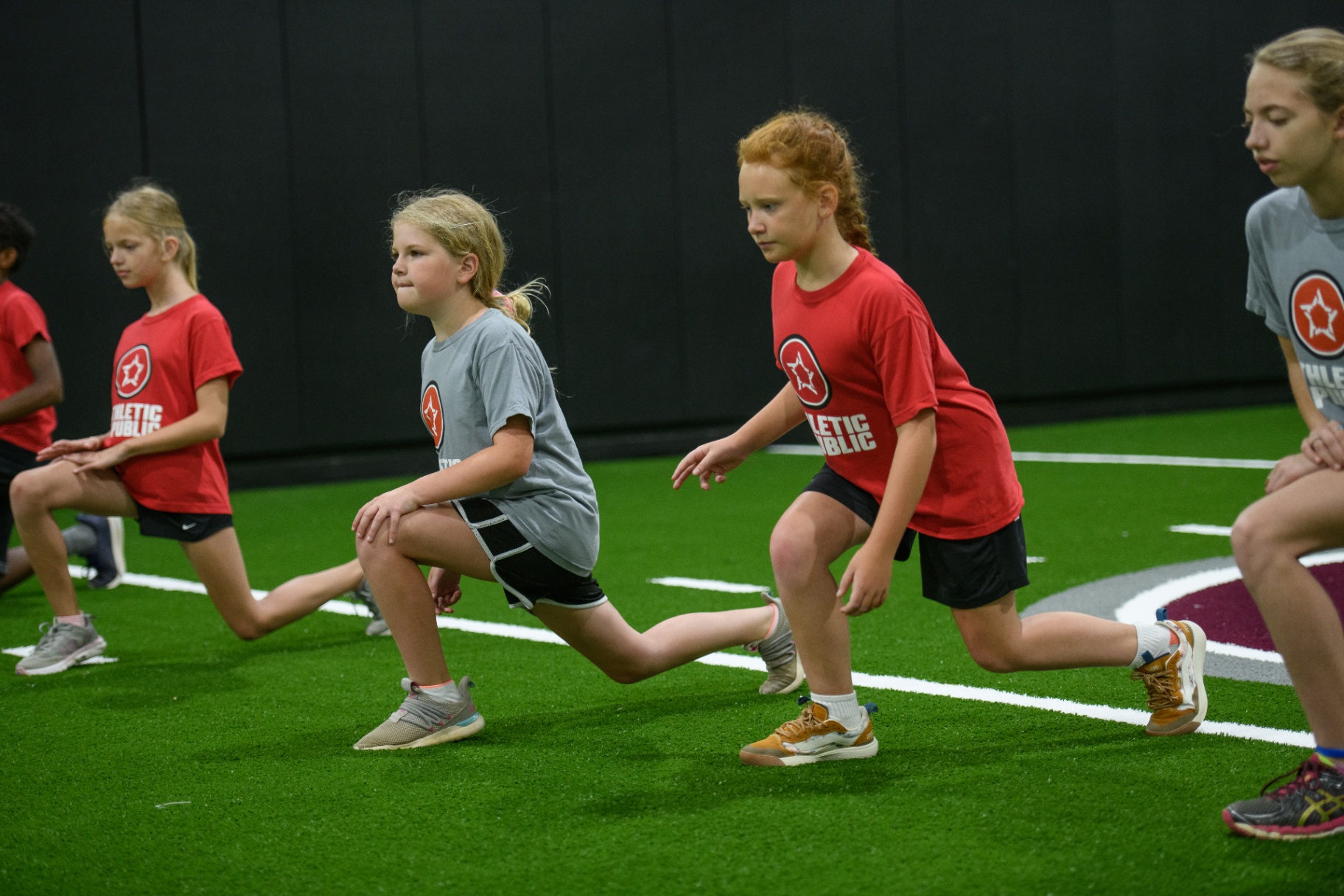
In most cases, yes, when training is appropriate for the athlete’s development, supervised by a qualified coach, and built around good technique rather than heavy lifting. Strength training for young athletes doesn’t have to mean barbells or max-effort workouts. It can start with bodyweight movements, balance, coordination, and learning how to move well.
The key is not simply whether a young athlete trains, but how the training is planned and coached. Here’s what Knoxville parents should know.
Does strength training stunt growth?
This is one of the most common concerns, and the evidence is reassuring. The American Academy of Pediatrics reports that properly designed, supervised resistance training has not been shown to negatively affect children’s growth or growth plates. The National Strength and Conditioning Association also supports youth resistance training when programs are age- and ability-appropriate and properly supervised.
That doesn’t mean every kind of lifting is suitable for every child. Poor technique, unsupervised training, excessive loads, and adding too much too soon can increase injury risk. A growing athlete also has developing muscles, tendons, and bones, so coaching and progression matter.
In other words, being young isn’t by itself a reason to avoid strength training. It is a reason to make sure the training fits the athlete.
What does safe strength training look like?
For a younger athlete, a good program usually begins with foundational movement skills. Coaches may use bodyweight exercises, light resistance, bands, balance work, and controlled drills to help athletes learn how to move with control. The goal is not to see how much weight a child can lift. It’s to build sound habits and gradually develop strength.
A safe, age-appropriate approach should include:
- Instruction before resistance: Athletes learn the movement and practice good form before adding load.
- Gradual progression: Resistance, repetitions, or difficulty increase in small steps, when the athlete can maintain control.
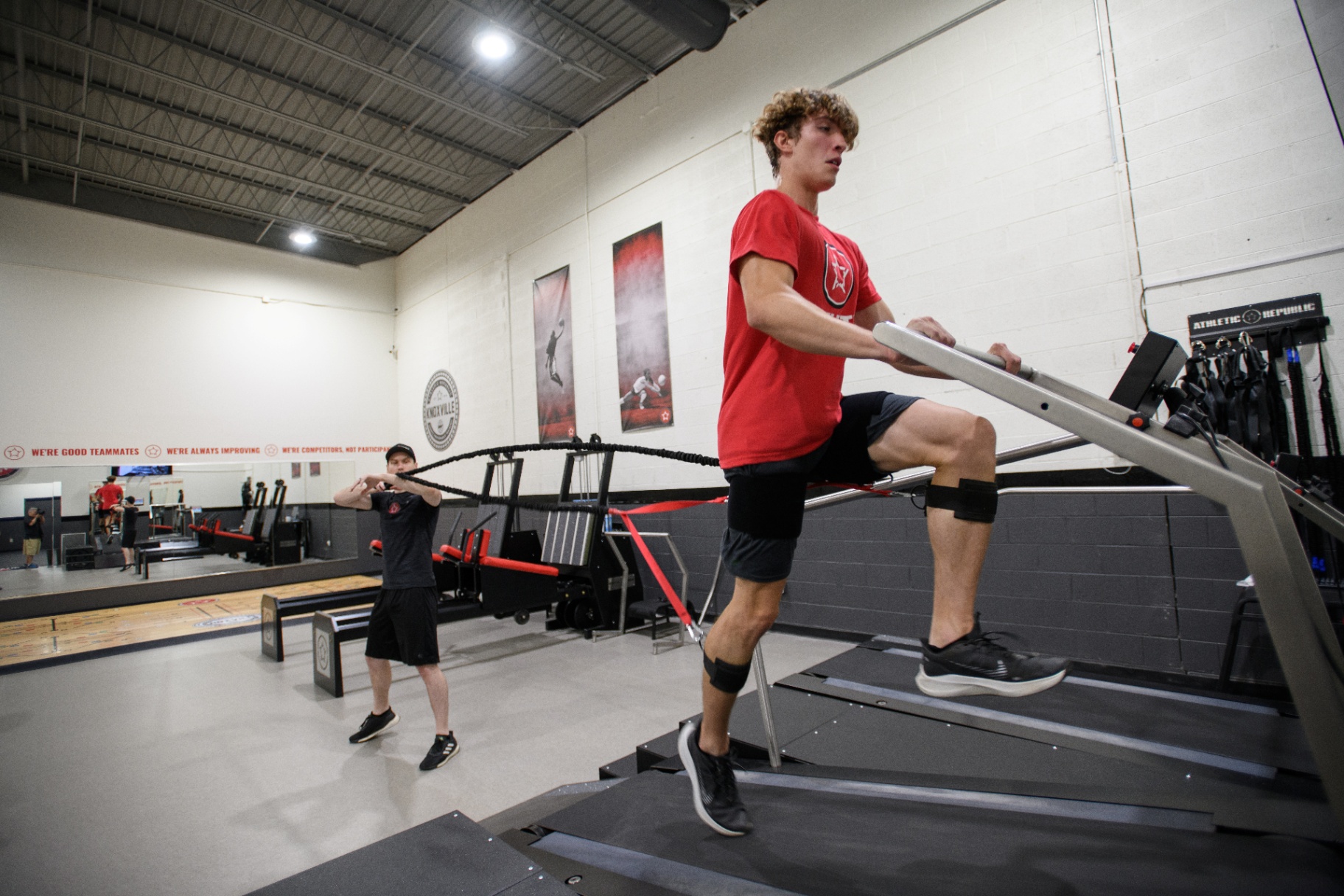
- Close supervision: A coach can demonstrate, observe, correct technique, and adjust exercises to the athlete.
- A variety of movement skills: Training develops strength alongside coordination, balance, mobility, and body awareness.
- Recovery: Training is balanced with rest, sleep, food, hydration, and time away from intense sports activity.
Maximal lifts and lifting to exhaustion aren’t necessary for a young athlete to make progress. In particular, a beginner shouldn’t be pushed to attempt a one-repetition maximum without appropriate expertise and a clear reason to do so. Strong foundations come first.
Is strength training only for older teens?
No single birthday or puberty milestone determines when a child can begin strength training. Readiness depends on the individual. A young athlete should be able to follow coaching instructions, use equipment safely, and focus on controlled movement. If they’re not ready for formal resistance work, they can still benefit from age-appropriate play and foundational movement practice.
For parents, it may help to think of strength as more than lifting weights. It’s the ability to control the body, maintain balance, and apply force safely, whether an athlete is sprinting, changing direction, jumping, or landing. Those skills can be introduced progressively as children develop.
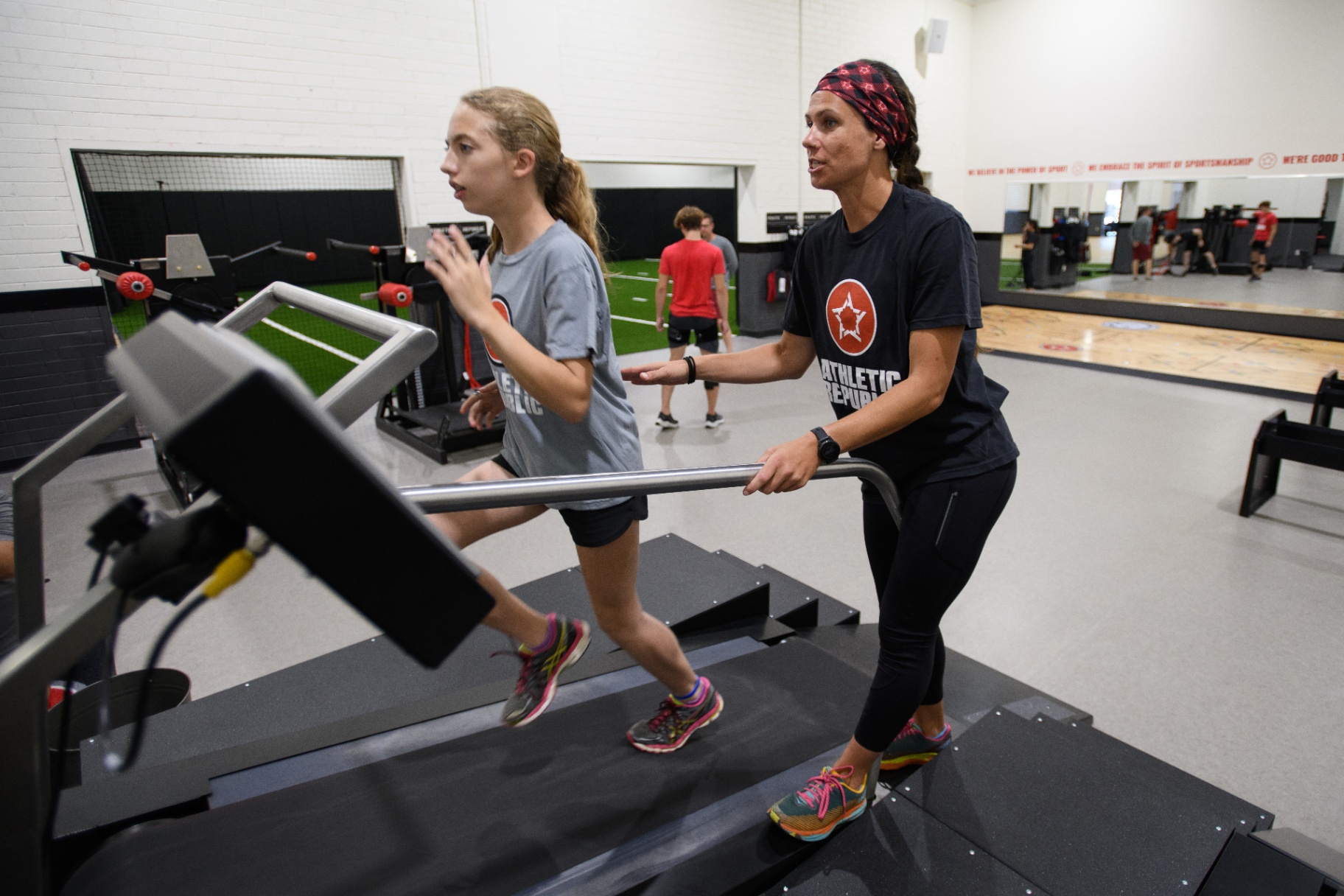
At Athletic Republic Knoxville, the Ignition program for younger athletes emphasizes fundamental movement skills, strength, balance, and body awareness, with attention to joint health and safety. The focus is on development, not rushing a young athlete into an adult-style training routine.
Can strength training help prevent sports injuries?
Well-planned strength and movement training can help athletes develop control and capacity for the demands of their sport. That may support injury prevention, but it cannot promise that an athlete will avoid injury. Sports carry risks, and factors such as practice schedules, playing surfaces, fatigue, technique, and previous injuries also matter.
A balanced training plan should consider the athlete’s total workload, not just the time spent in a training session. Practices, games, tournaments, physical education, and other activities all add up. Regular rest is part of development, not a sign of falling behind. The AAP recommends that young athletes have at least one to two days each week away from competitive athletics, sport-specific training, and practice.

What should parents watch for?
Mild muscle tiredness after a new activity can be normal. Pain that changes how a child moves, persists, worsens, or repeatedly returns deserves attention. Don’t encourage an athlete to “push through” sharp pain or train through an injury without guidance.
Pause training and check in with a healthcare professional when your child has concerning symptoms, a current injury, or a medical condition that may affect exercise. It’s also worth discussing a training plan with your child’s clinician if you have questions about their health or readiness. A coach can adapt exercises, but shouldn’t diagnose an injury or replace medical care.
Before starting a program, ask:
- Who will supervise the session, and what experience do they have with young athletes?
- How are exercises adjusted for different ages, experience levels, and abilities?
- Will the coach teach and check technique before increasing resistance?
- How does the program account for games, practices, and recovery?
- What should my athlete do if something hurts?
Clear answers help you understand how the program supports safe, steady development.
What progress should families realistically expect?
Strength training is not a shortcut to instant speed, a sports scholarship, or a season without injuries. Progress is gradual, and it looks different for every athlete. Early wins may include better movement control, more confidence with basic exercises, improved balance, or a better understanding of warm-ups and recovery.
Those fundamentals can give a young athlete a strong base to build on as they grow. The most useful program is one that keeps the athlete engaged, encourages consistent effort, and adjusts as their needs change, not one that treats every child like an adult competitor.
At Athletic Republic Knoxville, certified coaches use a personalized, developmentally appropriate approach to help young athletes build athletic skills and confidence. The student-athlete training program offers additional information for families exploring training for older athletes.
The bottom line for Knoxville parents
Strength training can be safe for growing athletes when it is properly coached, age-appropriate, and progressed gradually. Young athletes don’t need to wait until they’re fully grown to learn foundational strength and movement skills, but they do need sensible programming, attentive supervision, and enough recovery.
If you’d like to see whether a structured training environment feels right for your athlete, learn more about student-athlete training or schedule a free trial class with Athletic Republic Knoxville.
This article is for general educational purposes and isn’t a substitute for advice from your child’s healthcare professional.