Sitting on the bench is frustrating: especially when you know you can contribute.
You may already understand your team's plays, work hard in practice, and bring a great attitude every day. But when a coach is deciding between two athletes with similar skill levels, one quality often becomes the tiebreaker: athleticism.
Who gets to the ball first? Who can create separation? Who can recover after a mistake? Who can stop, change direction, and accelerate again without losing control?
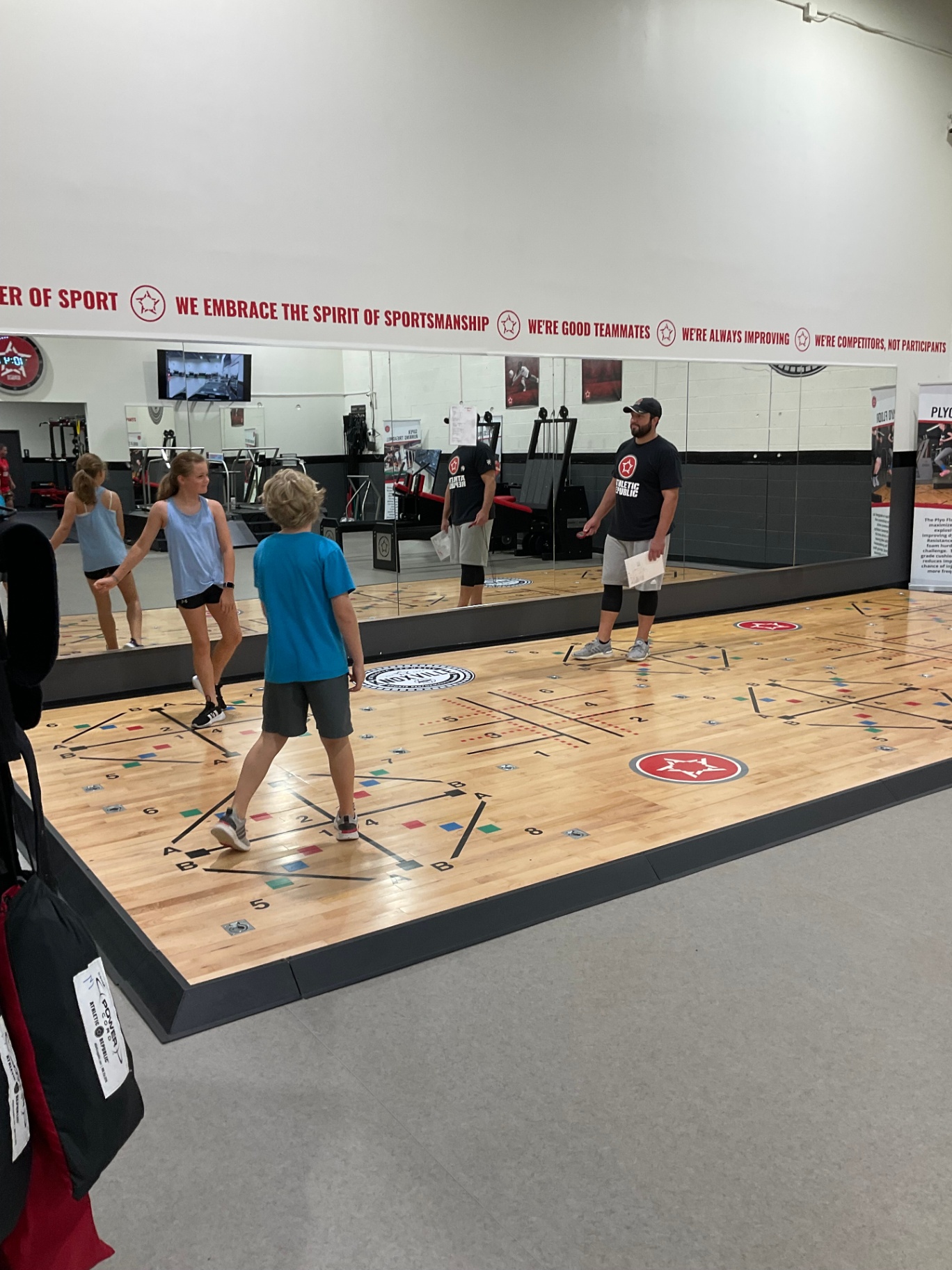
That is where speed, agility, power, and movement efficiency can change the conversation. The Acceleration Program at Athletic Republic Knoxville is designed to help athletes develop those qualities through science-based protocols, certified coaching, and measurable progress.
The goal is not simply to run faster in a workout. The goal is to become the athlete your coach trusts when the game is on the line.
Why Coaches Notice Faster, More Athletic Players
Coaches evaluate much more than a player's skill with a ball, puck, or bat. They also look for athletes who can consistently create advantages during competition.
A faster first step can help a soccer player win a 50-50 ball. Better lateral movement can help a basketball player stay in front of an opponent. Improved acceleration can help a baseball or softball player get down the line faster. Stronger deceleration can help a football player make a sharp cut without losing balance.
Speed does not replace sport-specific skill: but it can make those skills more effective.
When two athletes are competing for the same starting spot, the athlete who moves efficiently may offer a coach more options. That athlete may be able to cover more ground, recover more quickly, create space, close space, and respond to changing plays.
That is why speed can become the tiebreaker.
The good news is that speed and athleticism are not reserved for athletes who were naturally fast at age 10. With the right instruction and consistent practice, athletes can improve how they apply force, position their bodies, control their momentum, and react under pressure.
1. Build a Better First Step
Many game-changing moments are decided in the first few steps: not during a full sprint.
The first step helps an athlete:
- Explode out of a stance
- Beat an opponent to open space
- Close down a passing lane
- Start a chase or recovery run
- Reach top speed more quickly
- Create separation after a cut
Acceleration mechanics are about more than simply trying harder. Athletes learn how to project their body forward, maintain a productive body angle, drive their knees, use their arms, and apply force into the ground.
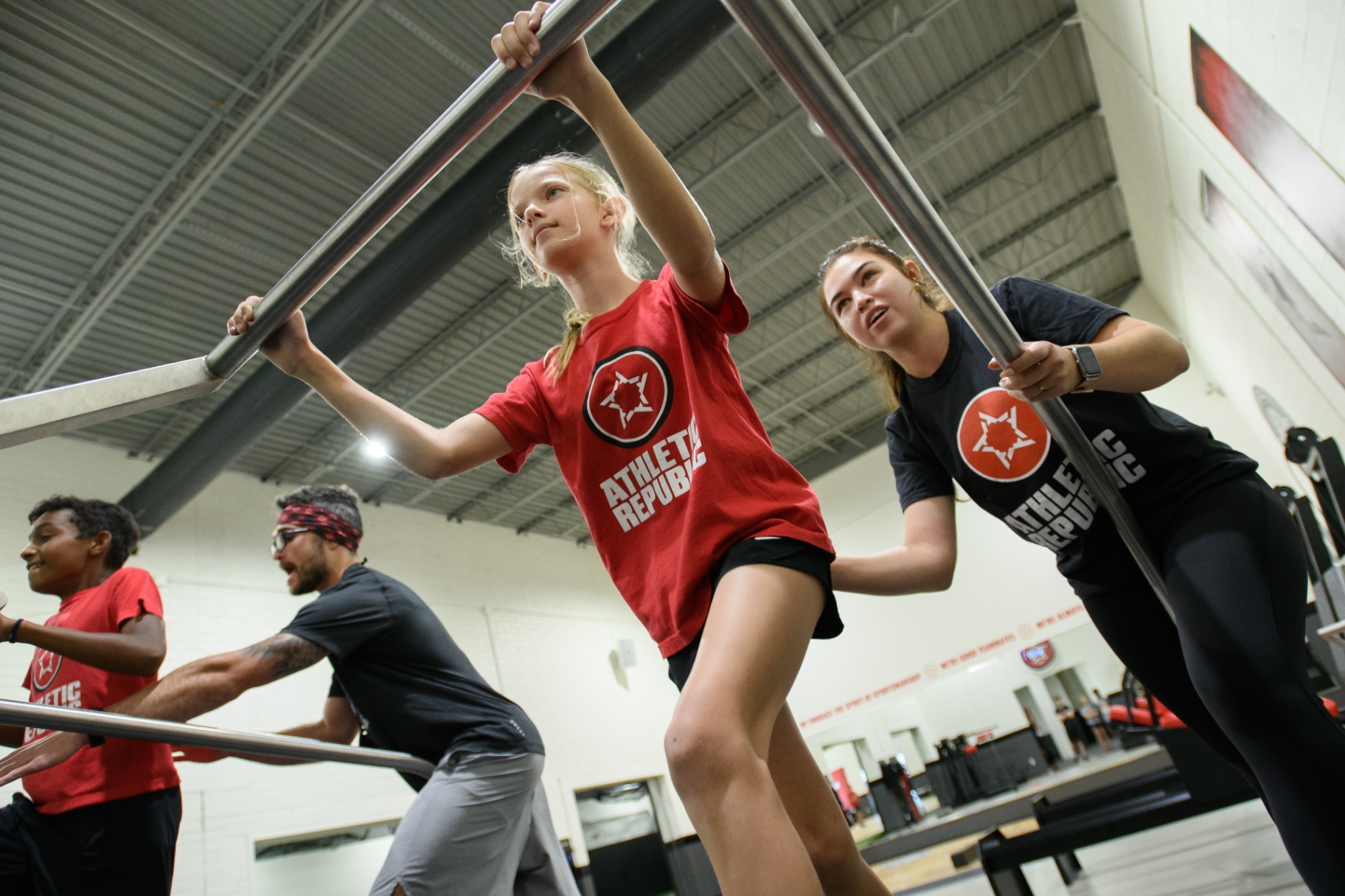
At Athletic Republic Knoxville, the Acceleration Program uses trainer feedback and specialized equipment to help athletes improve running mechanics, stride length, stride frequency, knee drive, hip position, and arm action. The focus is on making movement more fluid, powerful, and efficient.
That matters for athletes who feel “slow” even though they are working hard. Sometimes the biggest opportunity is not producing more effort: it is learning how to direct that effort more effectively.

2. Learn to Accelerate, Decelerate, and Change Direction
Game speed is rarely just straight-line speed.
Athletes constantly have to stop, shuffle, turn, cut, and accelerate in a new direction. The ability to change direction quickly depends on more than quick feet. It requires body control, balance, coordination, strength, and the ability to manage momentum.
Think of it this way:
- Acceleration is the engine.
- Deceleration is the brakes.
- Agility is how well you use both.
An athlete who can sprint quickly but cannot slow down under control may struggle to make sharp cuts. An athlete who can stop but cannot re-accelerate may lose the advantage after the change of direction.
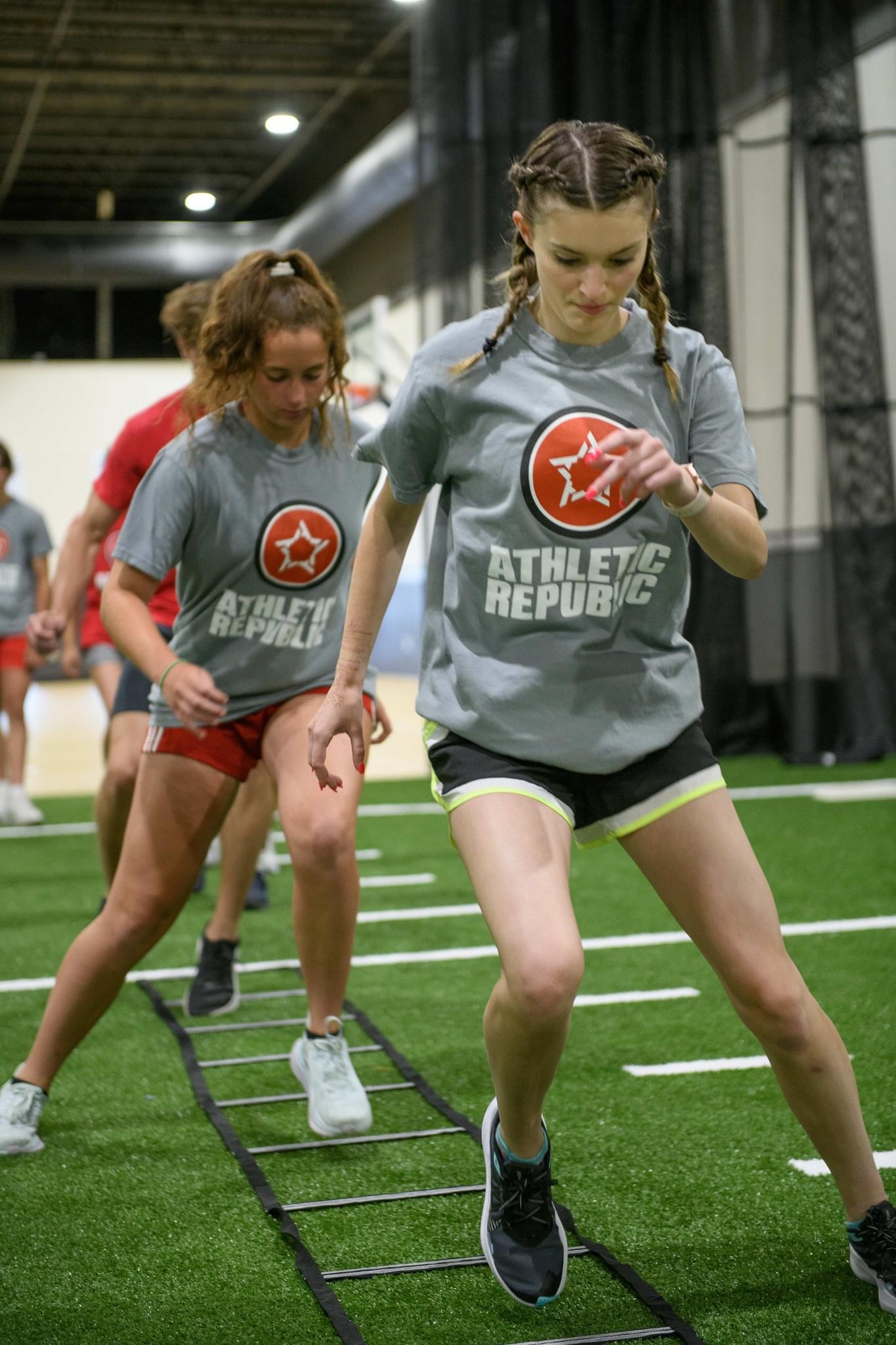
The Acceleration Program helps athletes train both sides of movement. Plyometrics and agility work develop coordination, foot speed, stability, and body awareness. Strength training supports the muscles and joints involved in braking and re-accelerating. Multidirectional drills help athletes move with control outside of a straight line.
Certified trainers can also coach the details that are easy to miss: lowering the center of gravity, controlling the hips and knees, keeping the chest and trunk stable, and planting in a position that allows the athlete to push into the next movement.
These details can show up immediately in competition. A cleaner cut may help an athlete separate from a defender. A stronger stop may help a player stay balanced. A more efficient re-acceleration may be the difference between arriving first and arriving late.
3. Develop Power and Explosiveness
Speed is closely connected to power: the ability to produce force quickly.
An athlete may be strong in a traditional weight-room setting, but sport requires that strength to be used rapidly. Jumping, sprinting, cutting, and reacting all require an athlete to generate force in a short amount of time.
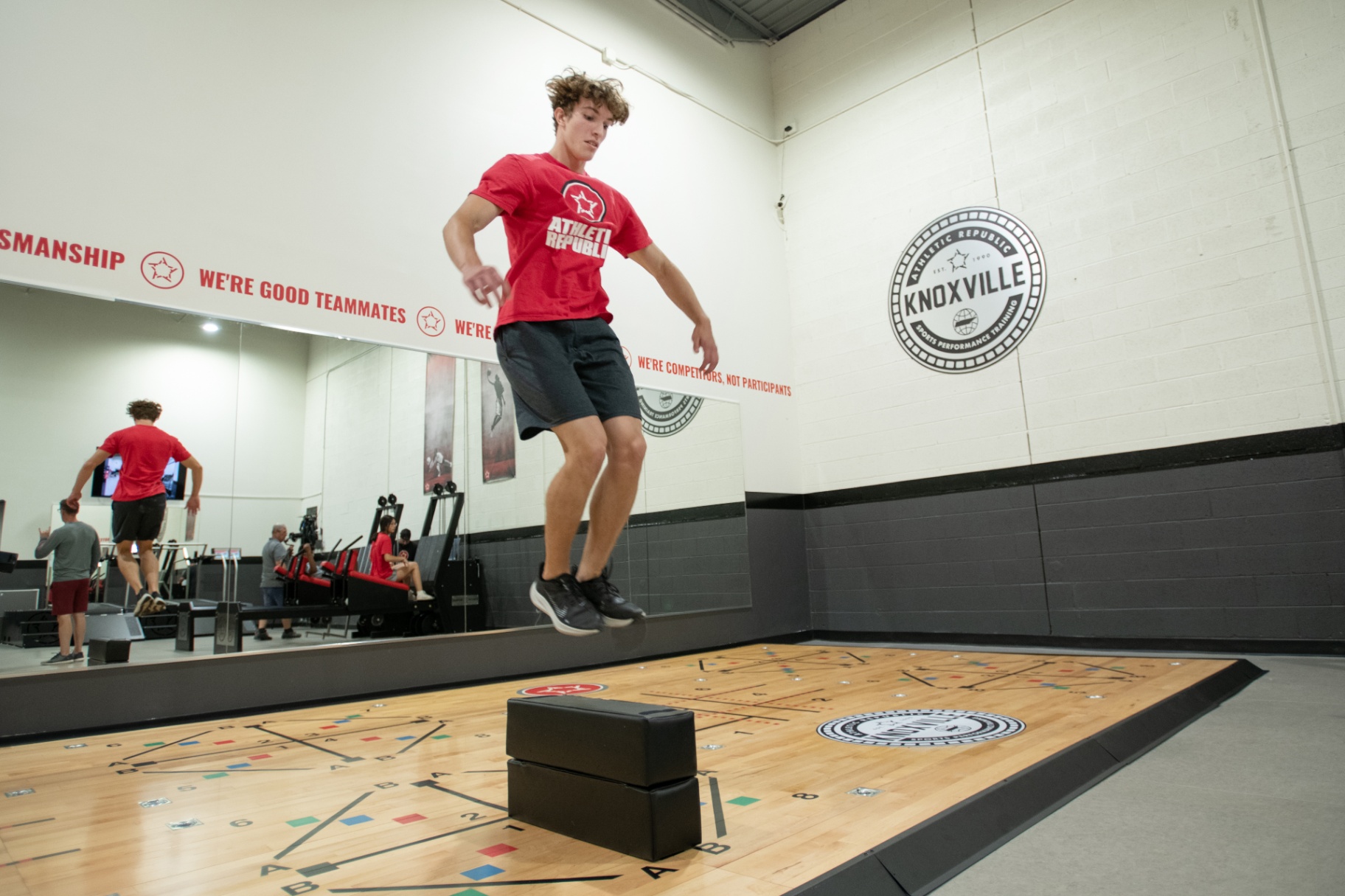
That is why the Acceleration Program combines speed training with plyometrics and strength work. Box jumps, jump drills, and other explosive movements can help athletes improve how quickly they produce force. Strength training helps build the foundation needed for more powerful movement.
Training is also personalized. An athlete who needs more lower-body strength may have a different focus than an athlete who needs better stability, coordination, or movement symmetry. Athletic Republic Knoxville trainers use science-based protocols to determine appropriate volume, intensity, and progression rather than giving every athlete the exact same workout.
The result is training that meets athletes where they are while continuing to challenge them.
4. Start With a Baseline and Track Real Progress
One of the most motivating parts of structured training is being able to see improvement.
At Athletic Republic Knoxville, athletes are tested at the beginning of a training program to help assess areas such as symmetry, movement, and performance. Testing is repeated later to measure results and identify continued opportunities for development.
That creates a clearer picture than simply asking, “Do I feel faster?”
Progress may show up as:
- A quicker sprint time
- A more explosive jump
- Better balance during a single-leg movement
- Improved change-of-direction performance
- More efficient running mechanics
- Better control during deceleration
- Increased confidence during sport practice
Numbers do not tell the entire story, but they give athletes and parents useful feedback. They help trainers adjust the program and help athletes recognize that their work is producing results.
For a player trying to earn a starting spot, measurable progress can also create confidence. Instead of hoping a coach notices improvement, the athlete can use that improvement as motivation to keep building.
5. Turn Consistent Training Into More Playing Time
There is no shortcut around consistency. A single great workout will not transform an athlete overnight. But repeated, focused work can build qualities that coaches see over time.
Here are a few ways athletes can turn training into a stronger opportunity to earn playing time:
Show up consistently
Speed and movement skills improve through repetition. Follow the schedule, complete the work, and give your body time to adapt.
Ask for coaching
Do not be afraid to ask, “What should I improve?” or “What can I do to earn more trust?” Then take that feedback seriously and apply it.
Bring training habits to practice
Sprint with intent during drills. Finish plays. Work on your first step. Focus on stopping under control. Your training should become visible in the way you practice.
Compete in the details
Coaches notice athletes who consistently win small moments: getting into position quickly, recovering after a mistake, communicating, hustling back, and staying engaged when they are not the focus of the drill.
Take care of recovery
Better performance requires more than hard work. Sleep, hydration, nutrition, mobility, and rest all help you bring quality effort to training and practice.
Be patient, but stay accountable
Progress may not happen on the exact timeline you want. Stay focused on what you can control: your preparation, your attitude, your effort, and your consistency.
Train for the Athlete You Want to Become
The path from the bench to the starting lineup is different for every athlete. Some players need a faster first step. Others need better change-of-direction ability, more explosiveness, stronger movement mechanics, or greater confidence.
Athletic Republic Knoxville’s Acceleration Program is built to address those needs with personalized coaching, science-based protocols, certified trainers, and an 18,000-square-foot facility designed for athletic development. Athletes train in a supportive environment where progress is measured, movement is coached, and every session has a purpose.
You do not have to wait for your coach to tell you that you are ready.
Start building the speed, power, agility, and confidence that can help you compete for your opportunity.
Book a free workout with Athletic Republic Knoxville and take the first step toward earning more trust, more confidence, and: ultimately: more time on the field or court.