If you’re an athlete who spends more time on the bench than you want, it’s easy to feel stuck.
You may know you can contribute. You may work hard at practice. You may be waiting for a chance to show your coach what you can really do. But when the competition is close, small differences in speed, power, balance, and movement can determine who gets more minutes.
That’s where the right training environment can make a difference.
At Athletic Republic Knoxville, the Acceleration Program gives youth, high school, college, and serious athletes a focused place to build the physical qualities that translate to competition. Inside our 18,000-square-foot facility, athletes train through science-based protocols designed to improve athleticism: not simply exhaust them.
The goal is not to promise a starting spot overnight. The goal is to help athletes become more prepared, more efficient, and more confident when their opportunity arrives.
More Than a Big Gym: A Facility Built Around Performance
Walking into Athletic Republic Knoxville, you’ll notice that the space is organized with purpose.
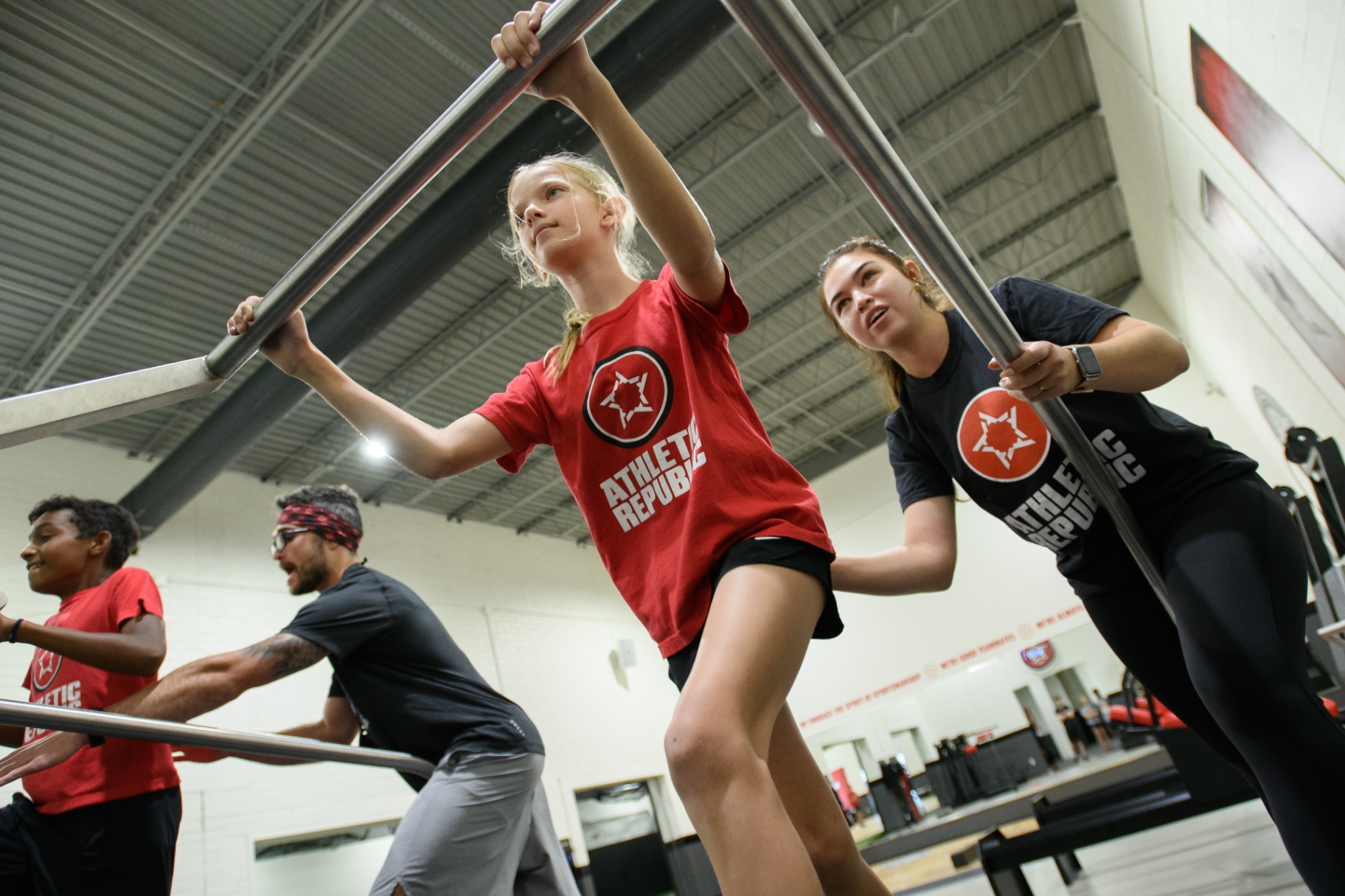
There are turf areas for acceleration and agility work, specialized floors for movement training, plyometric stations for explosive power, strength equipment, mirrors, video feedback tools, and high-speed treadmills. Each area supports a different part of athletic development.
That matters because earning more playing time usually requires more than improving one skill.
A soccer player may need to accelerate repeatedly, cut under control, and stay powerful late in a match. A basketball player may need to stop, change direction, jump, and react quickly in traffic. A baseball or softball player may need stronger lower-body drive, better rotational control, and improved explosiveness.
The Acceleration Program at Athletic Republic Knoxville brings these qualities together in a structured, trainer-led format.
Instead of doing random drills and hoping they carry over, athletes work through progressions that connect movement quality to performance.
Step One: Find the Athlete’s Starting Point
Before athletes can improve, they need to understand where they are starting.
Athletic Republic Knoxville uses testing and observation to identify areas such as movement efficiency, power, coordination, balance, and potential asymmetries. Athletes are assessed at the beginning of a training program and again later to measure progress.
For an athlete who is sitting the bench, this can be especially valuable. “Get faster” is a common goal, but it is not specific enough to guide effective training.
The better questions are:
- Is the athlete losing power during the first few steps?
- Is one side producing more force than the other?
- Does the athlete struggle to control a landing?
- Is poor body position slowing down cuts?
- Does technique break down when fatigue sets in?
- Is the athlete strong enough to produce power quickly?
These details help trainers create a more personalized path forward. An athlete does not need to train harder just for the sake of training harder. They need to train in a way that addresses the limitations holding them back.
Step Two: Turn Strength Into Usable Power
Strength is important, but sports are not strength contests.
Athletes must be able to produce force quickly and direct it in the right direction. That is power: and it is a major focus of Acceleration training.
Plyometric exercises, jumps, landing drills, and strength work help athletes learn to apply force efficiently. The focus is not simply on jumping higher or lifting more. It is on improving how the body coordinates movement under speed and pressure.
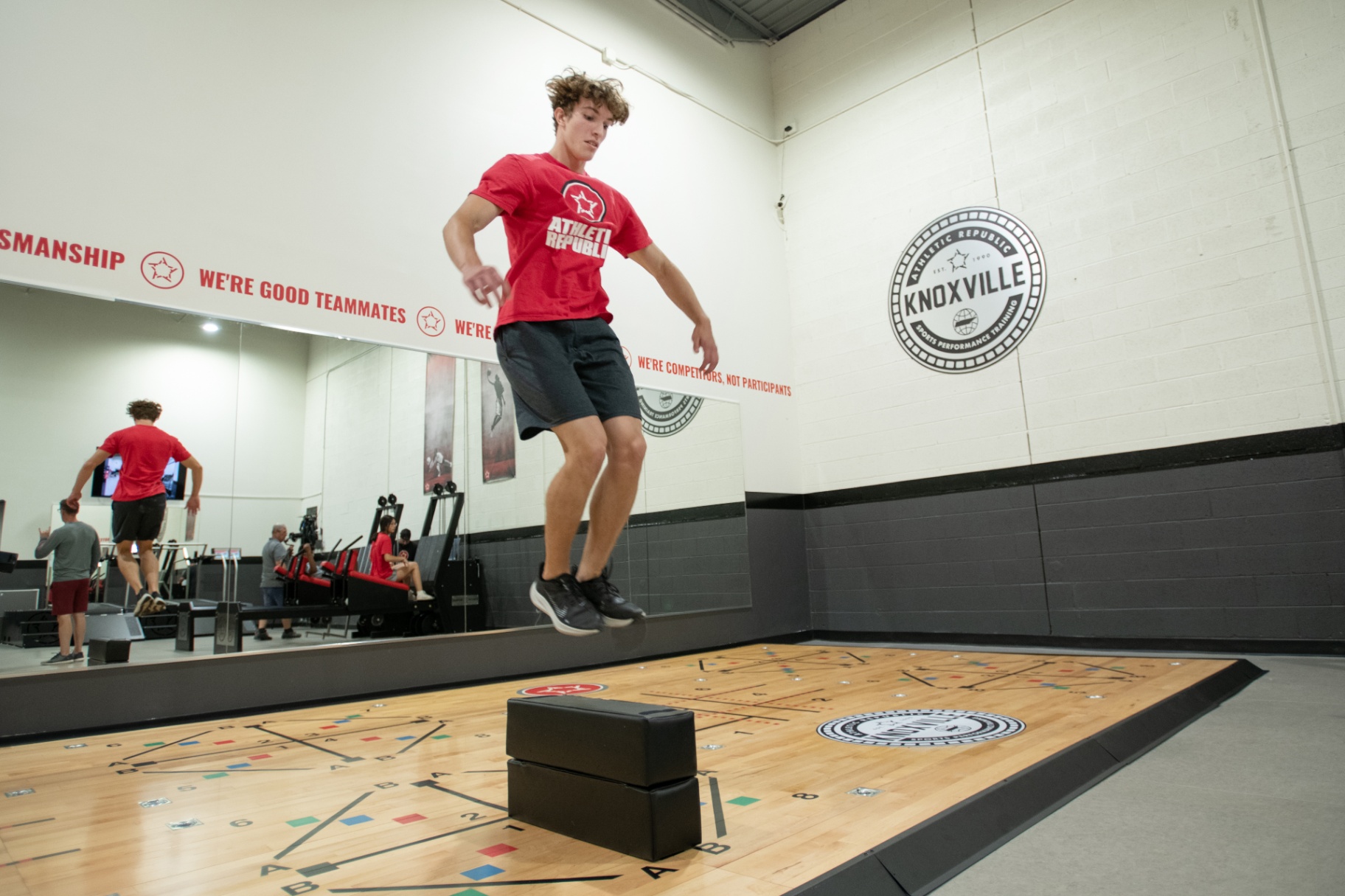
A box jump, for example, can challenge an athlete’s ability to load, explode, coordinate the upper and lower body, and land with control. Those same qualities can show up when an athlete:
- Jumps for a rebound
- Drives through contact
- Pushes off to chase a loose ball
- Explodes out of a stance
- Changes direction to create separation
- Repeats powerful efforts late in a game
Trainers also pay attention to landing mechanics and stability. Producing power is only part of the equation. Athletes need to absorb force and maintain control, too.
That combination: explosiveness plus control: can help an athlete move with more confidence and reduce unnecessary stress on the body.
Step Three: Improve Running Mechanics With Real Feedback
Many athletes run often without ever being taught how to run efficiently.
Arm position, posture, knee drive, hip position, stride frequency, and foot placement all affect speed. Small technical issues can make an athlete work harder without moving faster.
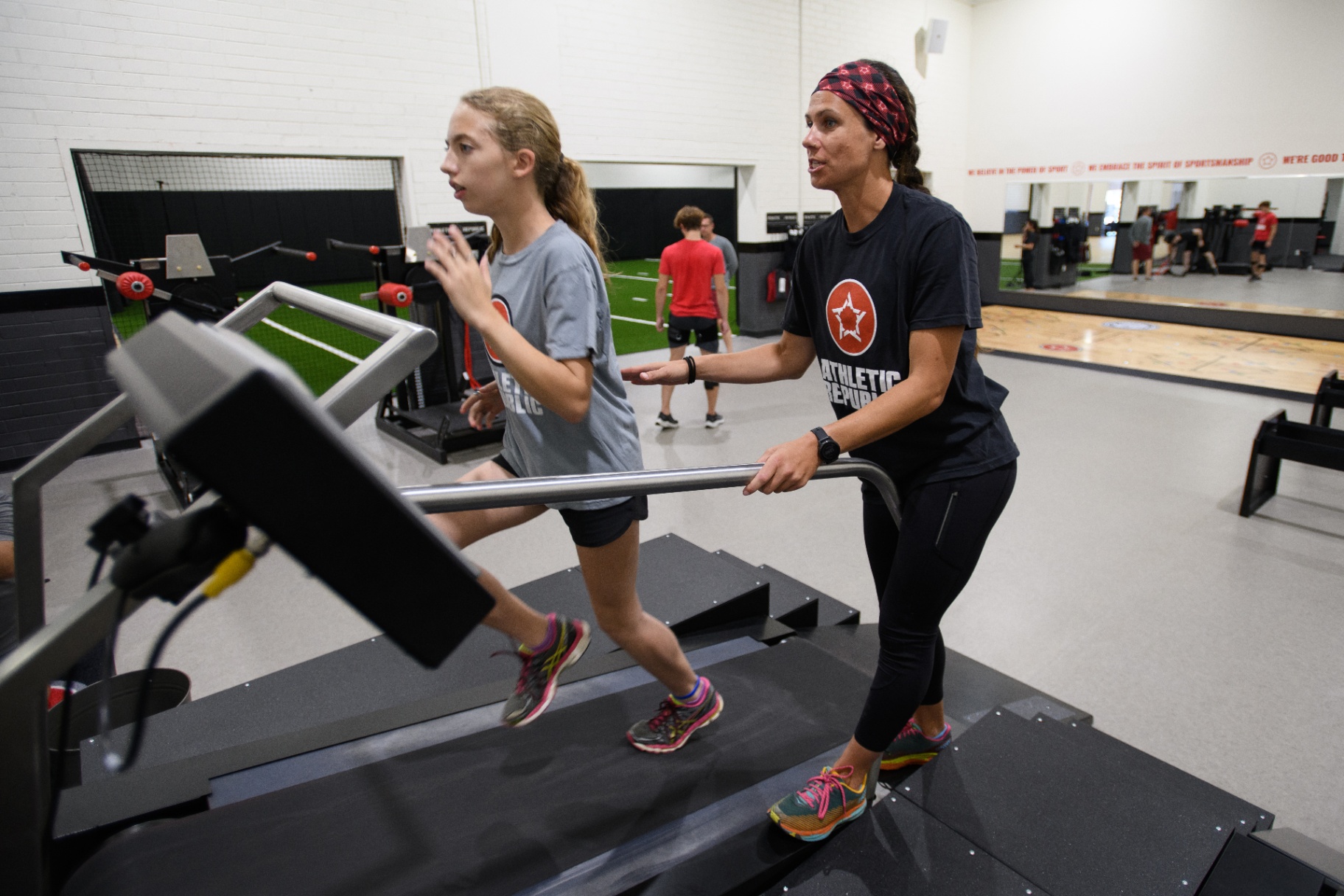
Athletic Republic Knoxville’s high-speed treadmills give trainers a controlled environment to work on running mechanics and speed development. Athletes can focus on specific changes while receiving immediate coaching and visual feedback.
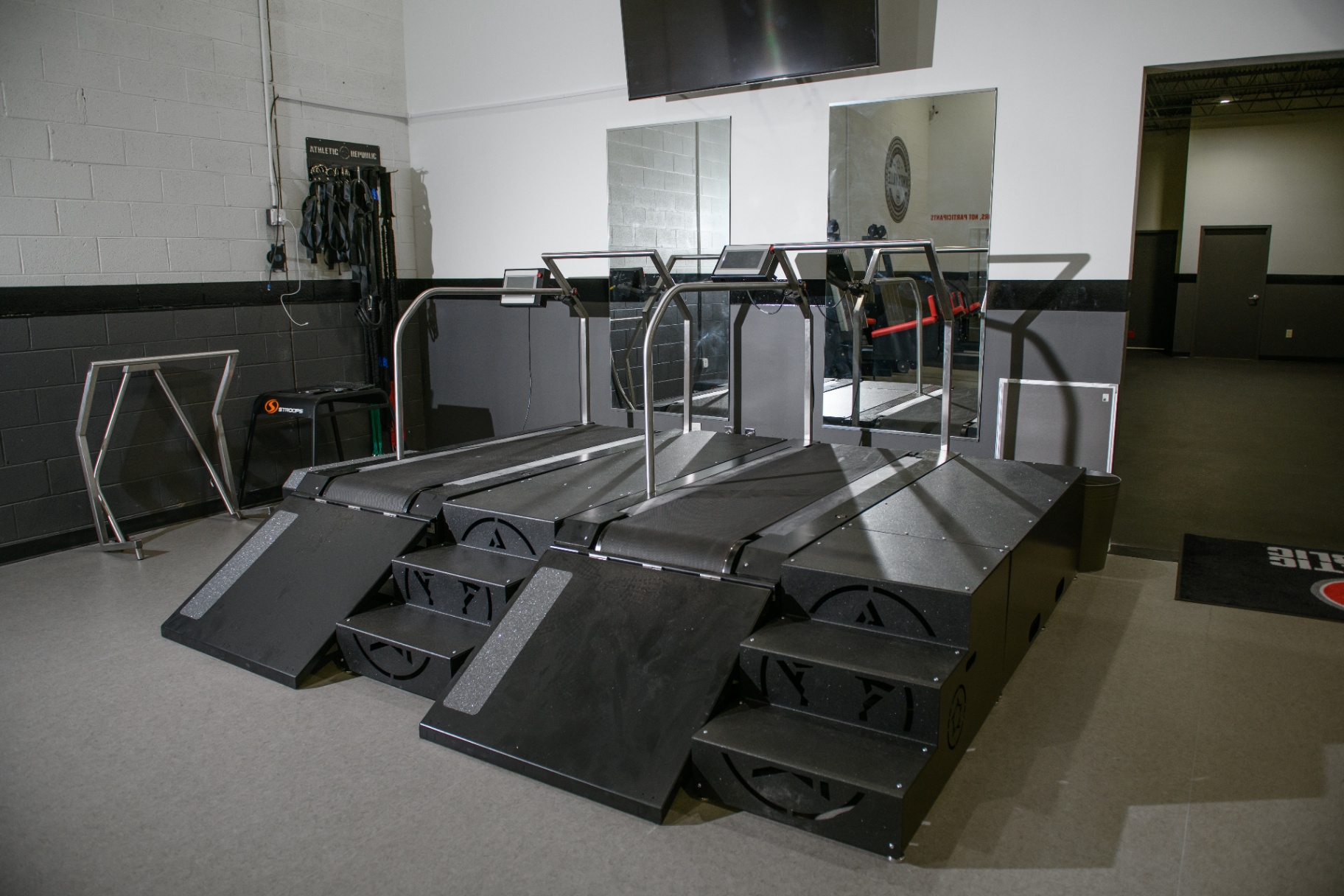
This type of training is different from simply running laps or adding conditioning volume. The purpose is to help the nervous system practice more efficient movement patterns.
Over time, that can help an athlete:
- Apply force more effectively
- Maintain better posture while sprinting
- Improve stride rhythm
- Coordinate arm action and leg drive
- Reach higher speeds with less wasted motion
- Repeat quality efforts during competition
For parents, this science-based approach offers something important: a clearer understanding of what training is targeting and why it matters.
For athletes, it means every sprint has a purpose.
Step Four: Build the Ability to Move in Every Direction
Starting spots are rarely earned by straight-line speed alone.
Athletes must also stop, cut, shuffle, rotate, react, and re-accelerate. They need to control their center of gravity while moving at game speed and under pressure.
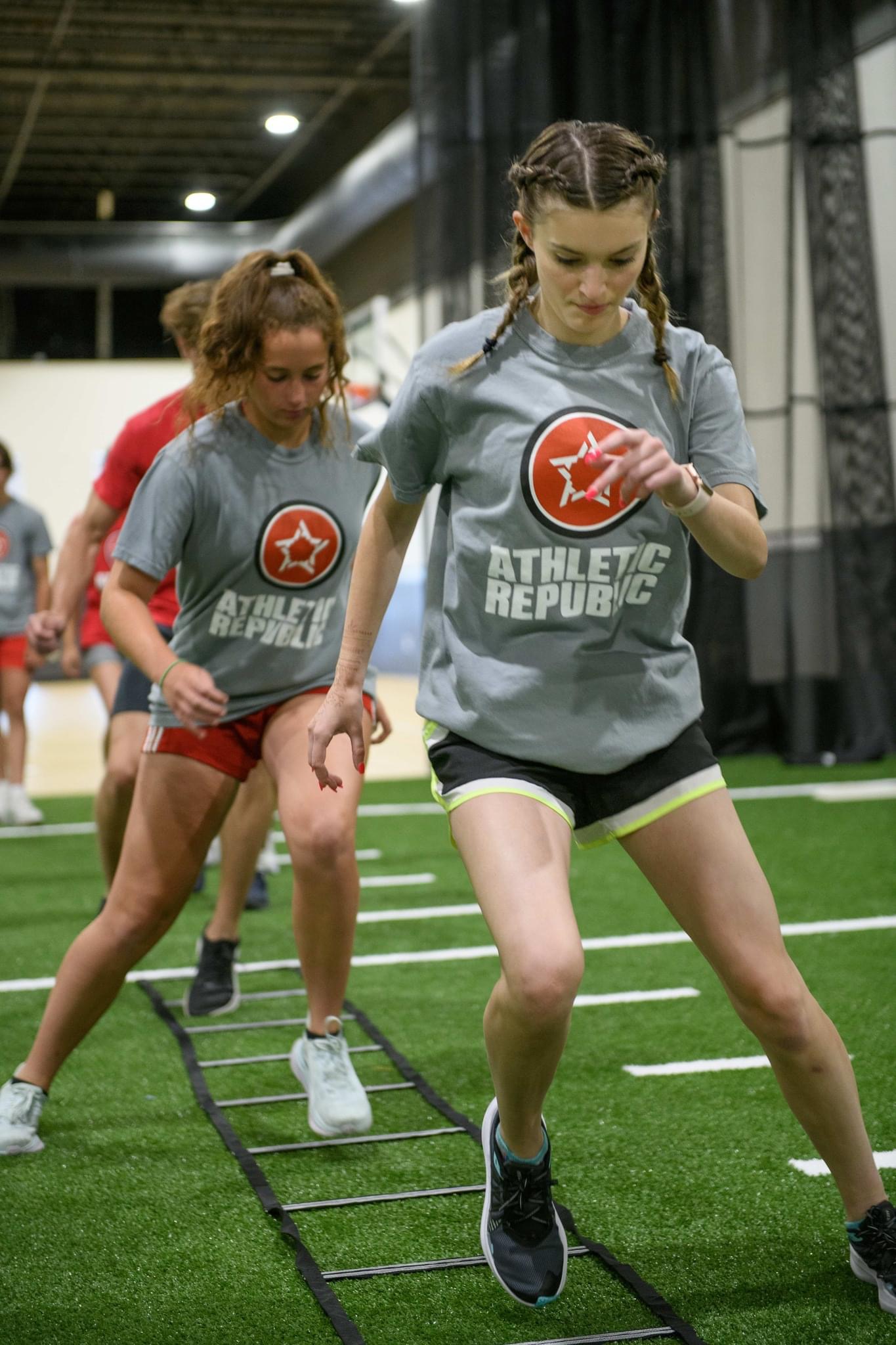
That is why Acceleration training includes multidirectional movement, agility, coordination, and dynamic stability. The marked training floors and turf areas inside the facility give athletes room to practice these skills with clear movement targets.

The training may look simple at first: stepping patterns, lateral movements, high knees, controlled deceleration, or changes of direction. But the details matter.
A trainer can help an athlete learn to:
- Lower the hips before changing direction
- Plant the foot in a stronger position
- Keep the chest and eyes controlled
- Avoid unnecessary extra steps
- Re-accelerate efficiently after a cut
- Stay balanced while reacting to a cue
These improvements can transfer to the moments coaches notice most: recovering defensively, closing space, creating separation, getting to a ball, or staying engaged through the end of a play.
The Science Is in the Progression
The most effective performance training is not a collection of exhausting exercises. It is a progression.
Athletic Republic Knoxville’s protocols are built around training principles that consider biomechanics, nervous-system demands, energy systems, volume, intensity, recovery, and injury risk. The work is adjusted to the athlete rather than treating every person as if they need the same program.
That is especially important for developing athletes. A middle school athlete, a varsity starter, and a college competitor may all want to get faster, but they do not need identical training.
A qualified trainer can modify drills, resistance, speed, complexity, and workload based on the athlete’s age, experience, sport, goals, and current ability.
The result is a training environment that is challenging without being random: and supportive without lowering expectations.
What Athletes Bring Back to Their Team
The biggest changes are not always found on a testing sheet.
Athletes may begin to feel more coordinated when they move. They may trust their ability to make a cut, win a race to space, or stay balanced through contact. They may recover more confidently after a mistake instead of disappearing from the play.
Those changes matter because confidence is often built from preparation.
When an athlete knows they have worked on their speed, power, agility, and conditioning consistently, they can step into practice with a different mindset. They are not waiting for someone to give them confidence. They are building it through measurable work.
And when the opportunity for more playing time comes, preparation gives them a better chance to take advantage of it.
Starting Spots Are Earned One Training Session at a Time
There is no shortcut around consistency. One workout will not transform an athlete, and no training program can guarantee a coach’s decision.
But athletes can control how prepared they are.
Inside Athletic Republic Knoxville’s 18,000-square-foot facility, the Acceleration Program gives athletes the space, coaching, technology, and science-based structure to keep improving. Every sprint, jump, cut, landing, and repetition fits into a bigger plan.
For the athlete who is currently sitting the bench, that plan can be the next step toward becoming more athletic, more reliable, and more ready to contribute.
Ready to see where your athlete can begin? Book a free workout with Athletic Republic Knoxville and start building the qualities that help athletes earn their opportunities.