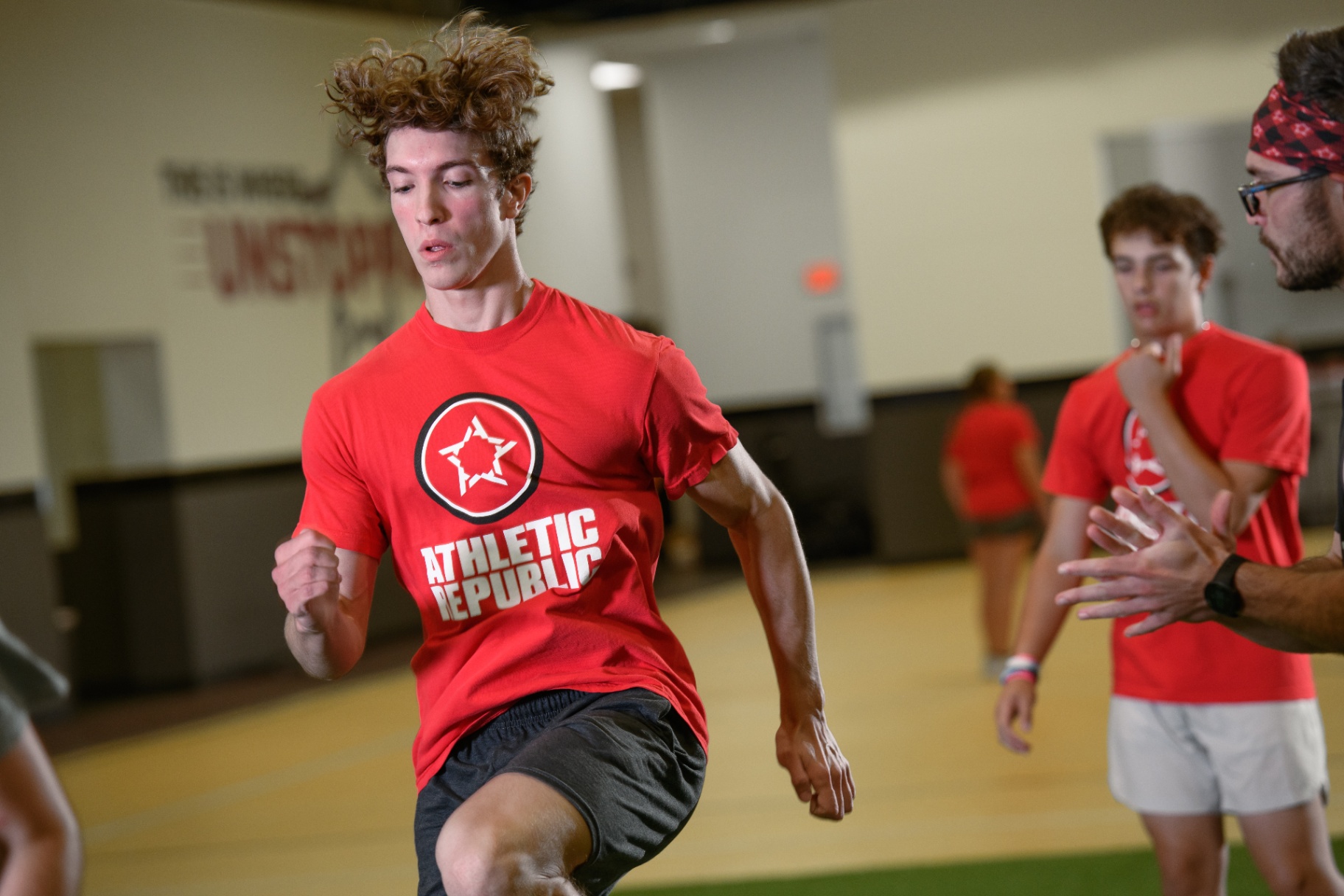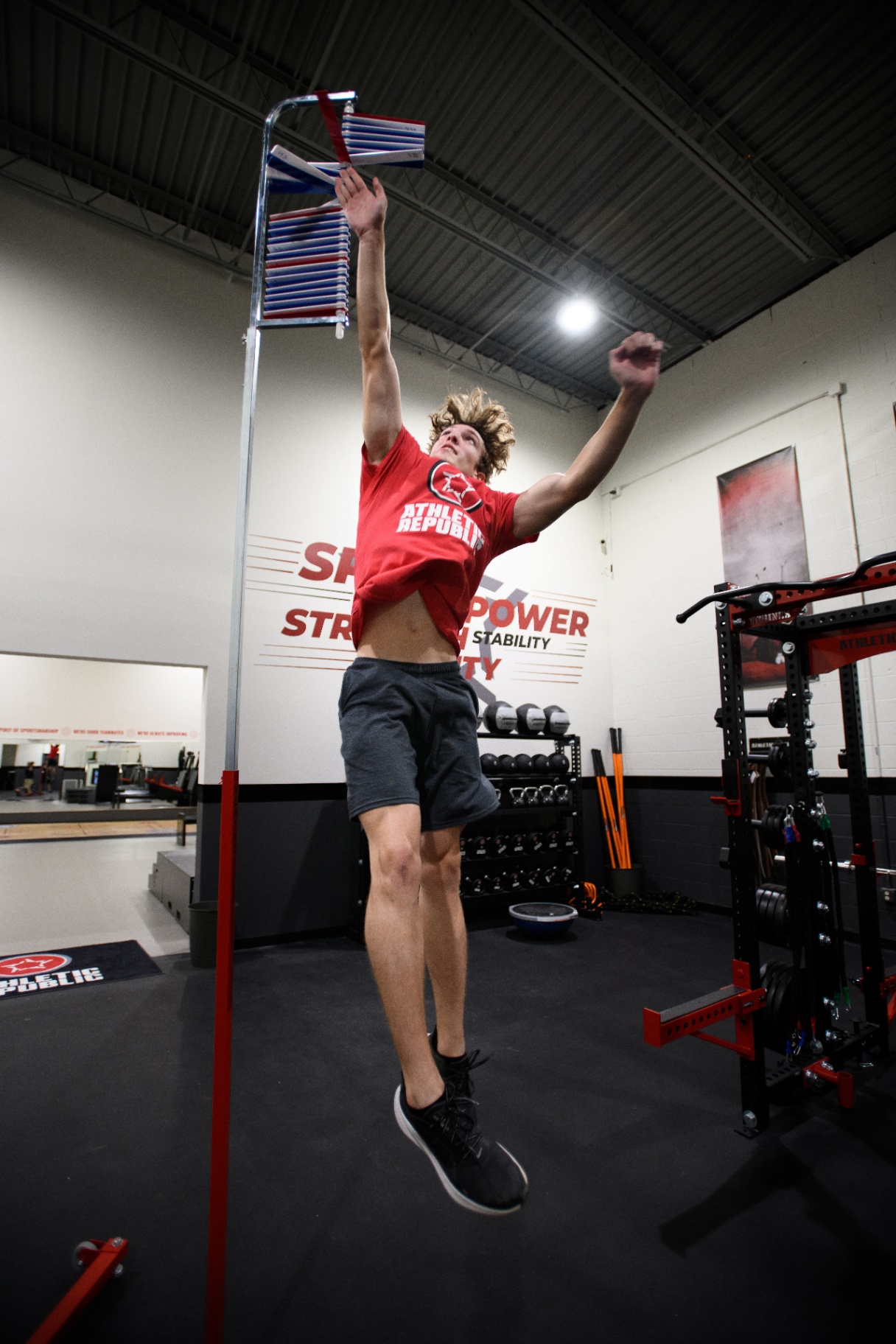
Saturday morning has a different feel at the gym.
The week’s practices are done. School is out. There may not be a game for a day or two. There is less rushing, less pressure, and more room to focus on the work that helps an athlete take the next step.
For an athlete who has been spending more time on the bench than in the starting lineup, that kind of focused training time can make a real difference.
At Athletic Republic Knoxville, the Acceleration Program is designed to help athletes build the physical tools coaches notice: speed, agility, power, balance, coordination, and the ability to keep moving at game speed. It does not promise a starting spot overnight, and no training program can make that promise, but it gives athletes a structured, science-based way to become more prepared to compete for one.
Being on the bench is not the end of the story
Most athletes who sit on the bench are not lacking effort or commitment. They may attend every practice, listen to their coaches, and care deeply about their team. Sometimes, though, they are competing against athletes who have a little more speed, a faster first step, better lateral movement, or more confidence changing direction under pressure.
Those small differences can affect playing time.
A coach may need a player who can close space on defense, beat an opponent to a loose ball, create separation, recover quickly, or maintain good movement late in a game. These are athletic qualities that can be developed with the right training.
The goal of the Acceleration Program is to help athletes turn effort into measurable progress, and measurable progress into better movement during competition.
A science-based approach to becoming more athletic
The Acceleration Program is not a collection of random exercises. It uses progressive, evidence-based training protocols built around how athletes move, produce force, and respond to physical stress.
Athletes are assessed at the beginning of a program to identify areas such as symmetry, movement quality, strength, and power. As they train, certified coaches can adjust exercises, volume, and intensity to match the athlete’s needs. At the end of the training period, athletes can be tested again to measure progress.
That process matters because every athlete has a different starting point.
One athlete may need to improve running mechanics. Another may need more lower-body power. A third may be quick in a straight line but struggle to stop and change direction. Personalized coaching helps make sure each athlete is working on the qualities most likely to improve performance.
Learn more about student-athlete training at Athletic Republic Knoxville.

Four ways Acceleration helps athletes compete for more playing time
1. It develops a faster first step
In many sports, the first few steps are the difference between arriving first and arriving late.
The Acceleration Program uses specialized Super Running Treadmills, sprint progressions, and coaching feedback to help athletes improve the mechanics behind acceleration. Trainers look at details such as posture, knee drive, hip position, arm action, stride length, and stride frequency.
That may sound technical, but the result is simple: more efficient movement.
A more efficient first step can help a basketball player get into defensive position, a soccer player reach a through ball, a baseball or softball player get out of the batter’s box, or a football player gain separation at the start of a route.
Athletes are not just being asked to “run harder.” They are learning how to apply force more effectively and move with better coordination.
2. It builds agility and change-of-direction ability
Speed is important, but sports rarely happen in a straight line.
Athletes have to shuffle, cut, backpedal, stop, react, and accelerate again. The ability to slow down under control is just as important as the ability to sprint forward. If an athlete cannot control their body while changing direction, they may lose balance, take extra steps, or arrive out of position.
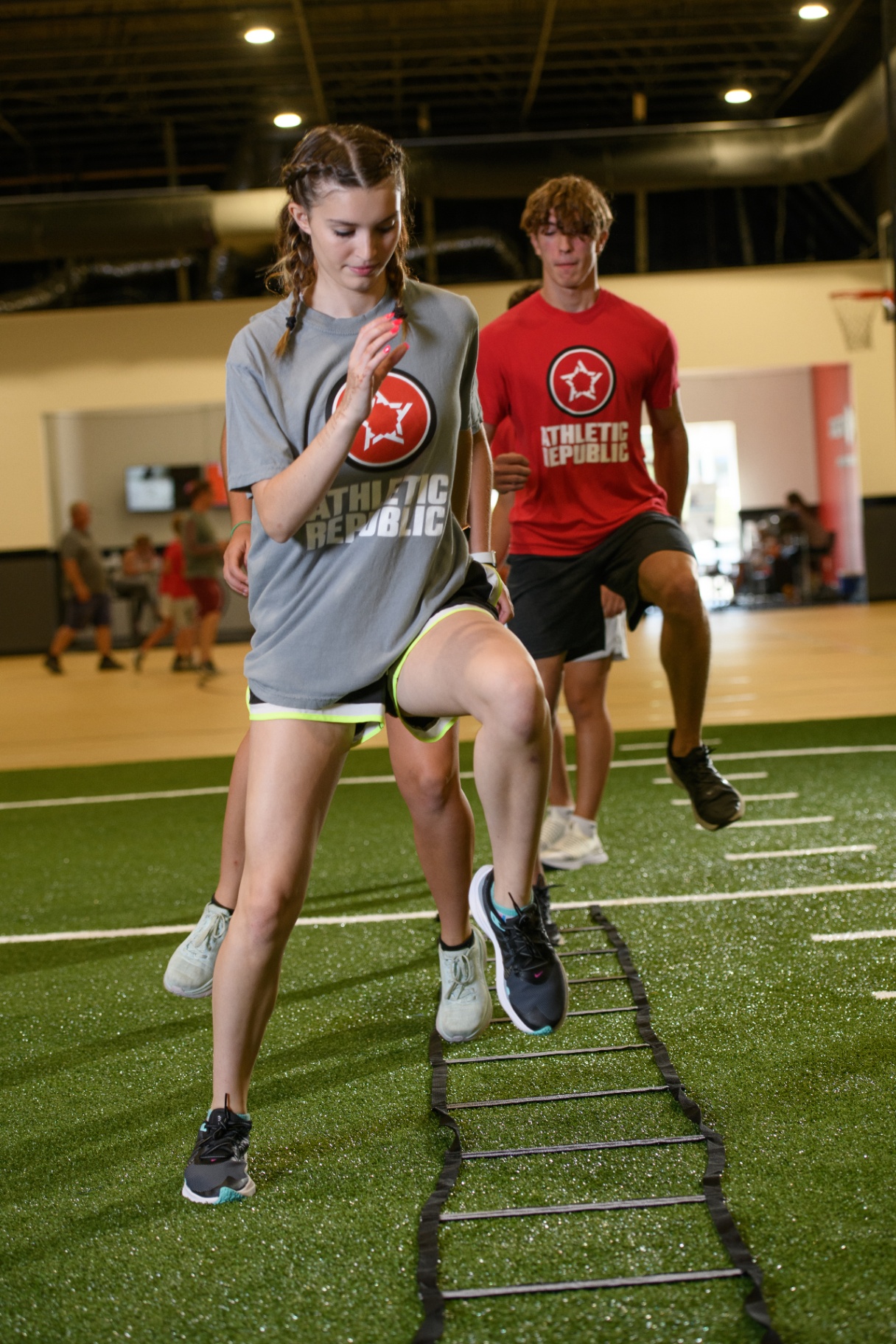
Acceleration training includes drills that challenge lateral movement, dynamic balance, foot speed, body control, and deceleration. Plyometrics and agility work help athletes learn to control their center of gravity while producing power in different directions.
That can translate to the moments coaches see every day:
- Staying in front of an opponent
- Recovering after a mistake
- Closing down space on defense
- Creating separation on offense
- Reaching a ball that seemed just out of range
- Changing direction without losing momentum
The work may look like a ladder drill, a quick cut, or a controlled stop. In competition, it can look like making the play instead of watching it happen.

3. It improves power, strength, and game-ready movement
A faster athlete also needs a strong foundation.
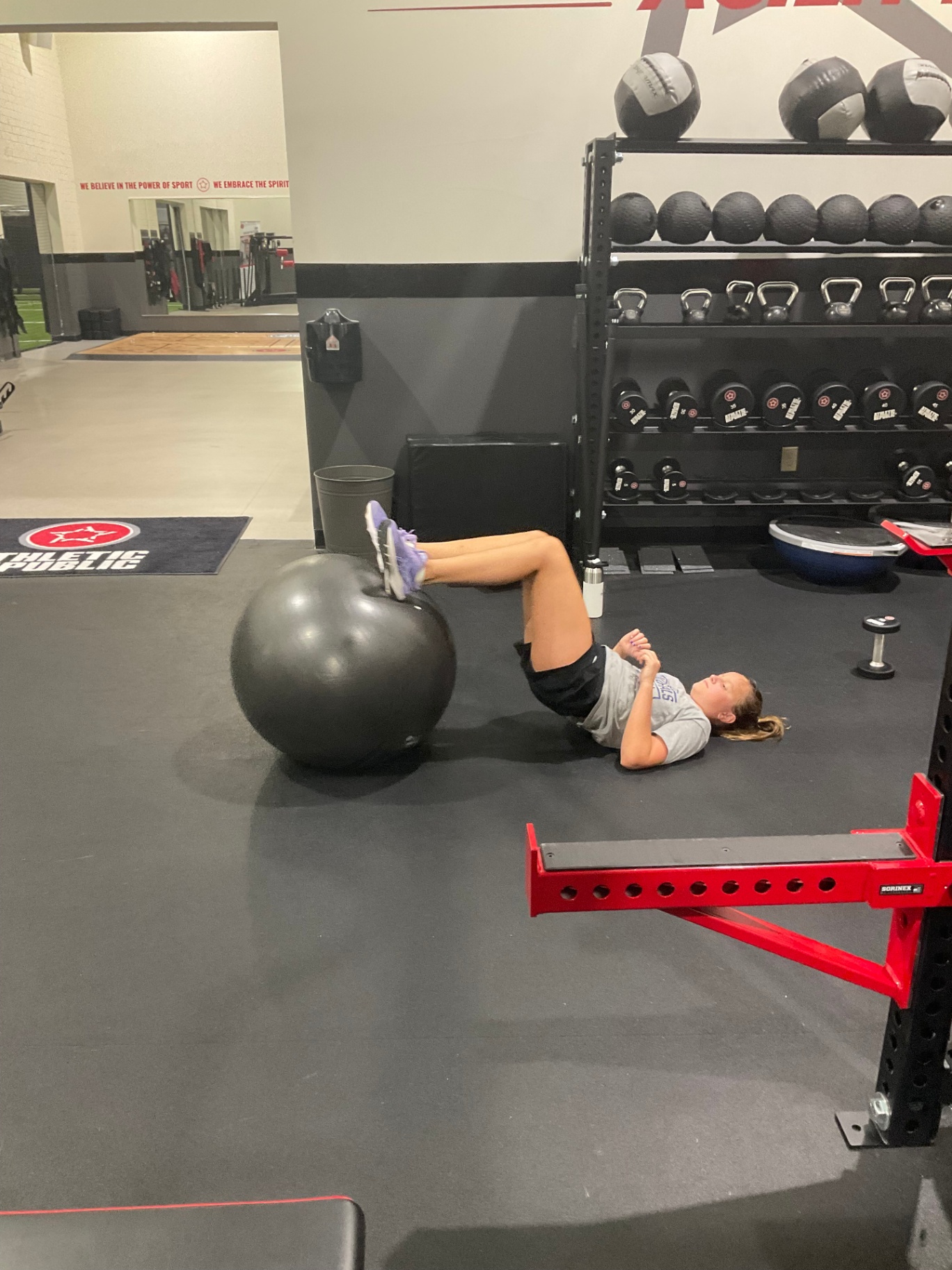
The Acceleration Program combines speed development with strength, resistance, plyometric, stability, and mobility work. The purpose is not simply to build bigger muscles. It is to help athletes produce force quickly and maintain control while moving at high intensity.
That combination is often called power: producing force at speed.
Power helps an athlete jump, sprint, push off, absorb contact, and change direction. Stability helps them stay controlled when the game gets physical or unpredictable. Mobility helps them reach strong positions without unnecessary compensation.
The program also considers injury prevention and movement quality. Athletes learn how to move well while building the physical capacity to train and compete consistently. For parents, that is an important part of the picture. The goal is not just to be faster for one weekend. It is to build athletic development that can support a longer, healthier sports journey.
4. It gives athletes progress they can see and feel
When an athlete has been sitting on the bench, confidence can take a hit. They may begin to wonder if the coach sees their effort or if they are simply “not athletic enough.”
Structured progress can help change that mindset.
As athletes improve their mechanics, complete more challenging drills, move with better control, or see better testing results, they gain evidence that their work is paying off. They begin to feel more capable during practices and competition.
That confidence does not come from empty praise. It comes from preparation.
A coach may notice that an athlete is getting to spots more quickly, staying engaged through every rep, recovering faster, or moving with greater confidence. Those details can help an athlete make a stronger case for more minutes.
Why Saturday is a great day to train
A Saturday session can be a smart way to create space for athletic development.
There is often more time to arrive without rushing from school or another activity. Athletes can focus on technique rather than trying to squeeze in one more workout at the end of a packed weekday. Parents can ask questions, learn more about the program, and see how the training environment supports their athlete.
Inside Athletic Republic Knoxville’s 18,000 square foot facility, athletes have room to work through different parts of the program. Sessions may include treadmill speed training, movement instruction, resistance work, plyometrics, agility drills, and recovery-focused mobility.
The atmosphere is serious about improvement without making athletes feel like they have to be perfect. Everyone starts somewhere. The job is to show up, listen to the coach, and keep building.
A starting spot is earned one improvement at a time
Moving from the bench to the starting lineup usually does not happen because of one dramatic workout. It happens through consistent preparation.
An athlete improves their first step. Then their ability to stop. Then their confidence cutting to the left or right. They become stronger, more coordinated, and better able to repeat quality effort throughout practice. Over time, those improvements begin to show up in game situations.
That is what the Acceleration Program is built to support.
At Athletic Republic Knoxville, athletes train in a supportive environment with certified coaches, specialized equipment, and science-based protocols designed around long-term development.
If your athlete is ready to use a Saturday morning to work toward more speed, more confidence, and more opportunity, schedule a free class. The next starting spot may begin with the next training session.