Your athlete shows up. They listen, work hard, and keep waiting for a bigger opportunity. But at school or club practice, a coach may be responsible for an entire roster. There’s only so much time to study one player’s first step, running form, change of direction, or conditioning, and explain what to improve next.
That’s where focused training outside team practice can make a difference. At Athletic Republic Knoxville, the Acceleration program gives athletes a chance to work on the specific athletic skills they want to develop, with certified trainers coaching in a small-group setting and attention tailored to the individual.
The goal isn’t to promise a starting spot. It’s to help your athlete build speed, agility, and athleticism, and give them a clearer path to showing what they can do.
When “work harder” isn’t specific enough
Sitting on the bench can be discouraging. For athletes, it can feel like every practice is an audition. For parents, it can be hard to know how to help when the feedback is general, or when there isn’t much time for feedback at all.
Often, “get faster” or “be more athletic” needs to be broken down into something more useful. Is your athlete slow out of the starting position? Do they lose balance when cutting? Could their running mechanics be more efficient? Do they fade late in a shift, inning, or game?
Those details matter because a player’s challenge is rarely identical to a teammate’s. A soccer player may need to accelerate into open space; a basketball player may want to change direction under control; a baseball or softball player may be working on quickness out of the box. Individualized training starts by looking at the athlete in front of you, not handing everyone the same workout and hoping it fits.
Start by finding the athlete’s starting point
In the Acceleration program, training begins with objective testing to establish a baseline and identify areas to work on. That gives an athlete and trainer a more useful starting conversation than “I just need to get faster.”
From there, the trainer can build a plan around the athlete’s needs, goals, sport, and experience. For one athlete, that might mean spending more time on sprint mechanics and first-step acceleration. For another, the priority may be body control when slowing down and changing direction. A plan can also develop power, coordination, and stamina as part of a broader athletic foundation.
The point of testing isn’t to label a young athlete or reduce them to a score. It’s to help guide training and make progress easier to discuss. When athletes are retested over time, they can see where they’ve improved and what still deserves attention.
Coaching that notices the details
Your coach sees 40 players. We see you. That doesn’t mean every Acceleration workout is a private session. The program uses a small-group, trainer-led format, with one-on-one coaching moments built into the session so athletes can receive cues and feedback as they work.
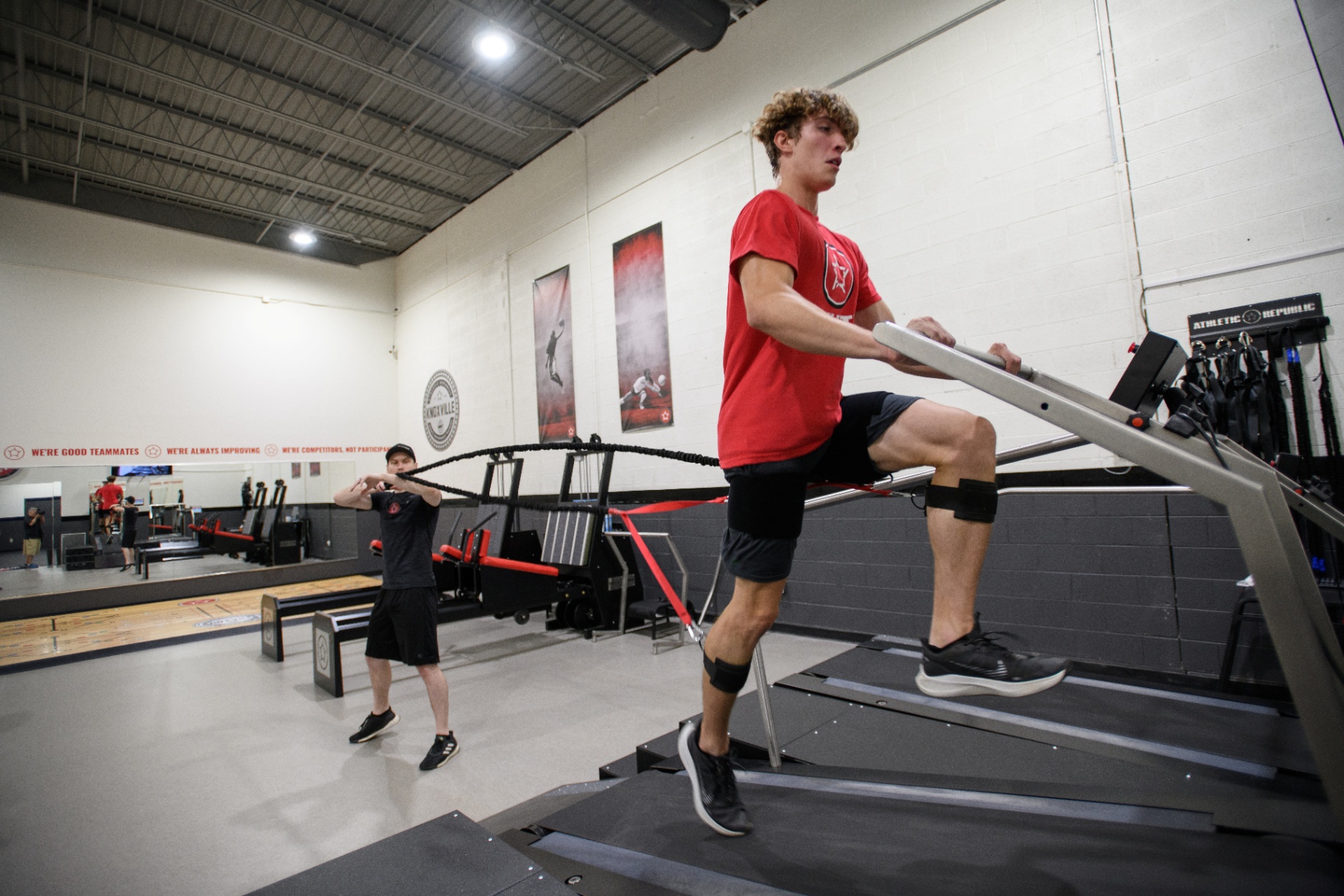
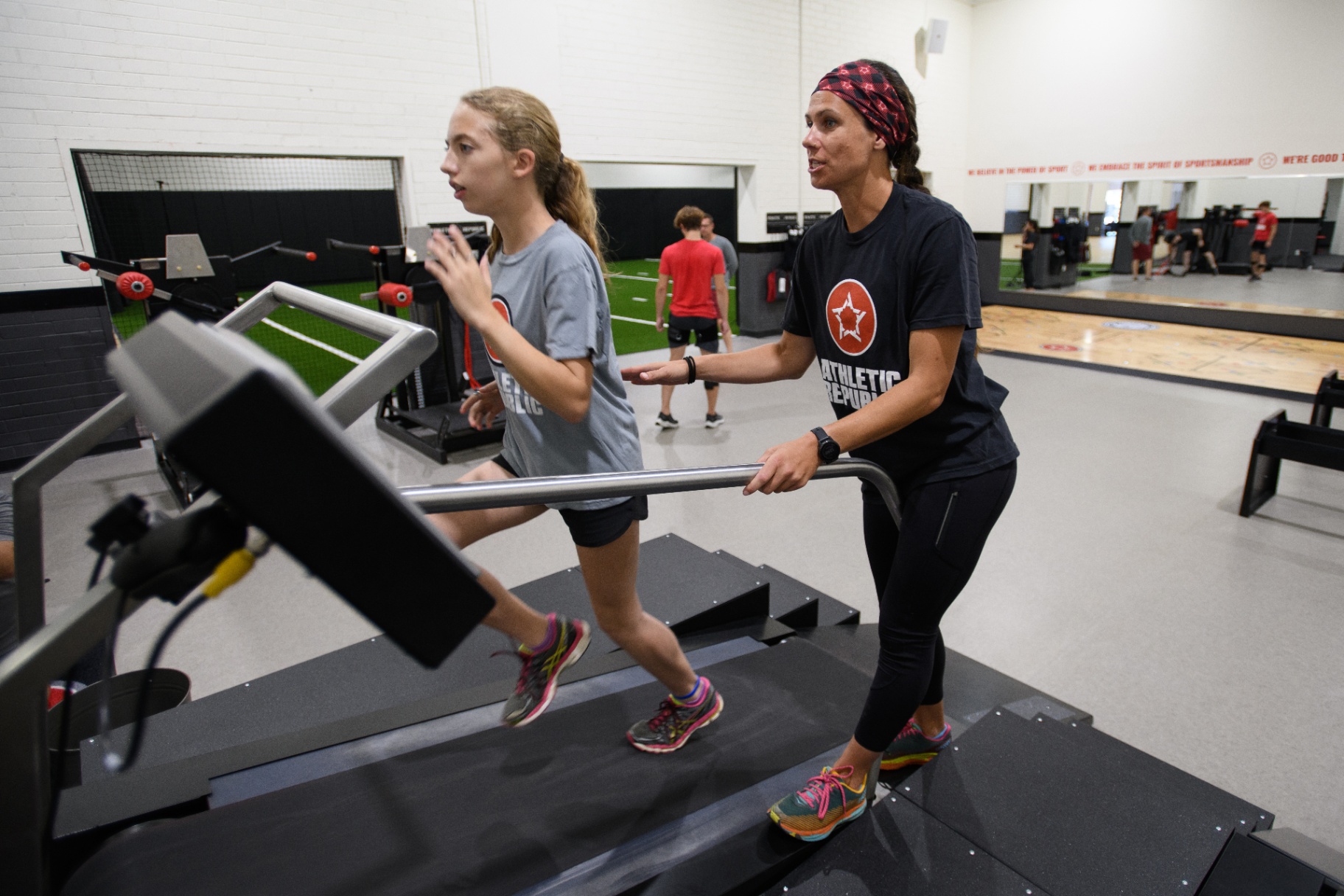
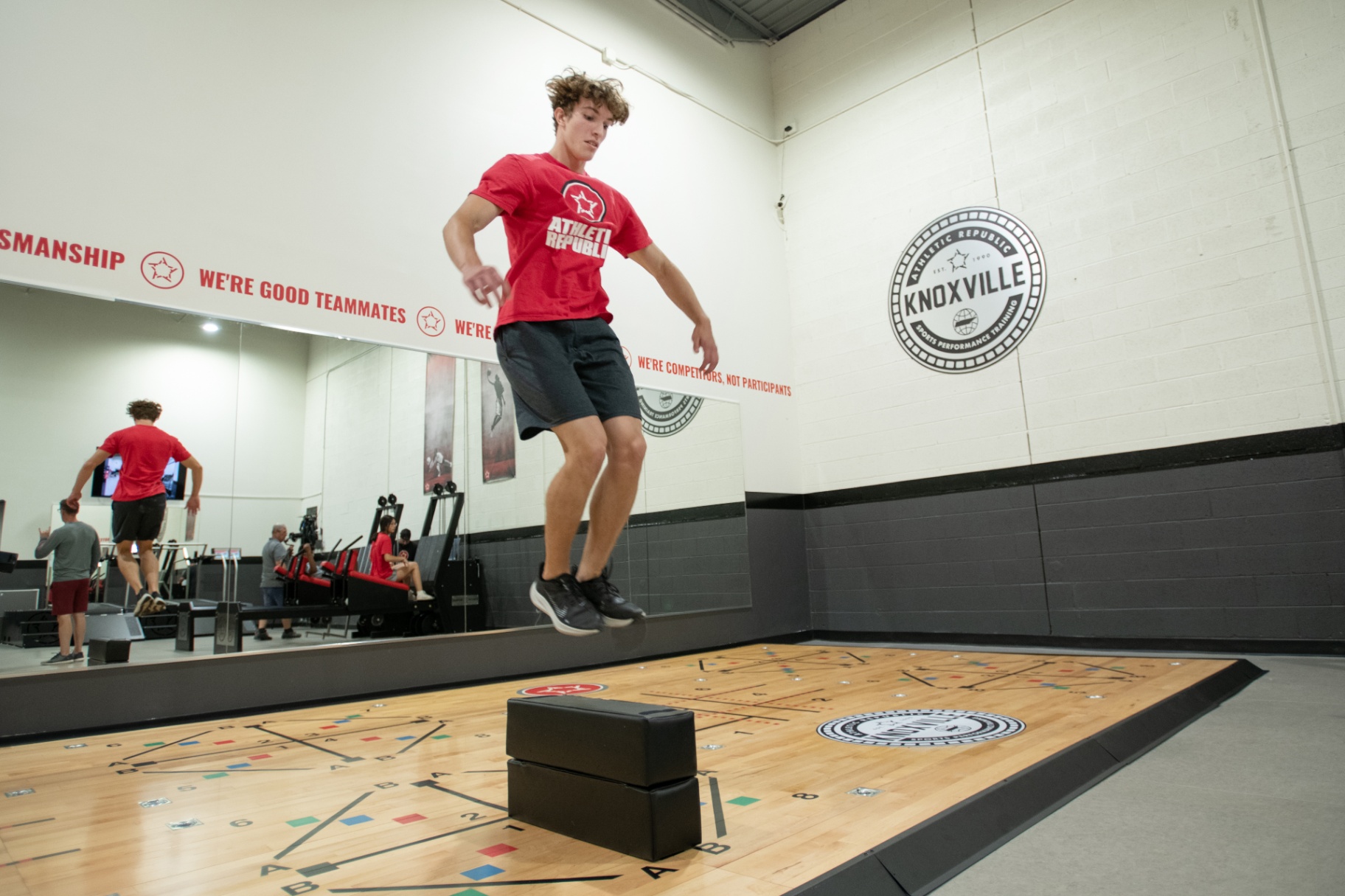
That can mean a trainer helping an athlete adjust posture and arm action during sprint work, or offering a specific cue to improve control during a change-of-direction drill. On Athletic Republic Knoxville’s specialized equipment, the trainer can watch the movement, provide direction, and help the athlete focus on quality, not just getting through repetitions.
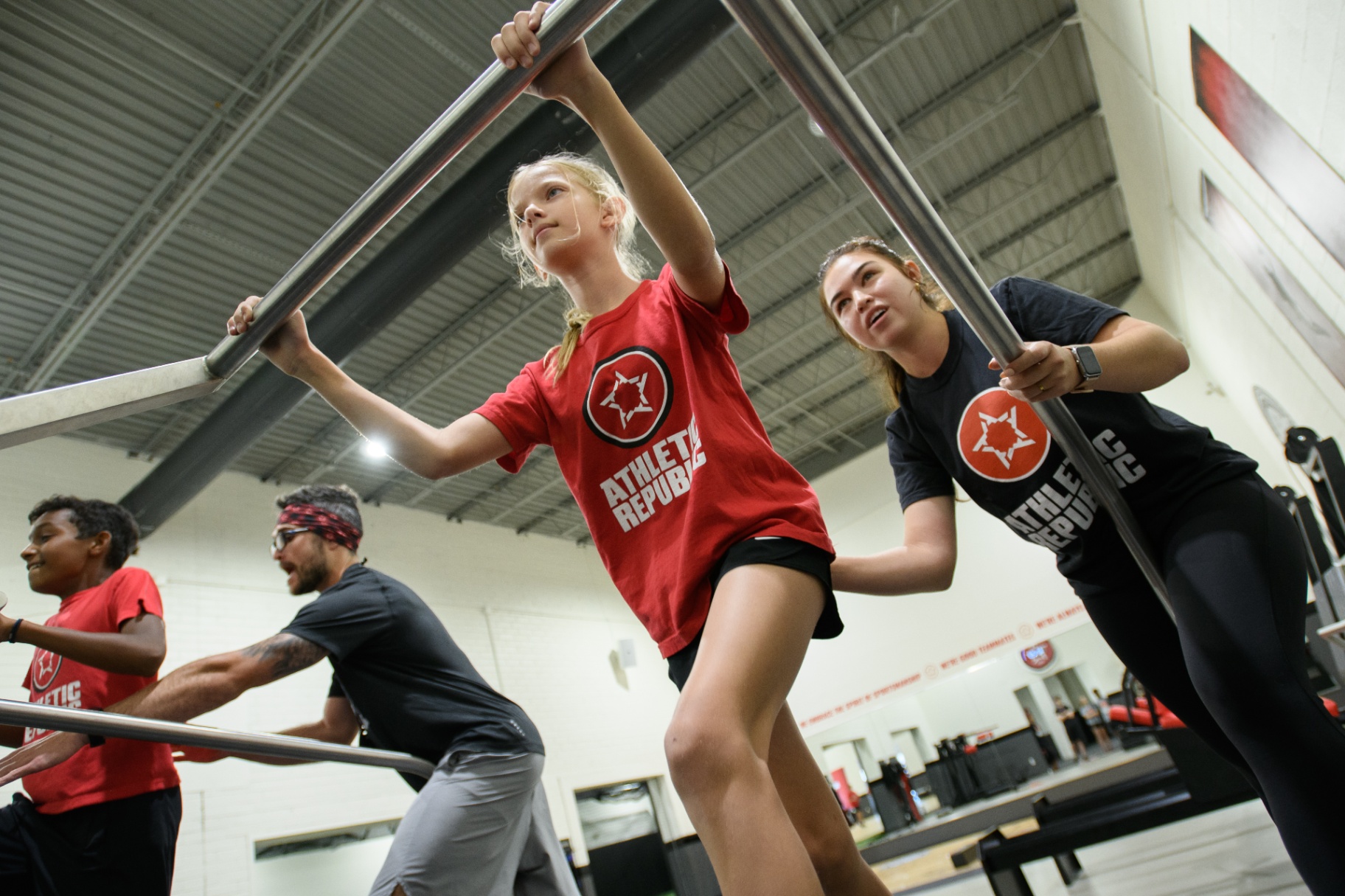
Athletes also benefit from focused practice and encouragement in a group environment. They can work alongside others with similar goals while their own training remains personalized. For a player who has spent a season feeling overlooked, being coached as an individual can help make training feel more purposeful.
Turn a specific gap into a training focus
A personalized plan can help take a vague frustration and turn it into manageable work. Depending on testing and coaching observations, training might focus on areas such as:
- First-step quickness: Practicing how to accelerate efficiently from a ready position.
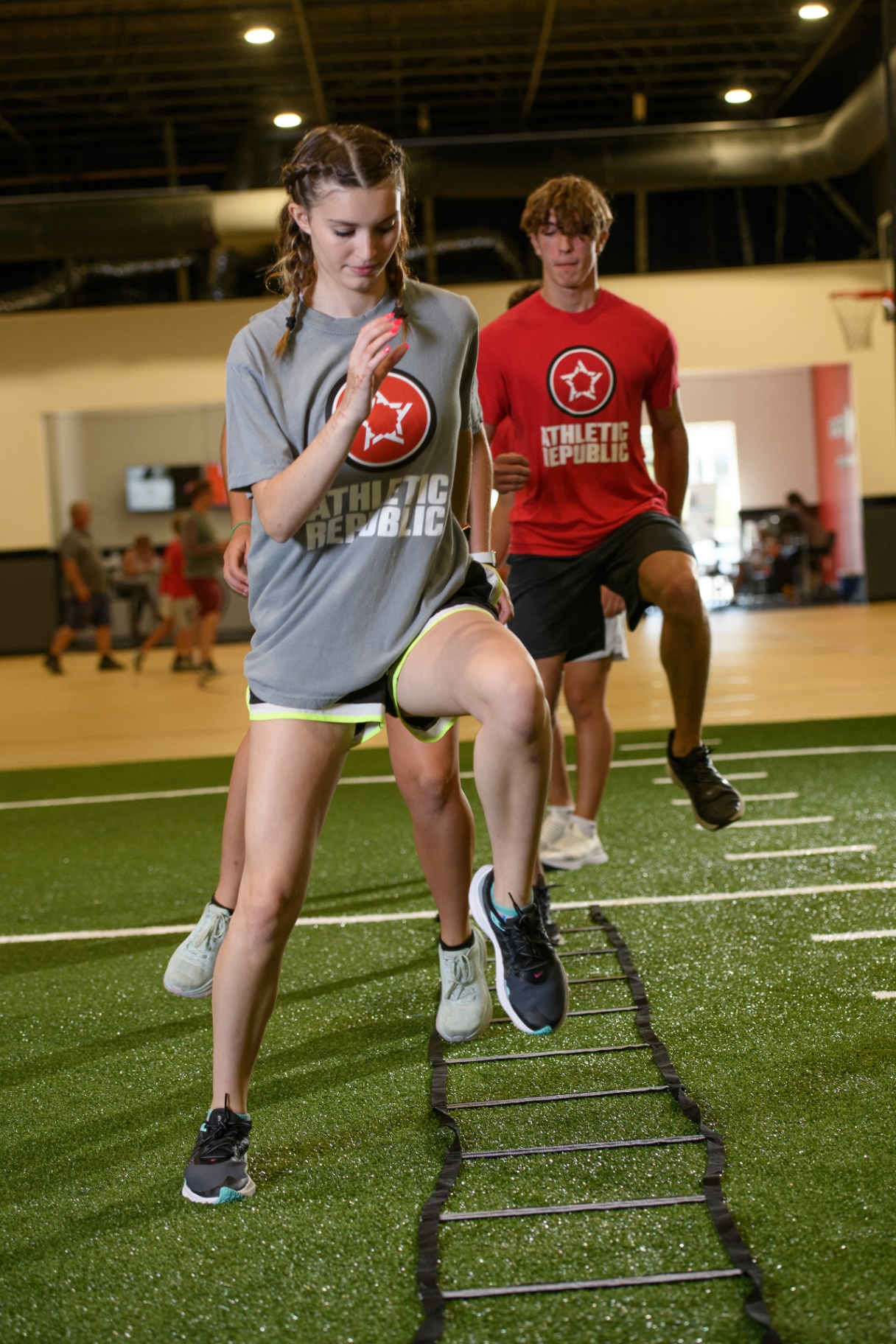
- Running mechanics: Building better habits in posture, stride, knee drive, and arm action.
- Change of direction: Working on deceleration, body control, and efficient movement into a new direction.
- Power and coordination: Using strength and plyometric exercises to develop more explosive movement.
- Stamina: Building the ability to repeat high-quality efforts as appropriate to the athlete’s needs.
The Acceleration program combines movement coaching with sprint training, strength work, plyometrics, and sport-relevant athletic development. Those elements are part of a systematic, science-based approach, not a guarantee of a particular outcome. Research reviews have found that appropriately designed sprint and plyometric training can improve athletic performance measures, though results vary by athlete, program, and training history. For example, see this systematic review on resisted sprint training and acceleration.
Progress is built over weeks, not one workout
A great session can feel motivating. Lasting improvement, though, comes from consistent, appropriate training over time. Progress tracking helps athletes and trainers see whether a particular focus is moving in the right direction and where a plan may need adjustment.
That process also helps young athletes learn to value more than immediate results. Maybe their movement looks more controlled. Maybe they’re getting out of a stance with better mechanics, or they’ve become more confident attacking a change-of-direction drill. Those are useful steps, even before anyone knows exactly how they’ll show up in a game.
Athletic Republic Knoxville’s 18,000-square-foot facility gives athletes room to work through a range of training activities, with specialized equipment and certified trainers supporting the process. The aim is to create an environment where athletes can focus, get coached, and build their skills over time.

What improvement can, and can’t, promise
Better athleticism can help an athlete be more prepared to compete. It may help them move more efficiently, accelerate with greater confidence, or handle repeated efforts better. But playing time is ultimately the coach’s decision. Position needs, team strategy, technical skills, experience, and many other factors contribute to lineup choices.
So, no: we can’t promise a starting spot. What we can do is help athletes train with purpose, identify areas to improve, and work toward becoming more capable and confident competitors. The work is theirs, the selection decision belongs to their coach, and the progress they make can be valuable wherever they play.
If your athlete is returning from an injury, has pain, or is currently in rehabilitation, check with their healthcare provider before starting or changing a training program. Recovery and return-to-sport timelines are individual; training should complement the guidance of their medical team.
Help your athlete take the next step
If your player is ready to work on speed, agility, and athleticism with more individualized attention, learn more about student-athlete training at Athletic Republic Knoxville. You can also book a free trial class and experience the coaching environment for yourself.
The starting spot may take time, and no training program can decide who earns it. But every athlete deserves a chance to be seen, coached, and supported as they work toward their next opportunity.