The coach looks toward the bench and calls your name. You have almost no warning. Maybe it’s the second quarter, maybe a teammate needs a quick break. You stand, step onto the court or field, and the game is already moving at full speed.
But your legs feel heavy. Your first few steps are short. You’re a half-step late to the play.
That moment can happen to any athlete, especially one who doesn’t know when their chance will come. It’s not always a question of skill or effort. Sometimes, the athlete simply isn’t physically ready yet. And from the sideline, “not warmed up” can look a lot like “not ready to play.”
Starters can plan. Bench athletes have to adapt.
A starter usually has a predictable pregame routine and a clear idea of when they’ll enter. A bench athlete may be called in with two minutes’ notice, or may sit for long stretches while the game continues.
That uncertainty changes the warm-up challenge. The goal isn’t to do one long routine and assume the body will stay ready indefinitely. It’s to have a short, repeatable way to prepare, then keep from getting completely cold while waiting.
That readiness is a skill. Like accelerating, changing direction, or landing well, it can be practiced and coached. It doesn’t have to depend on luck, or on an athlete trying to summon energy the second their name is called.
What a warm-up actually does
A warm-up is more than a few stretches before practice. Gradually moving the body helps raise temperature, increase circulation, and prepare the nervous system for the demands ahead. For an athlete who needs to sprint, jump, cut, or react, that preparation matters.
The research isn’t a simple “static stretching is bad, dynamic stretching is good” story. But a 2023 systematic review and network meta-analysis on warm-up methods and lower-limb explosive performance found that dynamic stretching generally supported sprint and jump performance, while static stretching alone could temporarily reduce explosive performance in some settings. The key is context: a few easy movements and progressive activity are different from holding long static stretches immediately before explosive work.
Research on youth athletes adds useful nuance. In a study of male youth soccer players, researchers found no statistically significant differences in sprinting, jumping, or kicking performance between several 10-minute warm-up approaches, including static and dynamic stretching. That’s a reminder that results can vary by age, athlete, and protocol, not a reason to skip preparation. (Hernandez-Martinez et al., 2023)
For a bench athlete, the practical takeaway is straightforward: move progressively, include actions that resemble the sport, and build toward faster effort rather than going from sitting still straight into a full-speed play.
A bench athlete’s warm-up has to work on the sideline
Pregame warm-ups can use more space and time. A sideline readiness routine needs to be repeatable, appropriate for the sport, and possible in a small area without getting in anyone’s way.
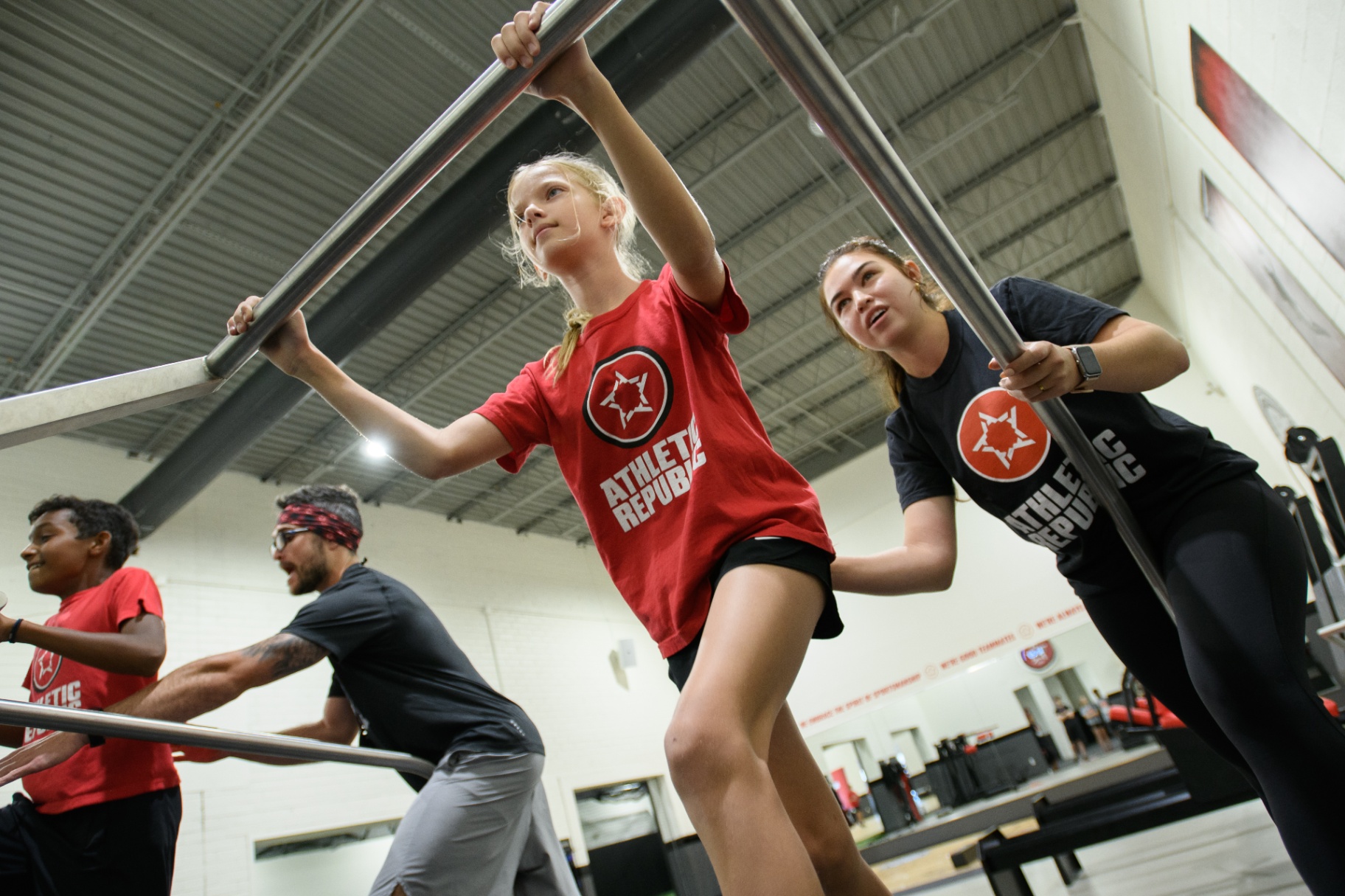
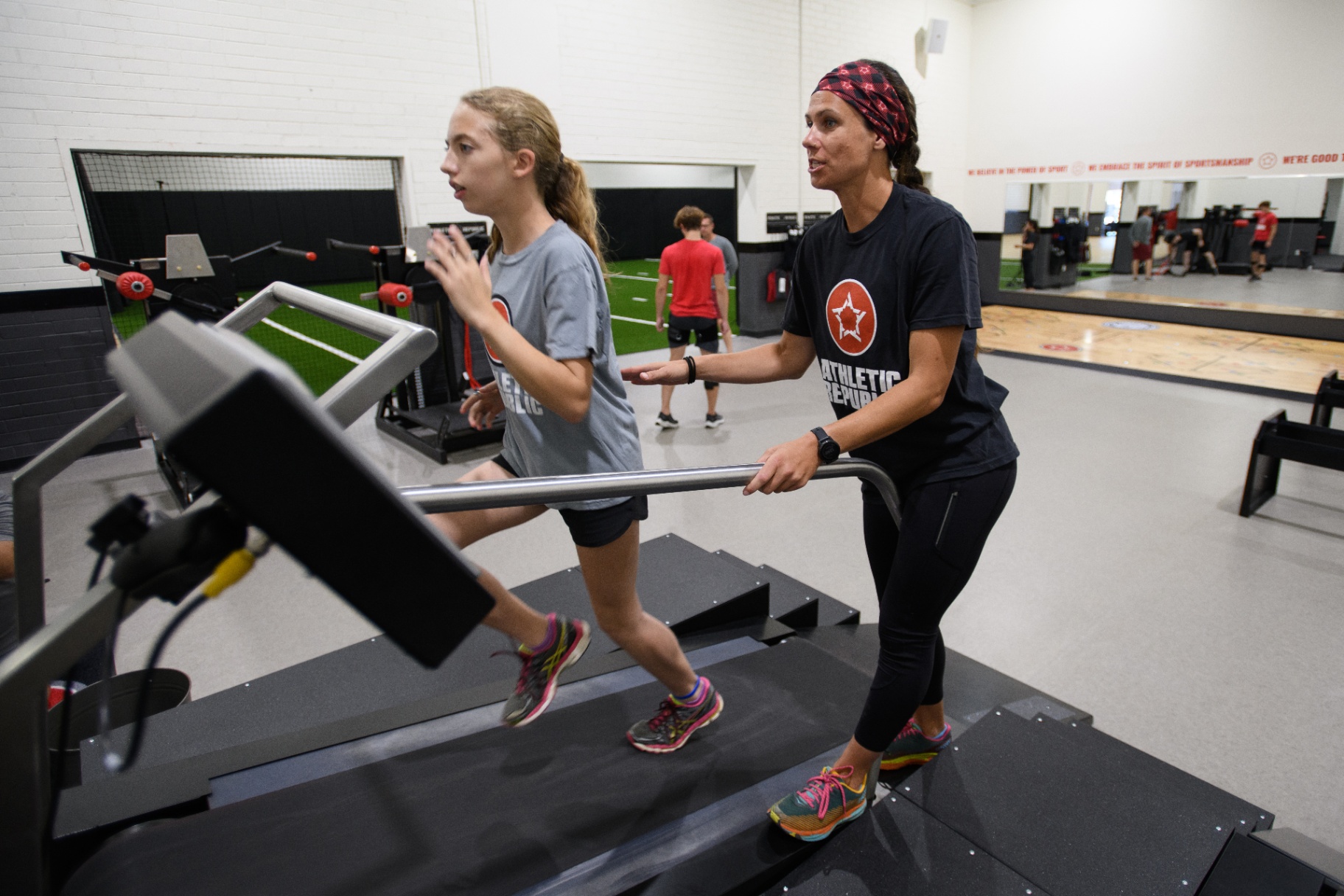
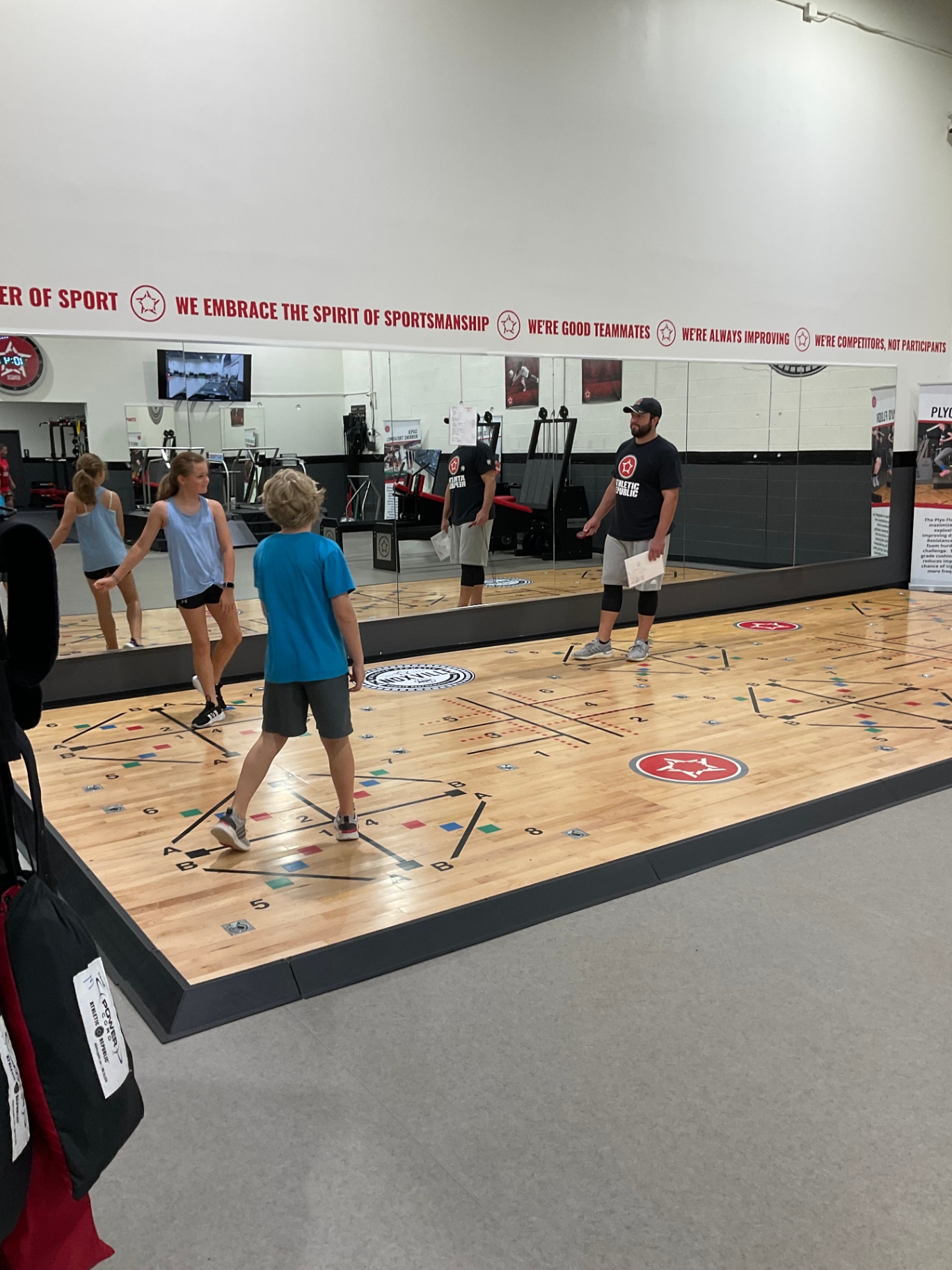
At Athletic Republic Knoxville, warm-up isn’t improvised. It’s coached as part of every Acceleration session, before athletes move into high-speed treadmill or plyometric work. Athletes begin by raising body temperature, activate the hips and hamstrings, groove basic movement patterns, and then build speed progressively.
That sequence gives athletes a routine they can learn, not just follow when a coach is standing beside them. With practice, they become familiar with how to move from easy effort to sharper, quicker actions without rushing straight to maximum intensity. The goal is for young athletes to remember the pattern and adapt it for a sideline, with their team’s coach and sport rules in mind.

Staying warm between shifts: the re-warm idea
A warm-up doesn’t keep the body prepared forever. If an athlete sits still for a long stretch, they can start to feel less ready. That’s why teams often use brief re-warm activities between periods of play or during halftime. The appropriate amount depends on the athlete, sport, conditions, and coaching staff.
A couple of simple, low-space options may help an athlete stay engaged while waiting:
- Stay gently active when it’s safe and allowed. Stand rather than staying seated, shift your weight, or walk a short distance between plays. The point is to avoid sitting motionless for the whole wait, not to tire yourself out.
- Use a short, progressive buildup when there’s room and permission. A few quick movement patterns followed by one or two controlled accelerations can help transition toward game speed. Keep them brief and stop if you feel pain, dizziness, or unusual discomfort.
Follow team instructions, stay out of the playing area, and don’t turn a re-warm into a conditioning session. A practical routine should leave an athlete feeling prepared, not fatigued.
Ready on demand is something you can practice
The warm-up routine matters, but so does the environment where athletes learn to move with purpose. In the Acceleration program at Athletic Republic Knoxville, athletes work on speed and agility with high-speed treadmills, plyometrics, strength training, objective testing, and guidance from certified coaches in an 18,000-square-foot facility.
That combination gives coaches opportunities to help athletes build movement skills and practice progressing from preparation into higher-speed work. Repetition makes the routine familiar, so an athlete doesn’t have to invent a plan while watching the game unfold.

The warm body rule is about removing one avoidable barrier
A good warm-up won’t make an athlete faster than they are. It won’t guarantee a starting spot, more playing time, or a perfect first shift. Coaches still have to make decisions based on performance, team needs, and the game.
But a consistent routine can help remove one avoidable barrier: starting cold. If an athlete needs the first few minutes to loosen up, a coach may not see what that athlete can do when fully prepared. Coaches can’t evaluate the athlete at their best if they’re still waiting for their body to catch up.
For parents and athletes, that’s encouraging: readiness isn’t simply willpower. It’s a coached skill that can be learned, practiced, and adjusted to the demands of the sport. The bench may be unpredictable. Preparation doesn’t have to be.
Want to build speed, agility, and a more reliable preparation routine? Learn more about student-athlete training at Athletic Republic Knoxville, or try a free class.