Part of the “Acceleration Program: Earning the Starting Spot” series
Tryouts are coming up. Your athlete is putting in the work, but they’re wondering whether six weeks is enough time to make a difference.
The honest answer: six weeks can be enough to build useful progress in speed and movement skills, but it can’t guarantee a spot, playing time, or a coach’s decision. What it can do is give an athlete a focused block to practice accelerating, changing direction, and moving with more control, then carry those skills back to the field or court.
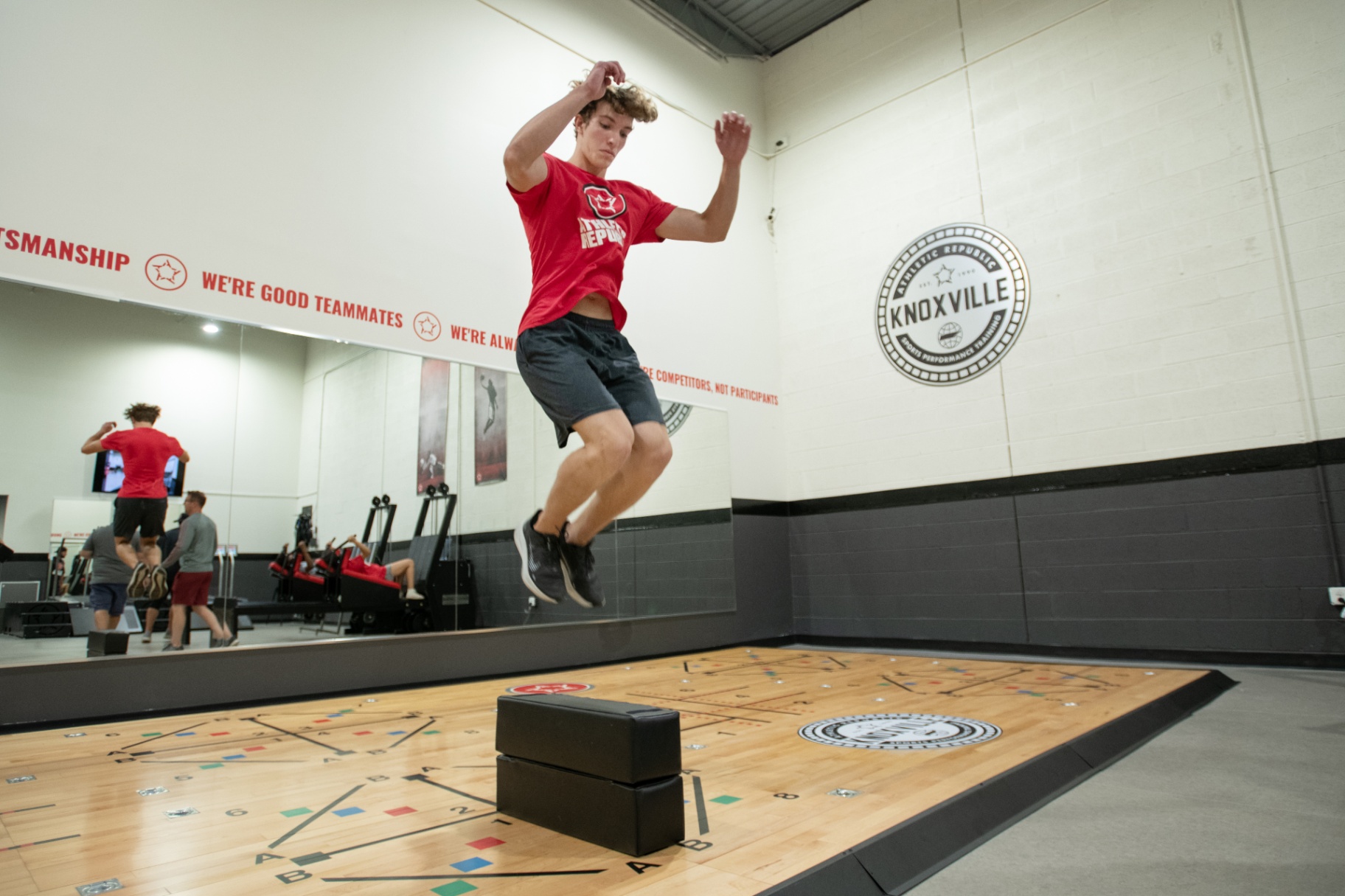
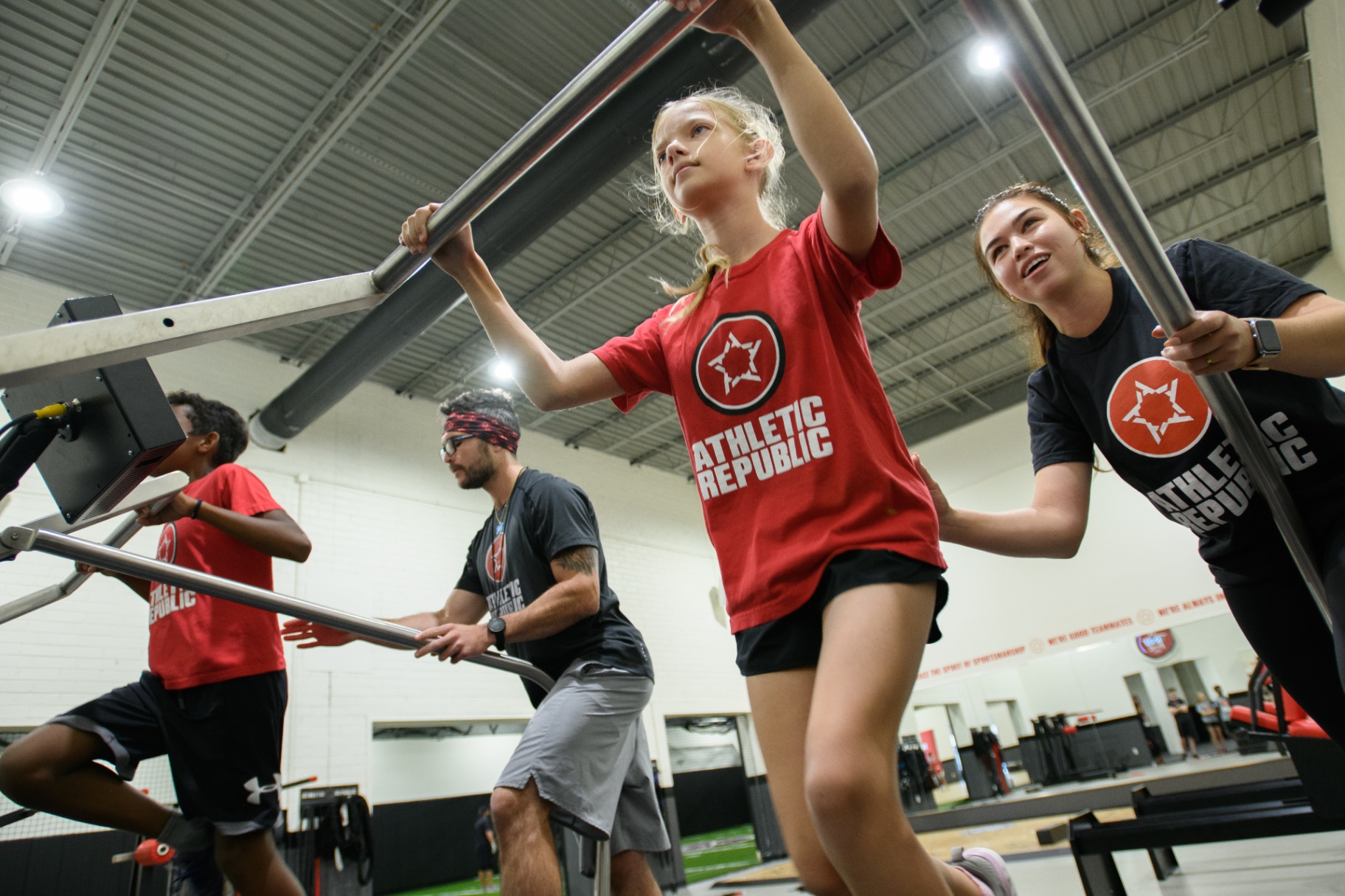
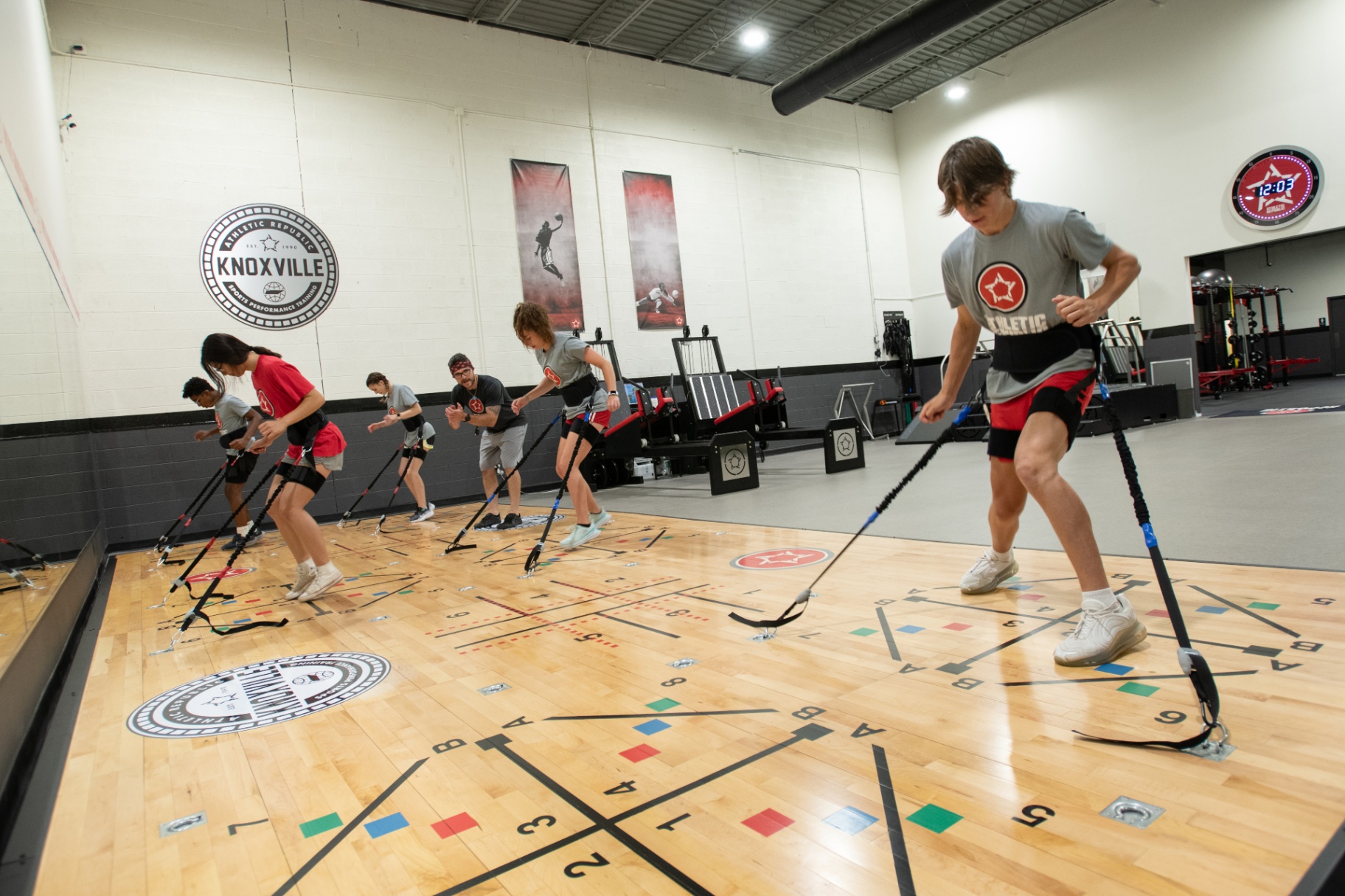
At Athletic Republic Knoxville, our Acceleration Program focuses on science-based speed and agility development in a supportive training environment. In our 18,000-square-foot facility, athletes work with coaches on the movement qualities that help them compete, not on promises about where they’ll land on a lineup.
What can change in six weeks?
Six weeks is a short training block, not a transformation deadline. With consistent, appropriately supervised training, an athlete may improve how they approach a sprint, how quickly they get moving, or how they control their body when slowing down and changing direction.
Those improvements can be valuable in sport. A quicker first few steps may help an athlete close space or get to a loose ball. Better control during a cut may help them respond to play without taking unnecessary extra steps. These skills don’t automatically make someone the fastest athlete on the team, and their impact depends on the sport, the athlete, and the situation.
Training also gives athletes a chance to practice with purpose. Instead of simply being told to “go faster,” they can learn to focus on a specific part of a movement, receive coaching, and try it again. That process (attention, practice, feedback, adjustment) is a meaningful outcome in its own right.

What does the research say about a six-week timeline?
A six-week study can tell us what happened with a particular group, using a particular program. It can’t promise the same result for every athlete. That distinction matters when families are trying to judge whether a short training block is worthwhile.
In a 2016 study, Lloyd and colleagues examined 80 boys in pre- and post-peak-height-velocity groups. Participants completed six weeks of training, two sessions a week, in traditional resistance, plyometric, combined, or control groups. The researchers found improvements in sprint and jump measures in the training groups, but the pattern differed according to maturation and training method. In other words, the same approach did not produce identical results for every group. Read the study in the Journal of Strength and Conditioning Research.
A 2023 study involving adolescent rugby sevens players also reported sprint improvements after six weeks. The program combined unresisted and resisted sprints with running-technique drills and trunk stability work. Because it combined several methods, the results can’t be credited to one drill or exercise alone. The study also involved a small, sport-specific group, so it shouldn’t be treated as a prediction for every youth athlete. Read the study.
There are also examples of why it’s important not to overstate the evidence. In a study of boys ages 12–15, a six-week resistance-training program did not significantly improve 9.1-meter sprint time, even though some other fitness measures changed. Read the study in Journal of Sports Science & Medicine.
Together, these studies support a measured takeaway: short, well-designed training can improve some athletic qualities for some young athletes. But outcomes vary with the athlete’s development, the training plan, and what is measured. Research is a guide, not a guarantee.
What athletes can work on during a focused block
A productive six weeks should be about more than collecting hard workouts. At Athletic Republic Knoxville, speed and agility work can focus on movement skills that relate to how athletes accelerate and change direction:
- Starting and accelerating: practicing how to project forward and build speed over the first steps.
- Sprint mechanics: learning to coordinate posture, arm action, and leg drive.
- Deceleration and direction changes: practicing how to slow down under control before moving into a new direction.
- Strength and power foundations: developing the ability to apply force with age- and ability-appropriate exercises.
- Consistency and confidence: returning to key movements and applying coaching cues across sessions.
These are training priorities, not a checklist that every athlete completes in the same way. Coaches need to account for an athlete’s age, experience, current sport schedule, and ability to perform movements safely.

Why supervision matters for young athletes
Speed work is more than asking an athlete to run all-out until they’re exhausted. Good training gives athletes room to learn the movement, practice it with intent, and recover enough to do the next repetition with quality.
The National Strength and Conditioning Association’s youth resistance-training position statement supports properly designed and supervised resistance training for children and adolescents who are ready to follow instruction. It emphasizes qualified supervision, appropriate technique, and a program suited to the young person, not simply scaling an adult workout down. Read the NSCA position statement.
That’s the spirit of science-based training: choose methods with a reason, coach them carefully, and adapt to the athlete in front of you. It also means paying attention to the bigger picture. School, practices, games, sleep, recovery, and an athlete’s overall wellbeing all influence what they can get from a training block.
What six weeks can’t control
A starting decision is about more than speed. Coaches may weigh skill, tactical understanding, effort, consistency, position needs, team chemistry, and many other factors. A faster first step can be useful, but no training program can promise a starting spot or playing time.
A helpful goal is to focus on what the athlete can influence: show up, listen to coaching, work on a few clear movement priorities, and bring those improvements into practice. The tryout list may look different six weeks from now, or it may not. Either way, developing skills and confidence is progress the athlete can carry forward.

Start with a plan, not a promise
If your athlete is preparing for tryouts, the next step is a training plan that matches their needs and schedule. Learn more about student-athlete training at Athletic Republic Knoxville, including the Acceleration Program’s speed and agility focus.
Not sure whether it’s the right fit? Try a free class and experience the coaching environment for yourself.
Six weeks can be a useful window for focused practice. We’ll help athletes put in thoughtful work, build movement skills, and prepare to compete, while being honest about what training can and cannot promise.