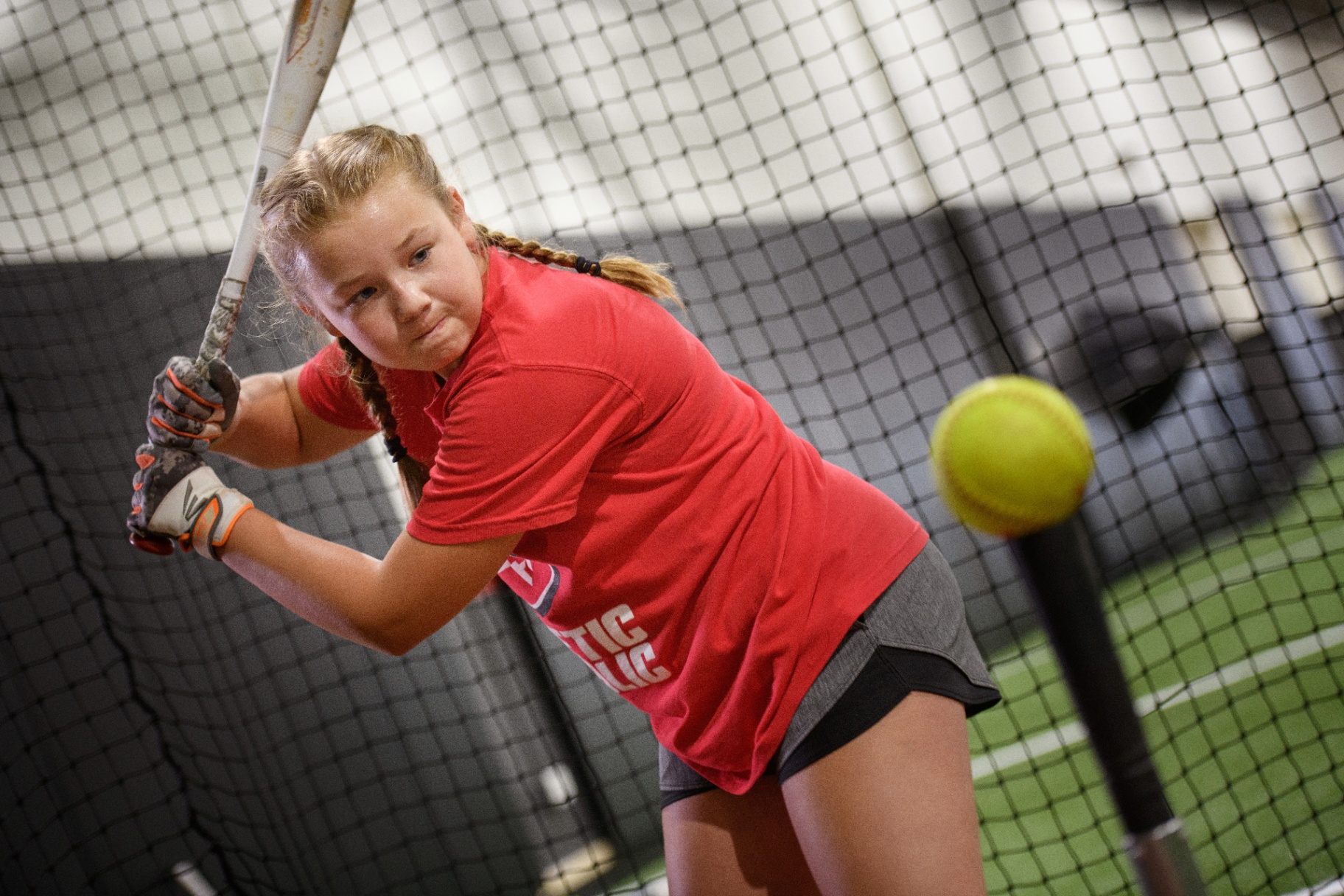
Acceleration Program: Earning the Starting Spot
If you’re a young athlete, or a parent watching from the sideline, you may have heard that lifting weights can stunt growth. It’s a common worry, and it deserves a clear answer: current evidence does not show that appropriately designed, supervised resistance training stunts a young person’s growth.
That doesn’t mean every workout is right for every athlete. How training is coached, progressed, and matched to the athlete matters. Here’s what the research says, what youth-appropriate strength work can look like, and how strength may help you compete for more opportunities.
The growth-plate concern, explained
Growth plates are areas of developing cartilage near the ends of certain bones. They help bones grow longer, so it’s understandable that parents want to protect them.
The concern that resistance training automatically harms growth plates isn’t supported by the research. The National Strength and Conditioning Association’s youth resistance-training position statement concludes that a properly designed and supervised program is relatively safe for young people. It also reports that growth-cartilage injuries had not been found in prospective youth resistance-training studies available to the authors. Historical case reports involved different circumstances, often including poor technique, maximal or inappropriate loads, or a lack of qualified supervision. Read the NSCA position statement.
The American Academy of Pediatrics’ clinical report likewise states that well-designed resistance training has not been shown to harm linear growth or growth-plate health. Its guidance is about suitable, supervised training, not doing whatever feels challenging in an unsupervised weight room. Read the AAP clinical report.
A useful distinction: resistance training is not the same thing as testing how much weight you can lift once, lifting with poor form, or copying an advanced athlete’s program. Those choices can create avoidable risk. Young athletes should have appropriate coaching, equipment, and progressions, and stop or speak up if an exercise causes pain.
What the research says about safety and growth
A review by Robert Malina examined research on weight training in children and adolescents. Its conclusion was consistent with the position statements: supervised, age-appropriate programs had not been shown to negatively affect growth or maturation. The review also notes limits in the evidence, including that some studies did not monitor injuries systematically. Read the review on PubMed.
So, the honest answer is not “strength training is risk-free.” No sport or physical activity is risk-free. Rather, the evidence supports a more careful conclusion: when resistance training is appropriately prescribed and supervised, it is considered safe and beneficial for young people. The NSCA and AAP both emphasize instruction, suitable progression, and attention to each athlete’s abilities.
Growing athletes can also be vulnerable to injuries around tendon attachment sites, sometimes called apophyses. The AAP report recognizes that forceful, explosive contractions can contribute to these injuries before skeletal maturity. That’s one reason training should build gradually and be coached, not rushed or piled on top of an already exhausting sports schedule.
What youth-appropriate strength training looks like
A good starting point isn’t a heavy barbell or a test of toughness. It’s learning to control your body and move well. Depending on your age, experience, goals, and readiness, a coach might begin with bodyweight movements, simple balance and coordination drills, or light resistance.
The basics come first:
- Bodyweight mastery: Learn stable, controlled versions of movements such as squats, lunges, push-ups, and hinges.
- Light loads when ready: Add resistance only when you can perform the movement with consistent technique.
- Manageable repetitions: Use a coach-selected repetition range that allows you to practice without form breaking down. NSCA guidance describes starting with light loads and technique-focused sets.
- Coached movement: Get feedback on setup, control, and how to finish a repetition safely.
- Gradual progress: Increase challenge step by step, based on ability, not pressure to keep up with a teammate.
- Recovery and communication: Make room for rest, sleep, hydration, and honest conversations about soreness or pain.
Regular training should also fit around practices, games, school, and other activities. A young athlete is not a miniature adult, and a program shouldn’t treat one athlete’s readiness as a template for everyone. The NSCA recommends qualified instruction and an individual approach to program design.
“Don’t max out” is a sensible rule for this conversation: young athletes don’t need unsupervised attempts at their heaviest possible lift to get stronger. The goal is to build movement skill and strength over time, not win a weight-room contest.
How strength can support earning playing time
Strength training won’t replace sport skills, decision-making, communication, or a coach’s evaluation. But it can help prepare you for the physical demands that show up during competition.
A stronger, better-coordinated athlete may be better prepared to:
- Create first-step power: Accelerate into space, close down a play, or get moving quickly after a change of direction.
- Hold position: Stay balanced when challenged, protect space, or maintain body control through contact.
- Compete in 50/50 moments: Get into position, stay composed, and use controlled force when both players are contesting the ball or puck.
- Handle the demands of a season: Build physical capacity as one part of a broader preparation plan.
Strength can also contribute to physical preparedness and may help reduce sports-injury risk as part of a well-rounded program, according to the NSCA position statement. That isn’t a guarantee against injury. It does reinforce a bigger point: training should help you participate and develop, not leave you too sore or worn down to practice and compete.
Availability is one of the biggest paths to a starting spot. If you’re consistently able to attend practice, learn, and show what you can do, you have more chances to improve and contribute. Training can support that development, but it cannot promise a starting spot or playing time. Those decisions depend on many factors, including your sport skills, consistency, team needs, and your coach’s judgment.
Strength builds confidence, too
There’s another benefit that doesn’t show up on a stopwatch: learning how to move and understanding what your body can do. When you master a movement, make steady progress, and get comfortable with new challenges, you can build confidence and physical literacy. The ability and willingness to move well in different situations.
That confidence should come from your own progress, not from comparing yourself with the strongest person in the room. A supportive coach helps you focus on good technique, effort, and development at your pace. The NSCA identifies potential psychosocial benefits and emphasizes encouraging young athletes to value self-improvement.
The takeaway for athletes and parents
Lifting weights does not automatically stunt a young athlete’s growth. Pediatric and strength-and-conditioning guidance supports supervised, age-appropriate resistance training as a safe, beneficial part of youth development. The important safeguards are qualified coaching, sound technique, sensible progression, and a program built for the individual.
At Athletic Republic Knoxville, athletes train with science-based protocols and certified trainers in an 18,000-square-foot facility. The focus is on developing the qualities that support sport performance. Step by step, with coaching that meets athletes where they are.
If you’re ready to explore a training plan built for your athlete, learn about student-athlete training at Athletic Republic Knoxville.
Want to see what a coached session feels like before deciding? Book a free trial class.
Sources
- Faigenbaum AD, et al. “Youth Resistance Training: Updated Position Statement Paper from the National Strength and Conditioning Association.” NSCA position statement (PDF).
- American Academy of Pediatrics. “Resistance Training for Children and Adolescents.” Pediatrics clinical report.
- Malina RM. “Weight training in youth, growth, maturation, and safety: an evidence-based review.” PubMed.
- Stricker PR, Faigenbaum AD, McCambridge TM. “Strength Training by Children and Adolescents.” Peer-reviewed review on PubMed Central.