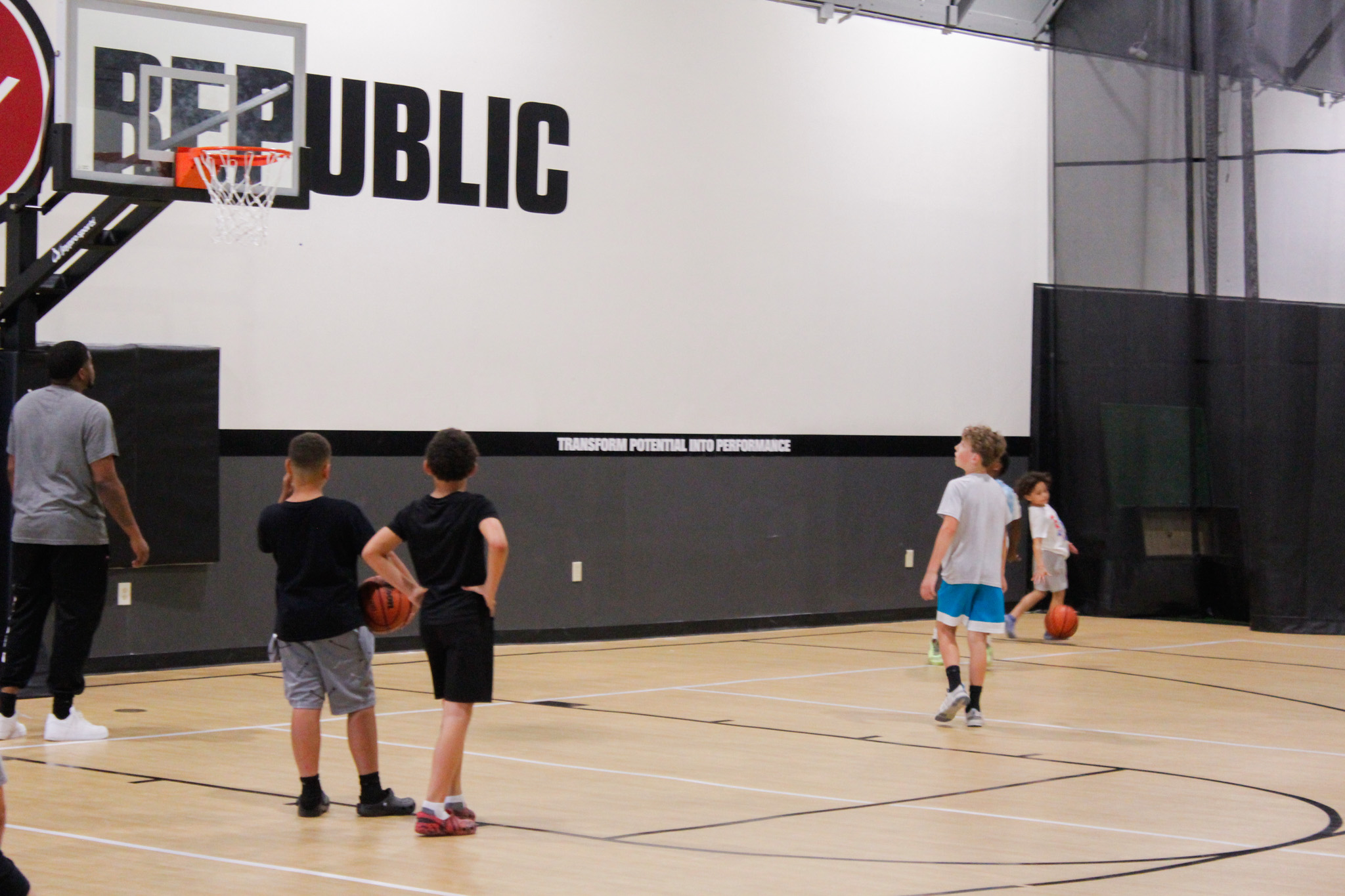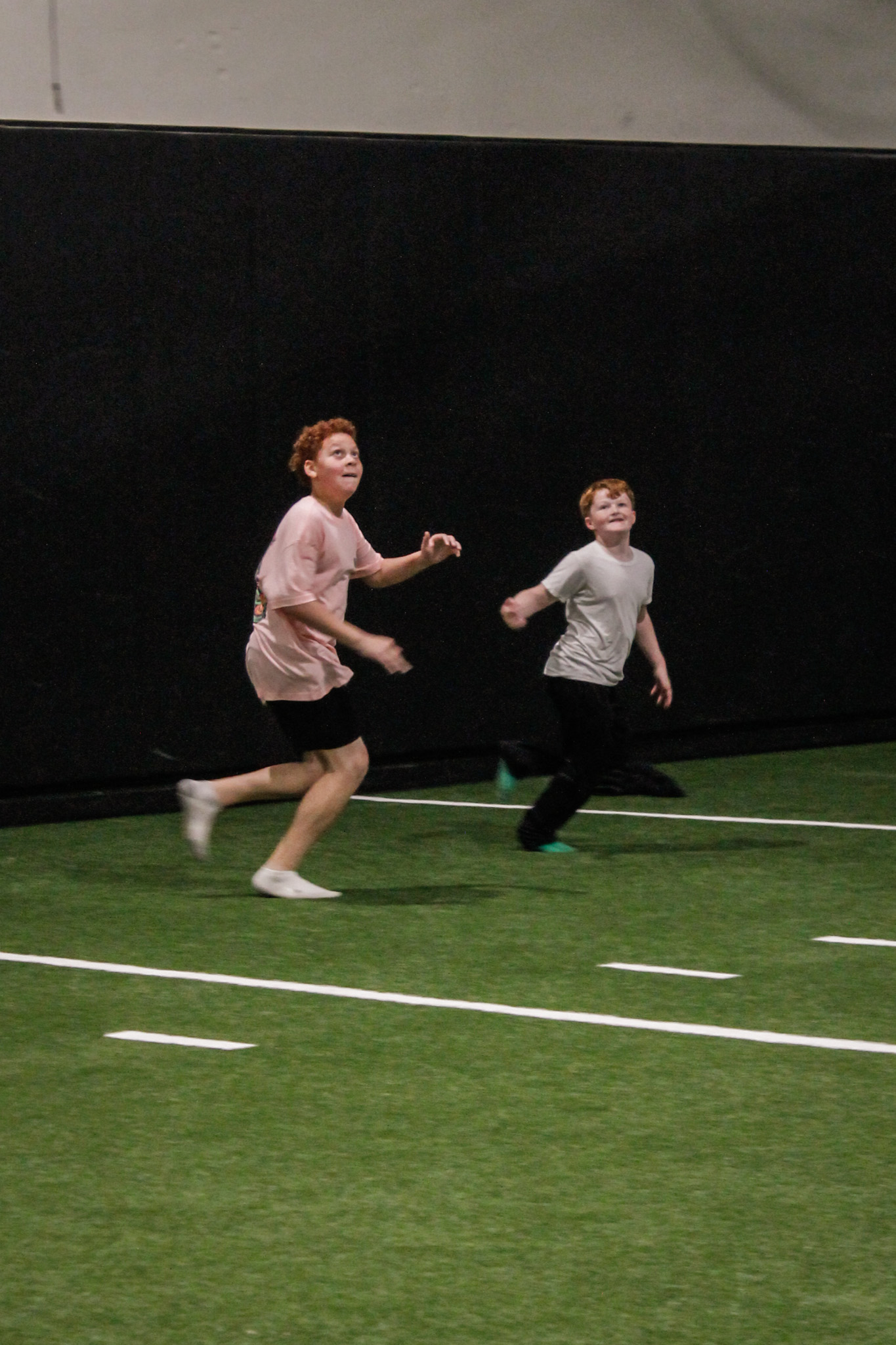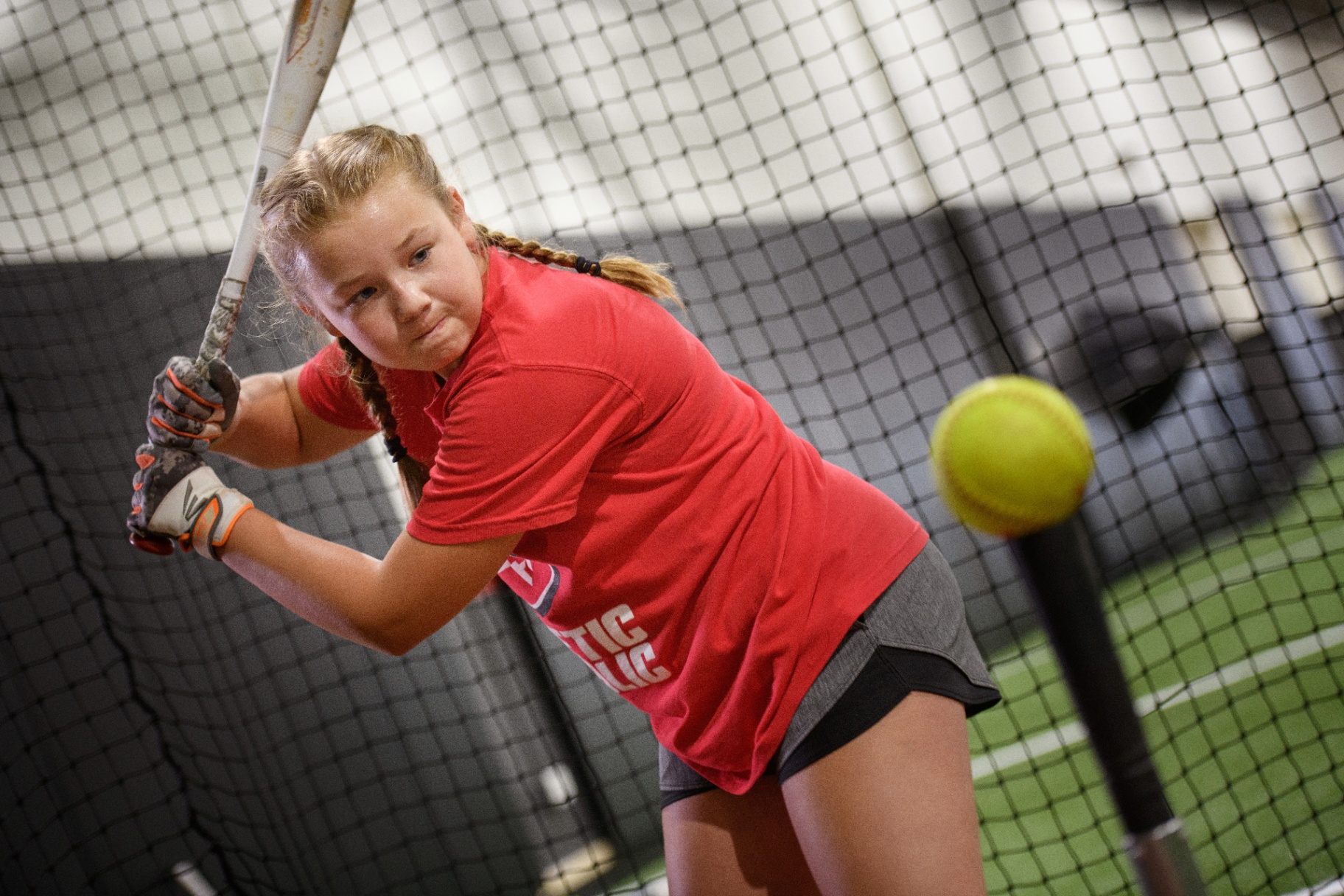
A ball takes off the bat. A defender cuts toward the open lane. A coach calls a play, and the game changes in a second.
When you’re trying to earn more playing time, being a step late can feel like the whole story. So can reaction time be trained, or are some athletes simply born quicker?
The honest answer: the raw speed of nerve signals is largely fixed, but much of what athletes call “reaction” is trainable. Seeing a cue, figuring out what it means, choosing a response, and moving efficiently are skills athletes can practice.
That distinction matters. Training may help you respond more effectively in your sport. It can’t guarantee a starting spot or playing time, and it doesn’t need to promise that to be worthwhile.
What does “reaction time” really mean in a game?
In a simple test, an athlete may press a button when a light flashes. That measures a fairly straightforward response to one predictable signal. Sport is more complicated: players have to notice relevant information, interpret it, choose what to do, and then execute the movement.
Think about a softball player reading a pitch. The response isn’t just “see ball, swing.” The athlete may pick up clues from the pitcher’s motion, recognize the pitch, decide whether to swing, and coordinate the movement. A defender or basketball player is doing a similar chain of seeing, deciding, and moving, often while several things are happening at once.
That’s why a quicker button press doesn’t necessarily mean an athlete will make a better play. And it’s why “reaction time” in sport is not just one trait.
What’s trainable, and what isn’t?
The basic speed at which a nerve signal travels through the body is largely a built-in physiological characteristic. Ordinary agility drills are not a reliable way to dramatically speed up that raw nerve conduction.
But the signal’s travel time is only one small part of a sporting response. Athletes can get better at noticing the right cue sooner, recognizing familiar patterns, selecting an appropriate action, and linking that decision to an efficient movement.
Research reviews support the trainability of sport-related anticipation and decision-making, especially when practice resembles the athlete’s sport. A systematic review and meta-analysis on perceptual-cognitive training found positive effects on athletes’ anticipation and decision-making, while also noting that gains on lab tests may not transfer completely to real-game performance. Another review found that temporal-occlusion training can improve visual anticipation, in other words, practicing how to read useful information before the full outcome is visible.
The practical takeaway is encouraging but realistic: athletes can train the parts of “reaction” they use to play the game, but improvement is specific to what they practice.
Train the whole see-decide-move chain
If every drill starts with the same signal and calls for the same response, an athlete can get better at that pattern. That may be useful, but games rarely offer the same cue in the same order every time.
Reactive agility work adds a cue the athlete has to read before choosing a movement. A coach might point or call a direction, or an athlete might respond to a moving partner. First-step quickness work can help an athlete turn that decision into a sharp, efficient initial movement. And sport-skill repetitions give athletes practice reading relevant cues while performing the actions they use in competition.
In other words, it’s not just about moving fast after someone says “go.” It’s about responding well when the next move isn’t already known.
Useful practice can include:
- Reactive agility drills: Respond to a visual or verbal cue, a coach’s movement, or a partner’s action instead of following a fully memorized pattern.
- First-step quickness: Practice starting in different directions and positions so the athlete can turn a decision into an effective first movement.
- Sport-skill repetitions: Rehearse skills in situations that ask the athlete to notice a cue and respond, not just repeat a movement with no decision involved.
- Varied, coached repetitions: Change the cue or situation, then give the athlete feedback on whether the response was timely, controlled, and appropriate.
The goal isn’t to make every session chaotic. Planned drills still have a place for learning technique and building physical qualities. But to practice reacting, athletes need some opportunities to perceive information and make a choice.
Physical preparation still matters
Even a good decision needs a body that can carry it out. If an athlete sees the opening but struggles to accelerate, change direction, or stay balanced, the response may not show up as an effective play.
That’s where physical training supports the chain. Speed, strength, coordination, and movement mechanics can help an athlete express a decision more effectively. At Athletic Republic Knoxville, the Acceleration Program combines athletic development with science-based training protocols, coaching, and practice designed to build movement skills.

A coach can help an athlete connect the physical work to their sport: not just “move quicker,” but “read this cue, choose your action, and move with control.” In Athletic Republic Knoxville’s 18,000-square-foot facility, athletes have space to work on those qualities with certified trainers and specialized training equipment.
A 2026 meta-analysis of agility training also highlights the value of pairing movement with the information that guides it. That’s a useful reminder: agility isn’t only changing direction. It’s noticing what’s happening and moving in response.
How should an athlete measure progress?
It’s tempting to look for one reaction-time number and hope it explains everything. But a single button-press test can’t tell you whether an athlete reads a defender better or chooses the right route under pressure.
A broader view is more useful. Look at whether the athlete is recognizing cues earlier, making better decisions, taking a more effective first step, and carrying out sport skills with greater control. Coaches can observe those responses during practice, and athletes can keep developing them through appropriately challenging repetitions.
Progress may not be linear, and improvement in a drill doesn’t automatically mean an immediate change in playing time. The point is to build skills that can contribute to better performance over time, not to treat one test score as a promise.
Can reaction training earn an athlete a starting spot?
It can help an athlete develop. It cannot guarantee a coach’s decision.
Playing time depends on many things: team needs, role, competition, consistency, and what a coach values. Training gives athletes a chance to work on qualities they can control and bring back to practice. It may help an athlete become more prepared to recognize opportunities and respond to them. It does not promise that those opportunities will arrive, or that the coach will make a particular choice.
That’s not a reason to give up. It’s a reason to focus on useful work: learn the cues in your sport, practice choosing and moving, and keep building the physical tools that support your game.
If you’d like to learn more about training options, visit the student-athlete training page. Athletes and families can also try a free trial class and see what training at Athletic Republic Knoxville is like.
Reaction time isn’t simply a fixed number an athlete either has or doesn’t. Raw nerve conduction speed is largely fixed, but reading the game, making a decision, and moving with purpose are skills worth training.