Sitting on the bench can feel like a verdict.
You may start wondering whether your athlete is talented enough, strong enough, or ready enough to compete. Parents may wonder what more they can do to help. But bench time does not automatically mean a lack of talent. Often, it means an athlete has not yet developed the athletic qualities that coaches can see and trust in fast-moving game situations.
The difference may show up in moments that last less than a second:
- The first step toward the ball
- Closing space on an opponent
- Stopping under control
- Changing direction without losing balance
- Re-accelerating after a cut
- Repeating high-effort plays late in a game
These moments are not always natural. They can be taught, practiced, measured, and improved.
That is the purpose of the Acceleration Program at Athletic Republic Knoxville: to build the speed, power, agility, coordination, and repeatable effort that help athletes become more noticeable: and more dependable: when their opportunity arrives.
Coaches Trust What They Can See Repeatedly
Every coach wants athletes who can make plays. But they also need athletes they can trust to execute the basics consistently.
A player may have excellent sport-specific skills, but if they are slow getting into position, struggle to stop and cut, or fade after several intense efforts, those limitations may affect playing time. A coach may choose the athlete who gets there faster, stays balanced through contact, closes down space, or makes the same quality movement in the final minutes as they did at the start.
That is not a judgment on an athlete’s potential. It is feedback about what needs to become more visible.
The good news is that athleticism is not fixed. Speed, acceleration, power, footwork, stability, and conditioning can all be developed through the right training process.
The Acceleration Program helps athletes turn effort into measurable movement improvements: and then turn those improvements into game-ready habits.
Athletic Republic Knoxville Starts With a Baseline
Effective training should not be guesswork.
Athletic Republic Knoxville begins by testing athletes at the start of a training program. Baseline testing helps identify strengths, movement patterns, asymmetries, and areas that may be holding an athlete back. It gives trainers a clearer picture of where the athlete is today and what the training plan should emphasize.
Testing may help evaluate qualities such as:
- Speed and running efficiency
- Explosive power
- Foot speed and coordination
- Balance and dynamic stability
- Strength and movement control
- Agility and change-of-direction ability
At the end of the program, athletes are tested again to measure results. That retesting process matters. It gives athletes something more useful than a vague feeling that they are “working hard.” They can see how their performance has changed and where they should continue developing.
For parents, this creates a clearer understanding of progress. For athletes, it creates ownership. Instead of simply hoping a coach notices improvement, they can track the work behind it.
Building the First Step Coaches Notice
In many sports, the first few steps determine who wins the moment.
A quicker first step can help a basketball player beat a defender, a soccer player reach a loose ball, a football player close a gap, or a baseball player get into position. The first step is not just about moving the legs faster. It involves body position, coordination, force production, balance, and the ability to react quickly.
Acceleration training teaches athletes how to produce movement from a strong, efficient position. Trainers can coach details such as:
- Forward body angle
- Knee drive
- Arm action
- Foot placement
- Stride length and frequency
- Applying force into the ground
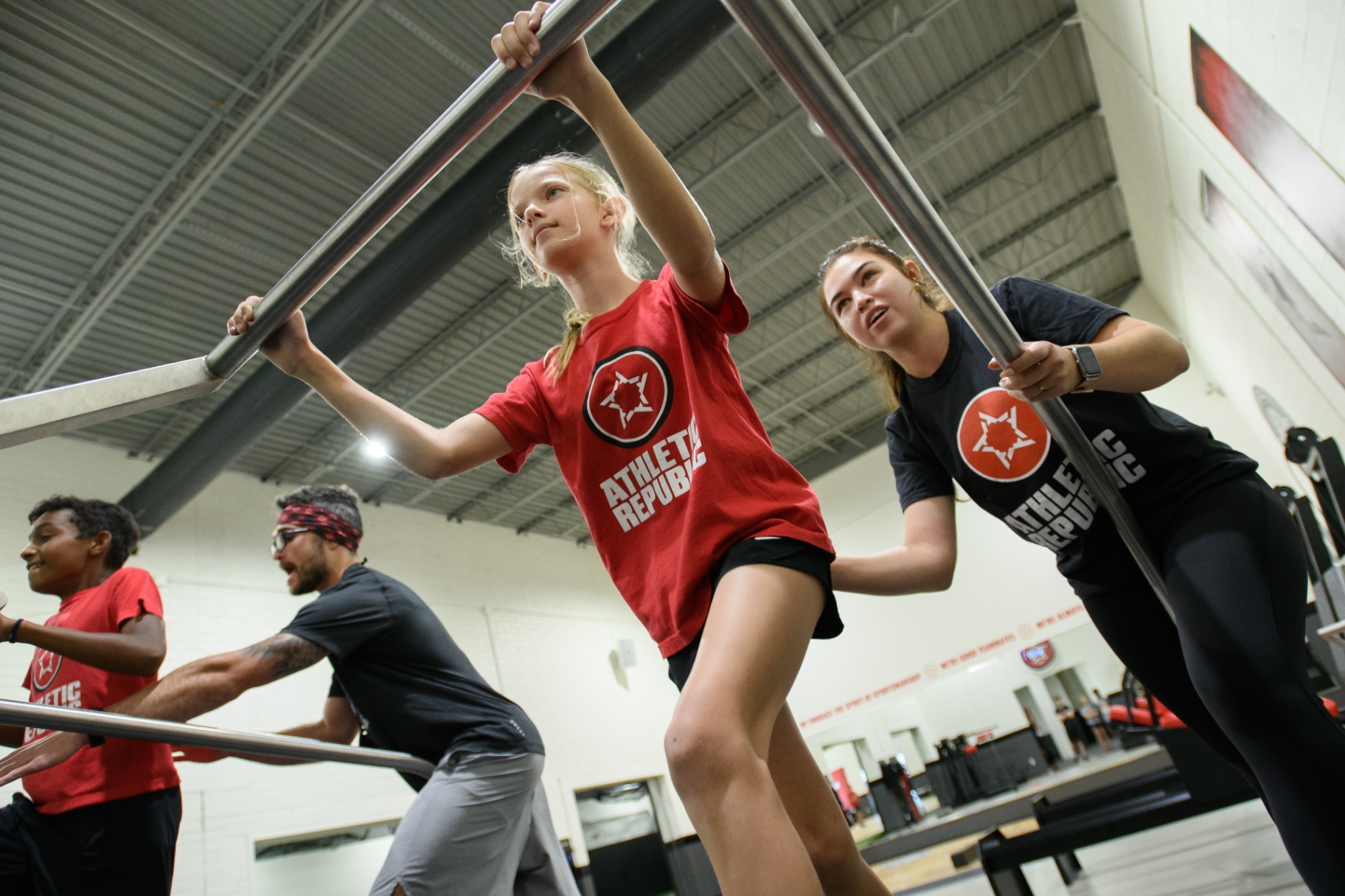
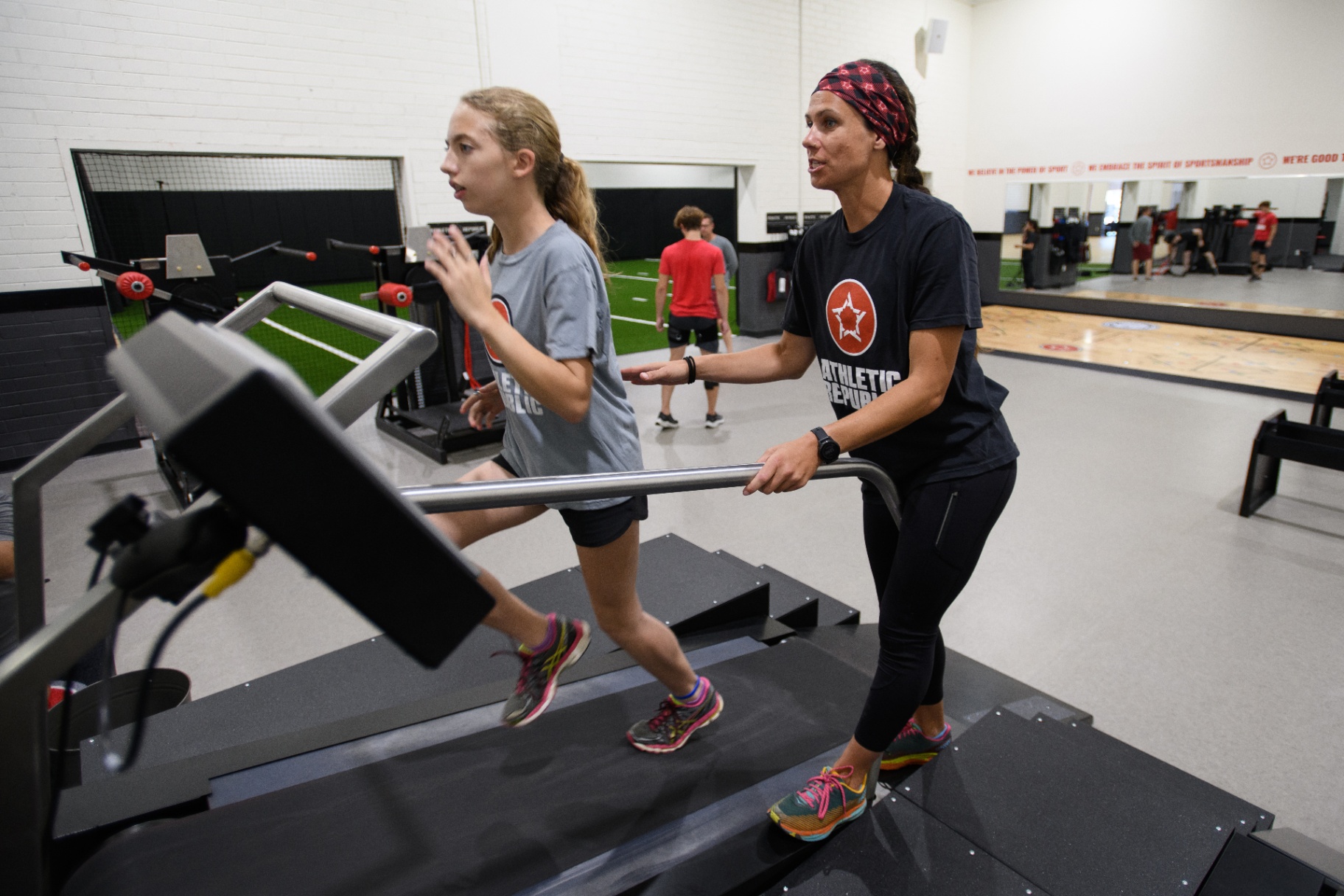
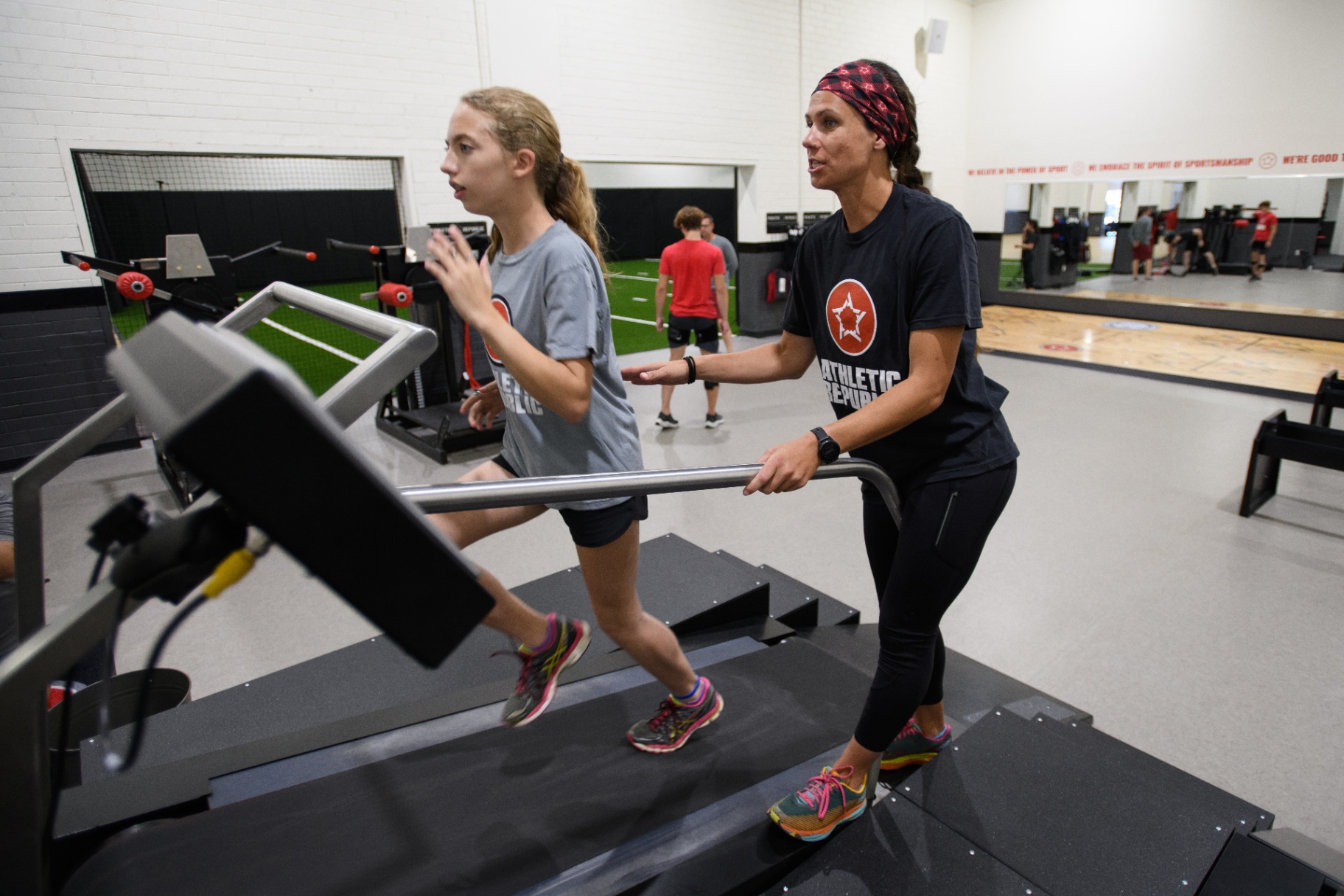
Athletic Republic Knoxville uses specialized high-speed treadmills, visual feedback, and trainer instruction to help athletes understand how they move. These tools give athletes the opportunity to improve mechanics in a controlled environment before applying those skills to the field or court.
Speed Is More Than Running in a Straight Line
Being fast in practice is helpful. Being able to use speed in a crowded, unpredictable game is even more valuable.
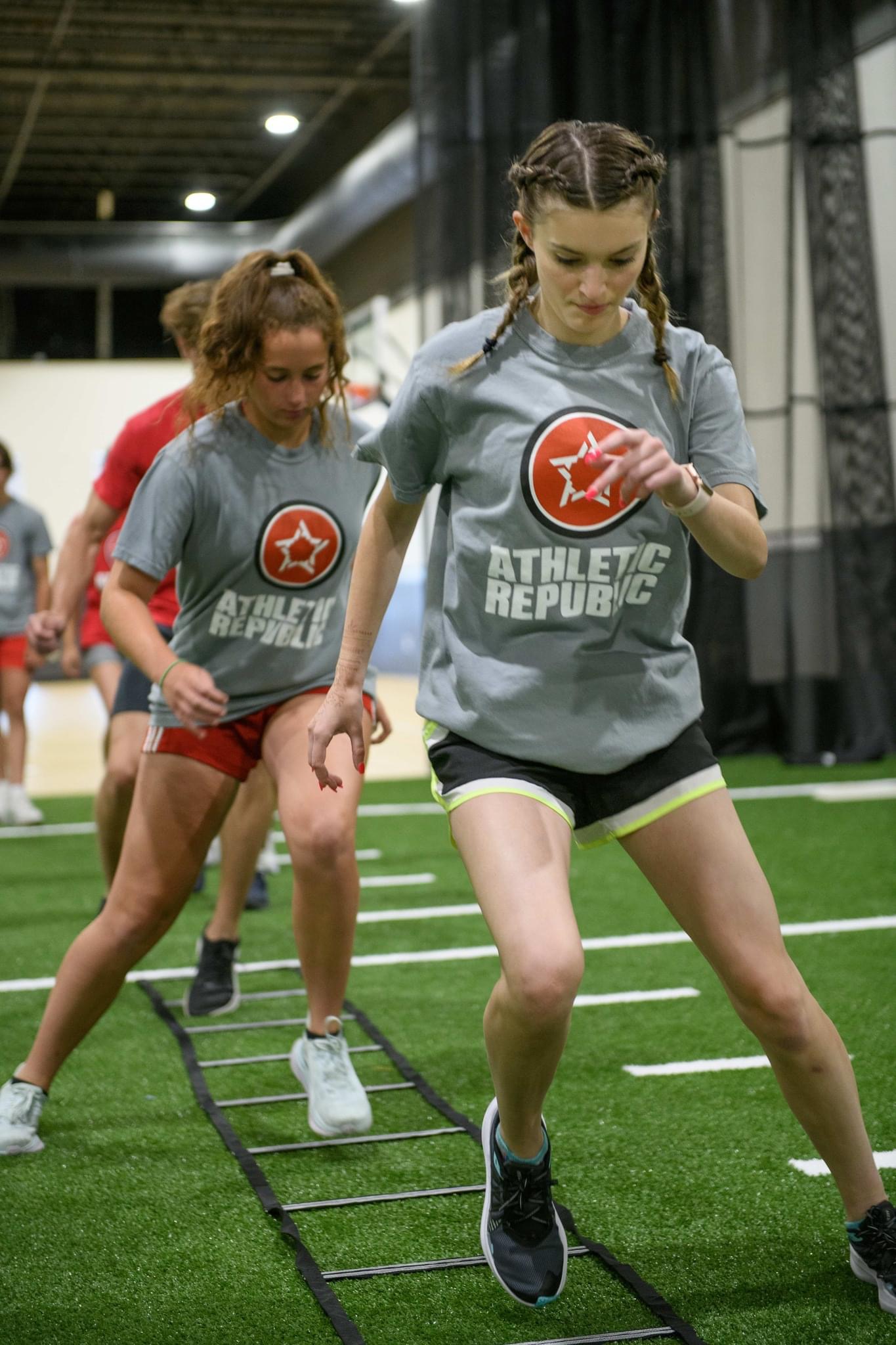
That is why the Acceleration Program develops more than linear speed. Athletes also work on the movement skills that allow them to slow down, change direction, and speed up again.
Agility depends on control. Athletes need to lower their center of gravity, plant effectively, maintain balance, and produce force in a new direction. Without those skills, a fast athlete may still lose time when cutting or stopping.
Training may include plyometrics, footwork, planned movement patterns, reactive drills, and sport-specific exercises. These progressions help athletes practice the visible moments coaches depend on:
- Getting into position quickly
- Braking without collapsing or standing too tall
- Cutting with control
- Reacting to a cue
- Re-accelerating after a change of direction
- Staying coordinated while fatigued
This type of training is especially important for athletes who feel like they are “almost there.” They may have the desire and basic skill, but need more efficient movement to separate themselves from the competition.
Repeatable Effort Can Change a Coach’s Decision
One exciting play can get attention. Consistent effort earns trust.
Athletes rarely get just one sprint, cut, or defensive recovery during a game. They may need to perform those actions over and over again. The player who can continue moving well late in a practice or game becomes valuable because the coach knows what to expect.
The Acceleration Program develops stamina alongside speed, power, and agility. The goal is not to exhaust athletes for the sake of exhaustion. Athletic Republic Knoxville uses science-based protocols to guide workout volume, intensity, recovery, and progression.
That approach helps athletes train hard while protecting movement quality. When technique begins to break down, that is important information: not a reason to push blindly. Certified trainers can make adjustments based on the athlete’s age, sport, training experience, goals, and current condition.
Over time, repeatable effort can become one of an athlete’s biggest competitive advantages.
Training That Is Structured, Personal, and Evidence-Based
The Acceleration Program is not a collection of random drills. It is a systematic progression designed to develop athletic qualities in a logical order.
Athletic Republic Knoxville combines:
- Science-based performance training protocols
- Certified trainers and hands-on coaching
- High-speed Super Running Treadmills
- Plyometric and agility training
- Strength and power development
- Video and visual feedback
- Baseline testing and end-of-program retesting
- A small-group format that allows for individual attention
Research and coaching practice consistently support the value of developing sprint mechanics, strength, power, plyometrics, and change-of-direction skills together. Athletes need more than one quality to perform well. They need the ability to produce force, move efficiently, control their bodies, and repeat those actions under pressure.
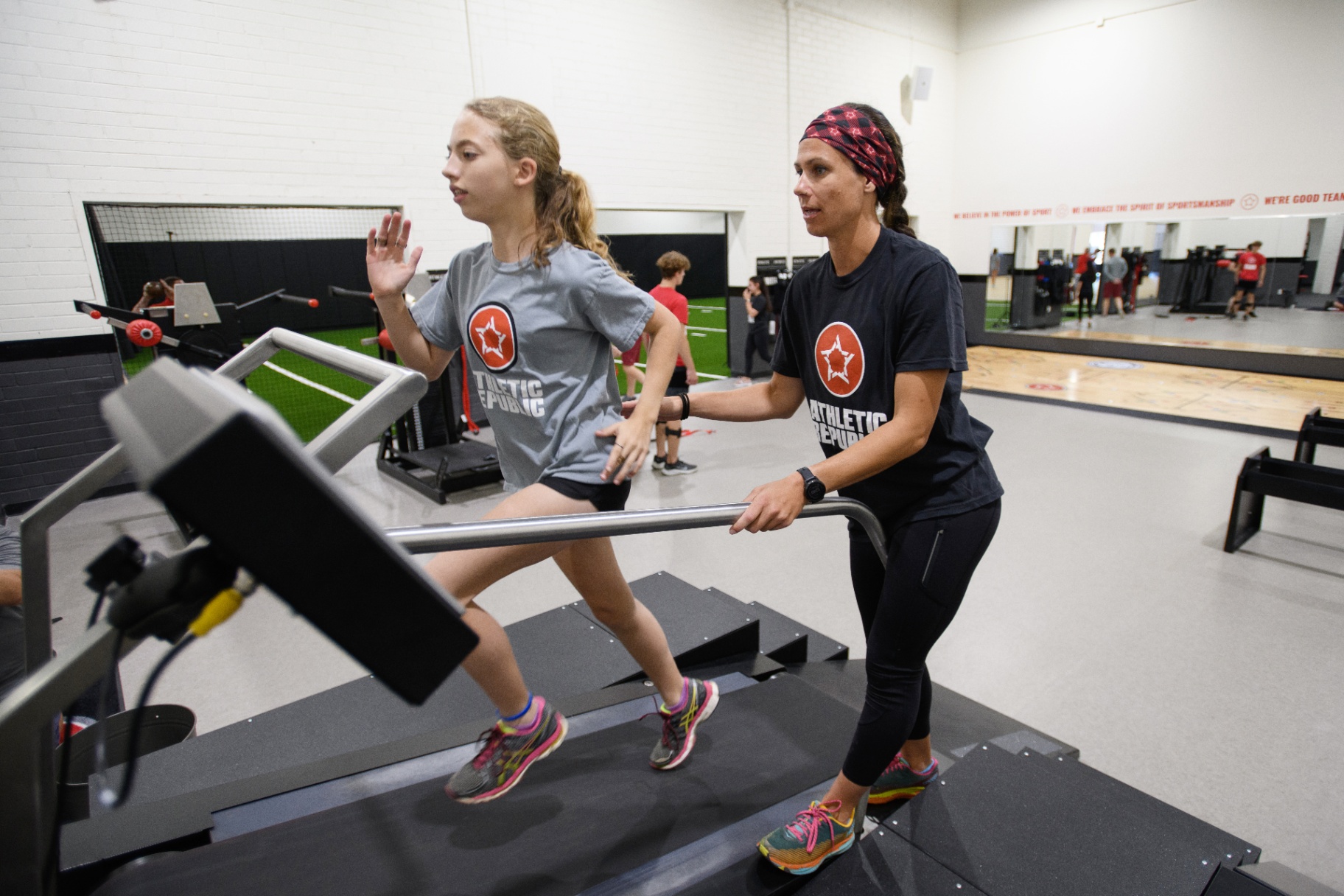
A Facility Built for Athletic Development
Athletic Republic Knoxville offers an 18,000-square-foot facility designed for sports performance training. That space allows athletes to work on multiple aspects of athleticism in one supportive environment.
Rather than trying to piece together speed work, strength training, footwork drills, and conditioning on their own, athletes can follow a coached plan built around their needs. The facility’s technology and equipment create more ways to observe movement, provide feedback, and make training purposeful.
For an athlete who has spent too much time watching from the sideline, that structure can be a major shift. Each session becomes an opportunity to improve something specific: not just “work harder,” but move better, react faster, and become more consistent.
What Parents Should Look For
If your athlete is frustrated by limited playing time, the first conversation should not be, “Why aren’t you starting?”
A more productive question may be: What qualities would help you become more reliable in the moments your coach values most?
That question shifts the focus from frustration to development.
Parents can support the process by helping athletes:
- Stay patient with gradual progress.
- Focus on controllable habits, such as effort, attendance, and coachability.
- Track improvements in speed, movement, strength, and confidence.
- Understand that athletic development is a long-term process.
- Communicate with trainers and coaches about goals and scheduling.
The goal is not to promise that a training program automatically guarantees a starting role. Playing time depends on many factors, including skill, tactics, team needs, attitude, and competition.
But athletes can improve the physical qualities that make coaches more likely to notice them: and more confident putting them into the game.
Your Next Opportunity Can Start Now
Bench time can be discouraging, but it can also be a starting point.
It may reveal the difference between having talent and being ready to show that talent consistently. The first step, the cut, the recovery run, the defensive closeout, and the final effort of the game all create evidence. When those moments become faster, sharper, and more repeatable, athletes give coaches more reasons to trust them.
The Acceleration Program at Athletic Republic Knoxville provides the structure, technology, coaching, and measurement to help make that growth possible.
If your athlete is ready to build the athleticism that earns attention, schedule a free trial class or learn more about sports performance training in Knoxville. The next opportunity may begin with one better first step.