A young athlete can have excellent hands, strong sport knowledge, and a great attitude: and still struggle to show those skills when the game speeds up.
Maybe they are confident during drills but hesitate during competition. Maybe they are productive in practice but spend more time on the bench than they want. Maybe they can make the play once, but not repeat the effort several times in a row.
That does not mean the athlete lacks potential.
Often, the missing link is game speed: the ability to accelerate quickly, change direction under control, react to what is happening, and repeat high-quality efforts throughout a game.
At Athletic Republic Knoxville, we believe game speed is not simply something an athlete is born with. It is a collection of physical and movement skills that can be measured, trained, and improved through the right plan.
Skill matters: but speed helps skill show up
A fast athlete is not automatically a great athlete. Speed without control, awareness, or sport skill does not guarantee success.
But when two athletes have similar technical ability, the athlete who can get to the ball sooner, create separation, close space, or recover position often has the advantage.
That is why an athlete may look talented in a controlled practice setting but struggle to make the same impact in a game. The game introduces:
- Quicker decisions
- Less available space
- Unexpected movement
- Defensive pressure
- Repeated acceleration and deceleration
- Fatigue between plays
The goal is not to make every athlete look like a track sprinter. The goal is to help each athlete move efficiently and confidently in the situations their sport demands.
Research and coaching frameworks commonly identify acceleration, maximum-speed running, deceleration, and change of direction as key parts of youth game speed. Sportsmith’s youth game speed framework also emphasizes that speed is most valuable when athletes can apply it in the context of their sport.
That is the difference between being fast in a drill and being effective when the game is moving quickly.
Acceleration starts with more than running hard
The first few steps can change an entire play.
A basketball player needs to beat an opponent to a driving lane. A soccer player needs to close down space. A softball player needs to reach a ground ball. A volleyball player may need to move from a ready position into a defensive play in an instant.
Acceleration training teaches athletes how to create force and direct it efficiently from the start.
In the Acceleration program, certified trainers work with athletes on details such as:
- Body position during the drive phase
- Powerful arm action
- Knee drive
- Foot placement
- Forward projection
- Stride length and frequency
- The transition from starting steps into open sprinting
These details matter because speed is not only about effort. An athlete can work incredibly hard while still losing time through poor posture, overstriding, weak force application, or inefficient mechanics.
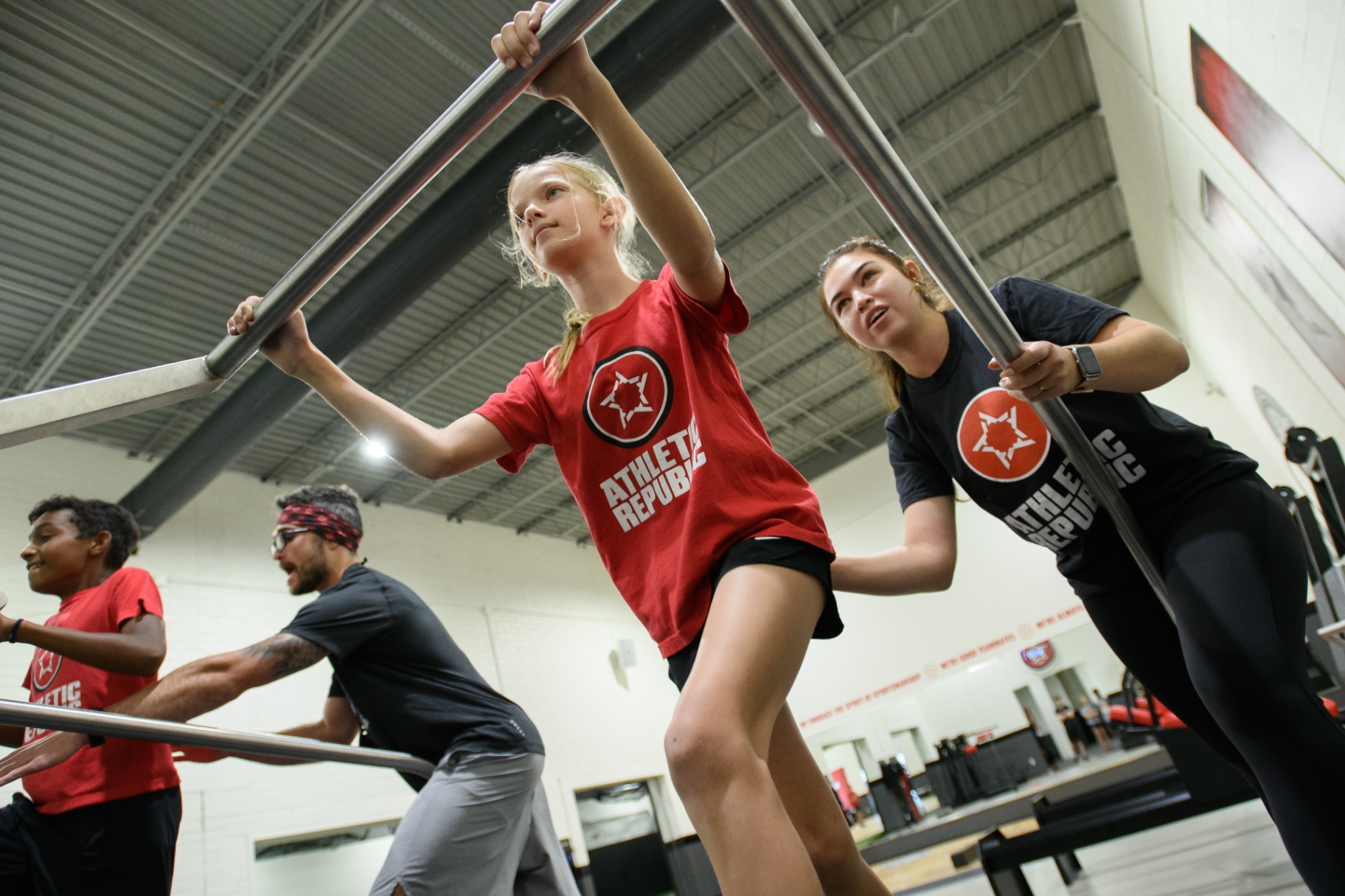
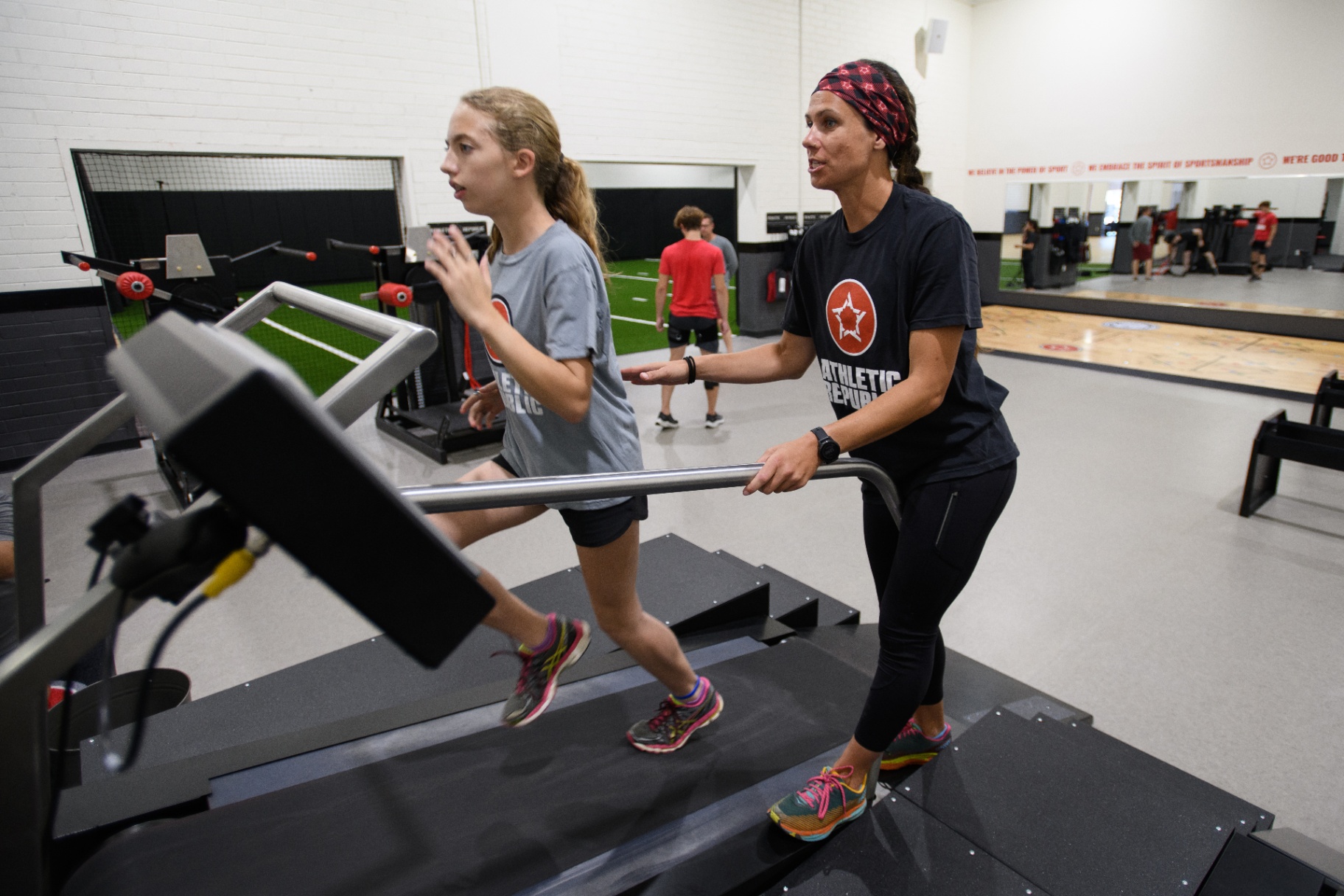
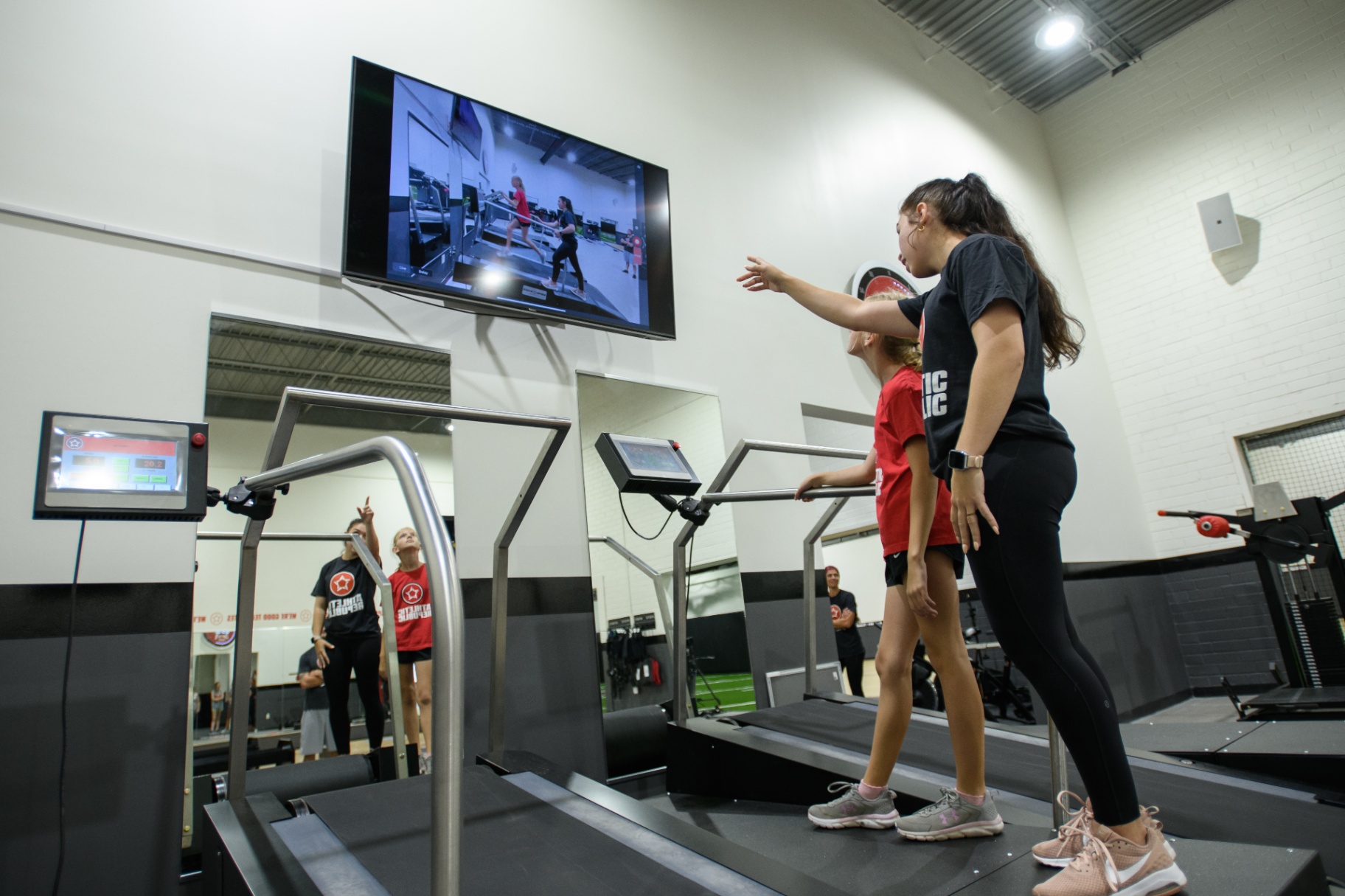
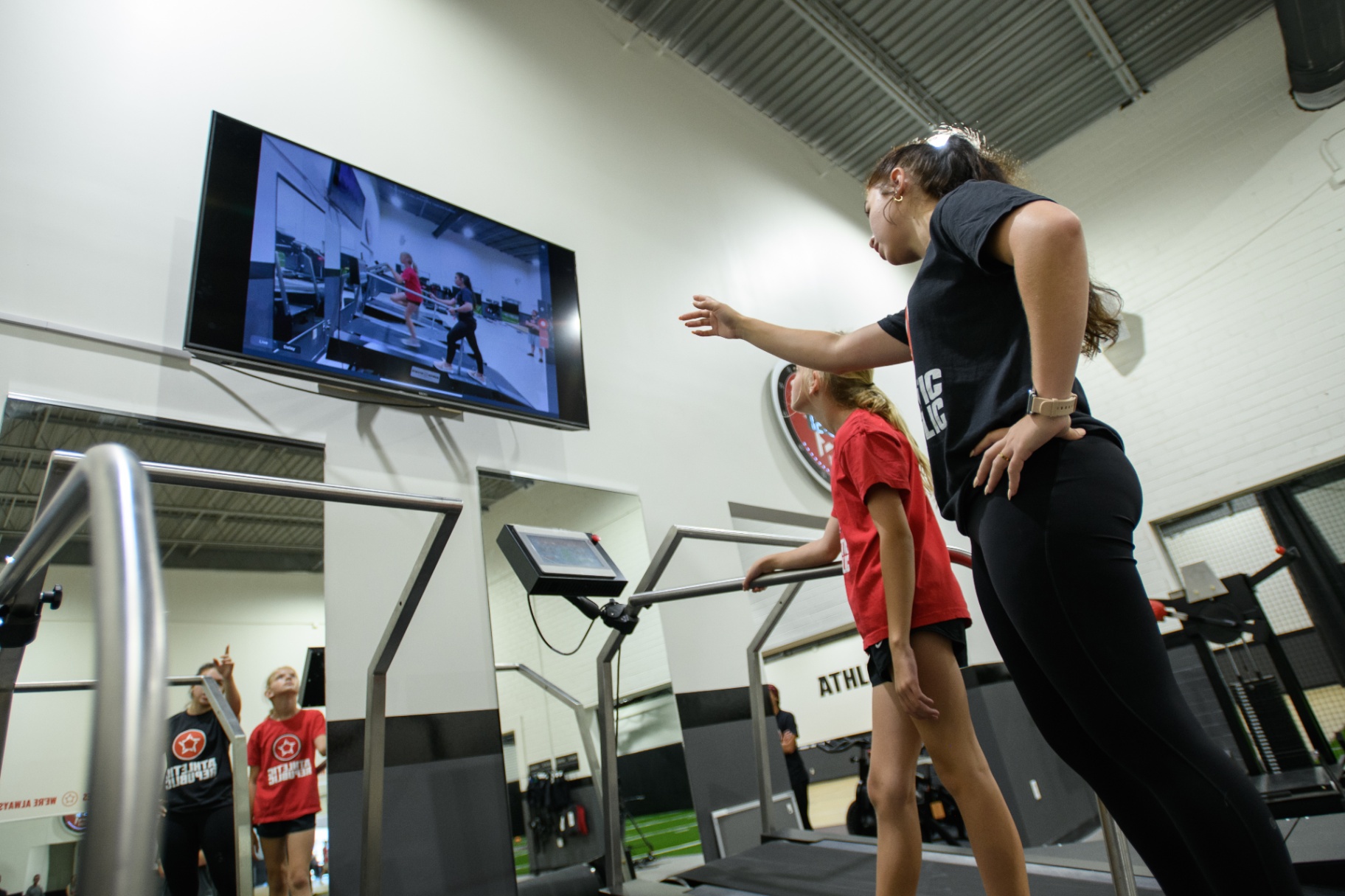
Athletic Republic Knoxville uses Super Running Treadmills, mirrors, and video feedback to help athletes understand what their bodies are doing while they move. That immediate feedback gives trainers the opportunity to make useful adjustments in real time, rather than asking an athlete to guess why a sprint did not feel right.
Change of direction is where game speed becomes athleticism
Most sports are not played in a straight line.
Athletes sprint, stop, shuffle, cut, backpedal, turn, and accelerate again. The ability to change direction quickly is important: but the ability to do it under control is even more important.
Effective change-of-direction training develops three connected abilities:
- Braking: Can the athlete slow down without losing balance?
- Control: Can the athlete keep a strong position while preparing to cut?
- Re-acceleration: Can the athlete push out of the cut and build speed again?
This is where many athletes discover that “quick feet” are only one part of the equation. Fast feet do not help much if the athlete cannot control the center of gravity, absorb force, or push efficiently in a new direction.
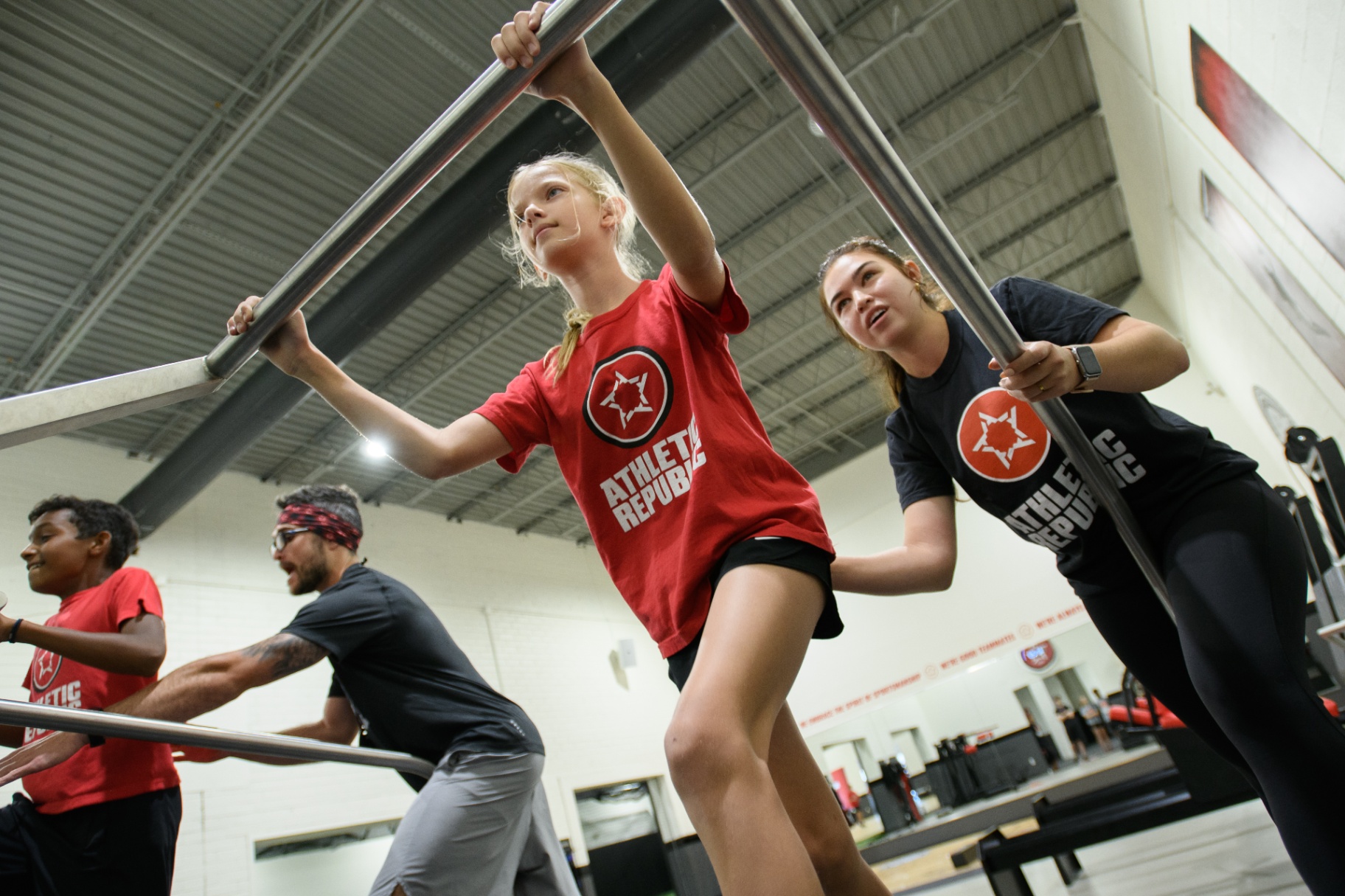
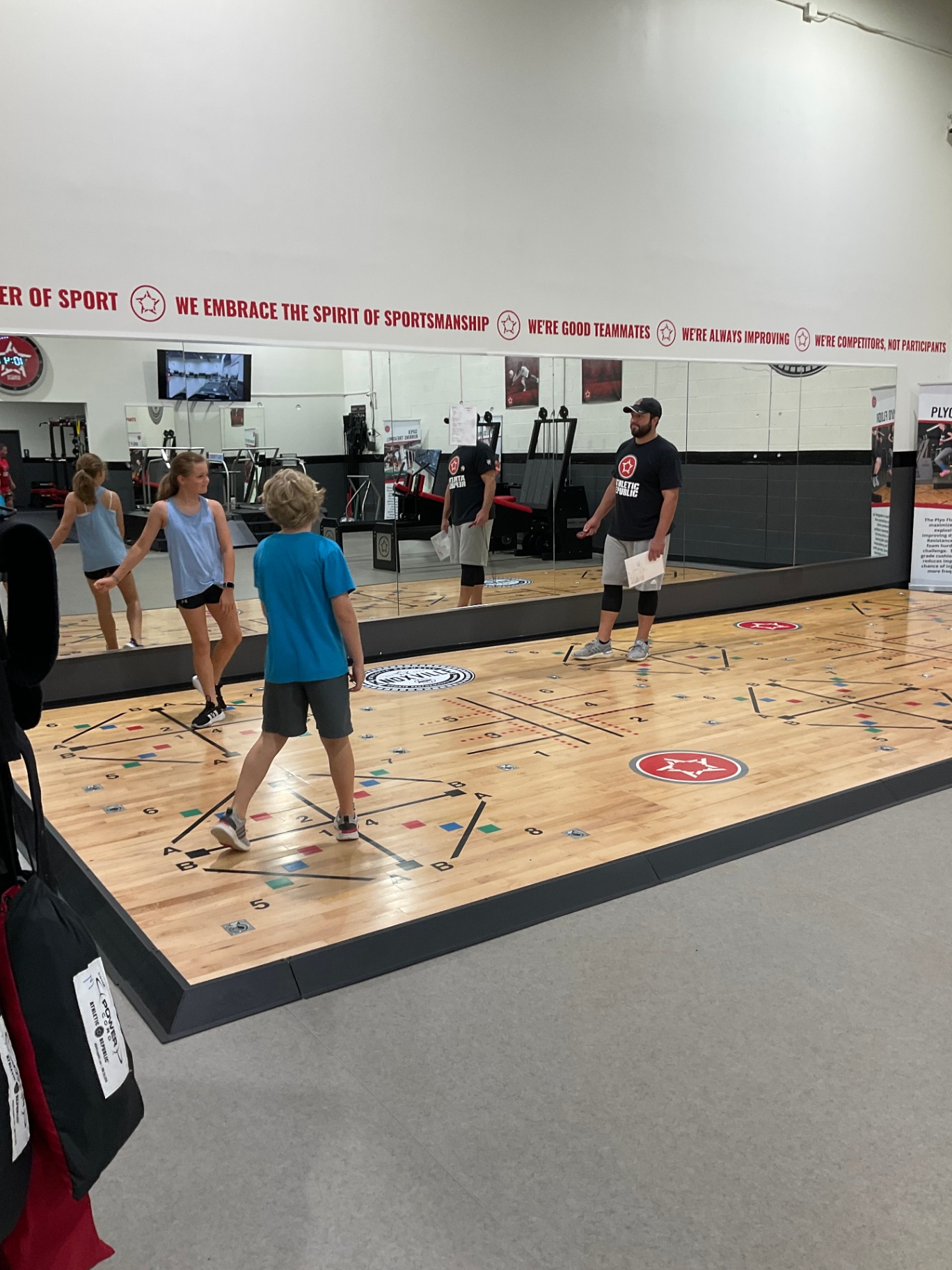
On the agility floor at Athletic Republic Knoxville, trainers can progress athletes from foundational movement patterns to more challenging drills involving multiple directions, reactive cues, and sport-specific demands. Athletes learn to move with sharper decisions while maintaining better posture and balance.
Power gives the athlete something to use
Game speed depends on how quickly an athlete can produce and apply force.
That is why the Acceleration program combines running mechanics with strength and plyometric training. Jumping, landing, pushing, and stabilizing all contribute to the ability to accelerate and redirect force.
Plyometrics can help athletes develop explosiveness, coordination, and body control. Strength training builds the foundation that allows them to produce force safely and consistently. Together, these elements help athletes become more powerful without relying only on effort or momentum.
A box jump, for example, is not just about jumping onto a platform. It can teach an athlete to coordinate the lower body, stabilize the landing, and express force quickly. Trainers adjust the exercise and coaching cues to match the athlete’s age, experience, movement quality, and goals.
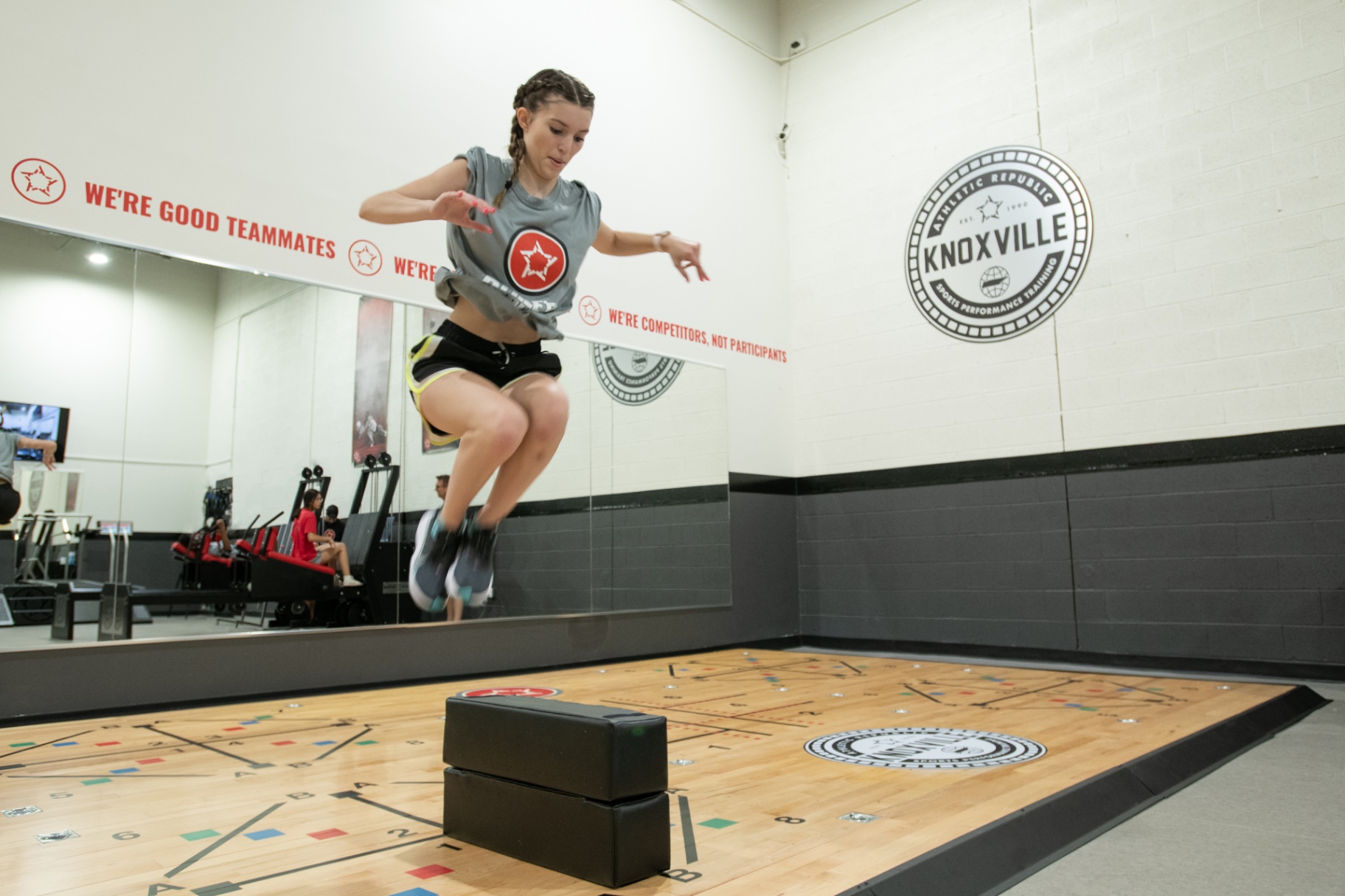
For younger athletes, that may mean learning to land and move well. For older or more advanced athletes, it may mean applying greater force, handling more complex movement patterns, or preparing for the demands of a specific sport.
Repeatable effort separates practice performance from game performance
One explosive play is valuable. Being able to make that effort again late in the game is often what creates a real competitive advantage.
This is why game speed is not just about a faster 10-yard sprint. It is also about repeatability.
An athlete may have enough speed to win one race during practice. But can they accelerate, decelerate, and change direction several times while tired? Can they maintain good mechanics after multiple efforts? Can they still react quickly in the fourth quarter?
The Acceleration program builds repeatable effort progressively. Athletes are not simply pushed through exhausting workouts and told that fatigue equals improvement. Speed work is performed with attention to quality, mechanics, recovery, and appropriate training volume.
As athletes develop, trainers can introduce more repeated efforts and game-like movement demands while continuing to monitor how they respond. The goal is to build conditioning that supports speed: not conditioning that teaches the athlete to move poorly while exhausted.
That distinction is especially important for youth athletes, who are still growing and developing. Training should be challenging, but it should also be age-appropriate, purposeful, and adjusted to the individual.
Baseline testing turns training into a process
Many athletes want to know whether they are getting faster, stronger, and more explosive. Parents want to know the same thing.
The Acceleration program begins with baseline testing to help identify an athlete’s starting point. Athletic Republic Knoxville evaluates qualities such as speed, agility, power, flexibility, endurance, movement mechanics, and symmetry.
The results help trainers create a more personalized plan. An athlete who struggles with lateral movement may need a different emphasis than one who has good change-of-direction ability but lacks acceleration. Another athlete may need to improve landing mechanics, single-leg stability, or running efficiency.
Then, after a period of training, athletes are retested.
Retesting gives the athlete something more meaningful than a vague feeling that workouts are working. It creates a way to recognize progress, identify the next opportunity, and adjust the plan as the athlete develops.
Coaching makes the technology useful
The equipment at Athletic Republic Knoxville is advanced, but technology alone does not build game speed.
The difference comes from having certified trainers who know how to interpret movement, coach technique, choose appropriate progressions, and connect training to the athlete’s goals.
Athletes train in a supportive, small-group environment where trainers can provide individual feedback while still creating energy and accountability. That combination helps athletes stay engaged and makes it easier to build consistency over time.
The 18,000-square-foot facility gives athletes room to run, jump, lift, cut, and learn. From the high-speed treadmills to the agility floor and plyometric areas, the training environment is designed to support a complete approach to athletic development.
From the bench to the moment
Being on the bench can be frustrating, especially when an athlete knows they have the skill to contribute.
But physical development is not a judgment on an athlete’s potential. It is an opportunity.
When athletes improve their first-step quickness, movement efficiency, change of direction, power, and repeatable effort, they give their existing skills more chances to appear in competition. They can get to the play sooner, recover more effectively, create space, and stay involved when the pace increases.
That progress does not happen overnight: and it does not look exactly the same for every athlete. It comes from consistent training, thoughtful coaching, measurable goals, and the confidence that develops when an athlete can feel and see improvement.
At Athletic Republic Knoxville, the Acceleration program helps athletes ages 9 through college build the physical tools that support game-day performance. To learn more about student athlete training or schedule a free trial class, connect with our team.
Game speed may look like a gift from the outside. In reality, it is built one quality repetition at a time.