You win the ball, make a smart pass, track back on defense, and then the coach calls you off. If you’re a player trying to turn short shifts into a starting spot, that moment can sting. It’s easy to wonder, Did I do something wrong?
Sometimes you might have. But a substitution, by itself, doesn’t tell you that. Coaches make changes for plenty of reasons that aren’t a verdict on your last few minutes, and the way you respond can help you be ready for the next opportunity.
A substitution isn’t always a performance review
Good shifts still end. Coaches manage rotations, match lines or combinations against an opponent, keep players’ legs fresh, and use the depth of the roster across a game. A player may come off because the coach wants a different skill set for the next stretch, or because they’re planning ahead for a demanding finish.
You may not know the reason in the moment. That uncertainty can make the change feel personal, especially if you were contributing. But try not to turn “I’m coming off” into “I played badly” without more information. Your shift can have gone well, and the coach can still have a tactical or workload reason to make a change.
After the game, if you need clarity, ask calmly and specifically: “What did you want me to do well during that shift, and what should I focus on when I go back in?” You’re not challenging the decision. You’re looking for useful feedback.
Reset the moment, not your whole game
Being taken off after playing well can bring a quick mix of disappointment, nerves and frustration. Research exploring soccer substitutes’ experiences describes feelings such as anxiety and isolation, alongside the pressure of having limited time to make an impact. That research doesn’t mean every player feels the same way, or that it studied the exact situation of being substituted after a strong shift. It does remind us that the substitute experience can be emotionally demanding.
The goal isn’t to pretend you’re not disappointed. It’s to keep that disappointment from taking over the next few minutes. A small reset gives you something useful to do:
- Breathe: Take one slow breath out. Let your shoulders drop.
- Pick a one-word cue: Choose something simple, like ready, next or calm.
- Watch the player in your spot: Notice one useful detail, where they’re positioning, how they’re communicating, or when they’re choosing to press or move.
- Stay available: Keep following the game and be prepared if the coach calls you back in.
That’s positive reframing in practice: not insisting that being subbed off is secretly great, but treating the next minutes as a chance to reset, observe and prepare. A longitudinal study of young footballers navigating challenges found that reflection, problem-solving, support and clear feedback could help players move from an initial setback toward a rebound. The players’ experiences varied, so there’s no one-size-fits-all response. Still, a practical next step is within your control.

“Stay warm” means keep moving, and keep reading the game
Staying warm isn’t the same as doing another workout on the sideline. Follow your coach’s instructions and your team’s normal routine. If there’s no specific instruction, avoid standing still for a long stretch: walk easily, shift your weight, or use gentle movement that feels comfortable and appropriate for the conditions. As a return looks possible, your coach or team routine may include a brief, gradual movement preparation.
Just as important, stay mentally connected. Watch the player who replaced you and notice what is changing: the pace, the space, the matchups or the way your team is building an attack. That’s not a comparison contest. It’s useful information you can carry into your next shift.
If you’re called back in, you may need to produce a fast burst soon after entering. Team sports often ask athletes to repeat short, intense efforts with limited recovery, not just perform one sprint and call it a day. That repeated-sprint ability is a physical quality athletes can train.
Repeated-sprint fitness is trainable, but it needs a plan
Evidence supports repeated-sprint training as one way to develop qualities useful for repeated high-intensity efforts. A 2026 meta-analysis focused on youth soccer players found improvements in average repeated-sprint performance and short-distance sprinting, though it did not find a significant improvement in best single-sprint performance. A broader Sports Medicine systematic review and meta-analysis also found that repeated-sprint training improved several fitness measures in trained athletes.
The details matter. In a study of under-15 soccer players, six weeks of repeated-sprint training once or twice per week improved some sprint and repeated-sprint measures. The study used sets of four to six sprints over 15–30 meters, with recovery between efforts. A later youth-soccer meta-analysis suggested a general starting framework of about two sessions per week for at least six weeks, with four to six repetitions per set and work-to-rest ratios around 1:5 to 1:10.
Those numbers aren’t a prescription for every young athlete. Age, training experience, current sports schedule and the coach’s plan all matter. Shorter efforts (around 15 meters, for example) can be a useful way to focus on acceleration and maintain quality, particularly when the goal is to limit a drop-off in sprint performance across repetitions. The best distance, rest and volume depend on the athlete and the session.
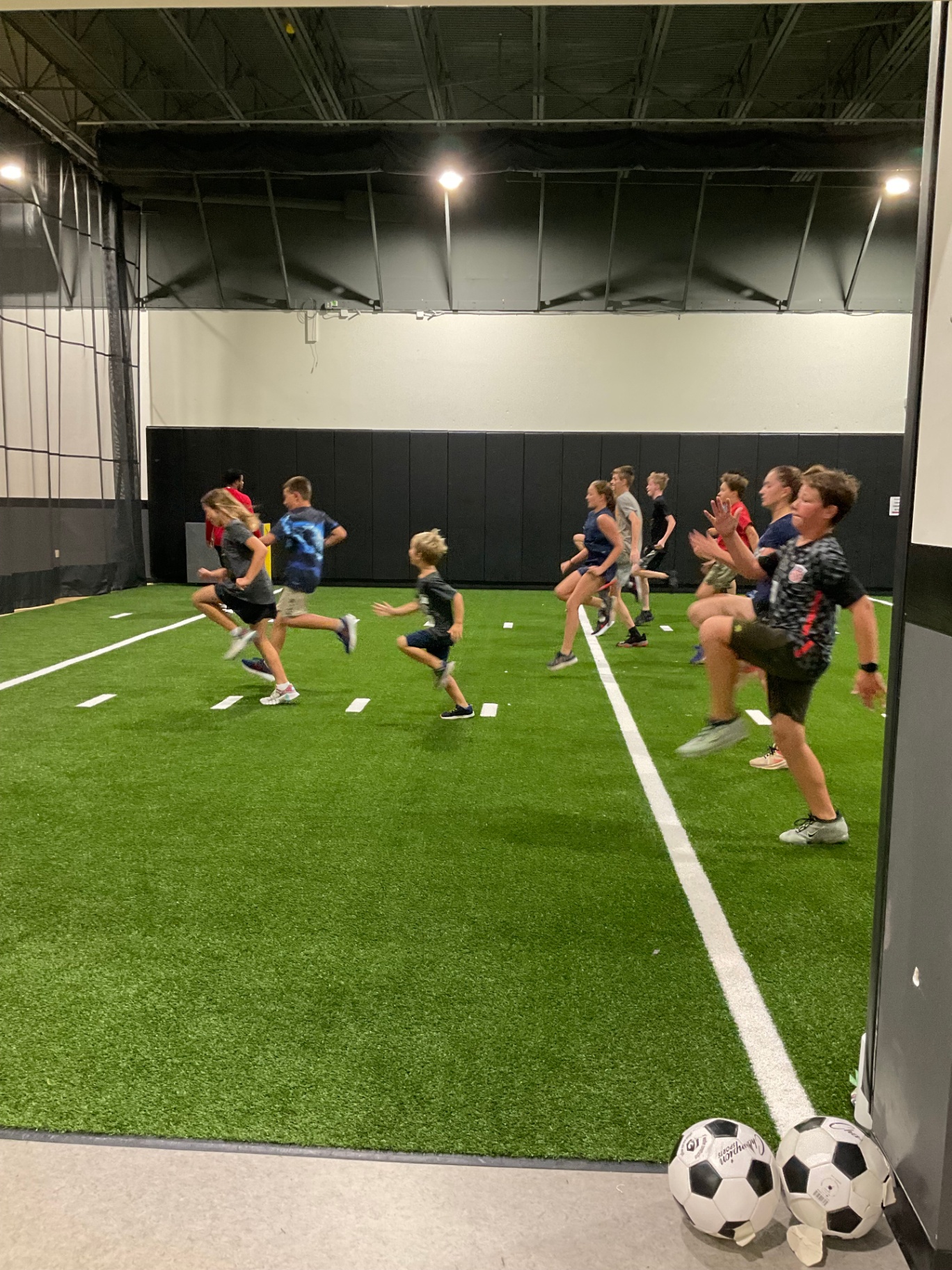
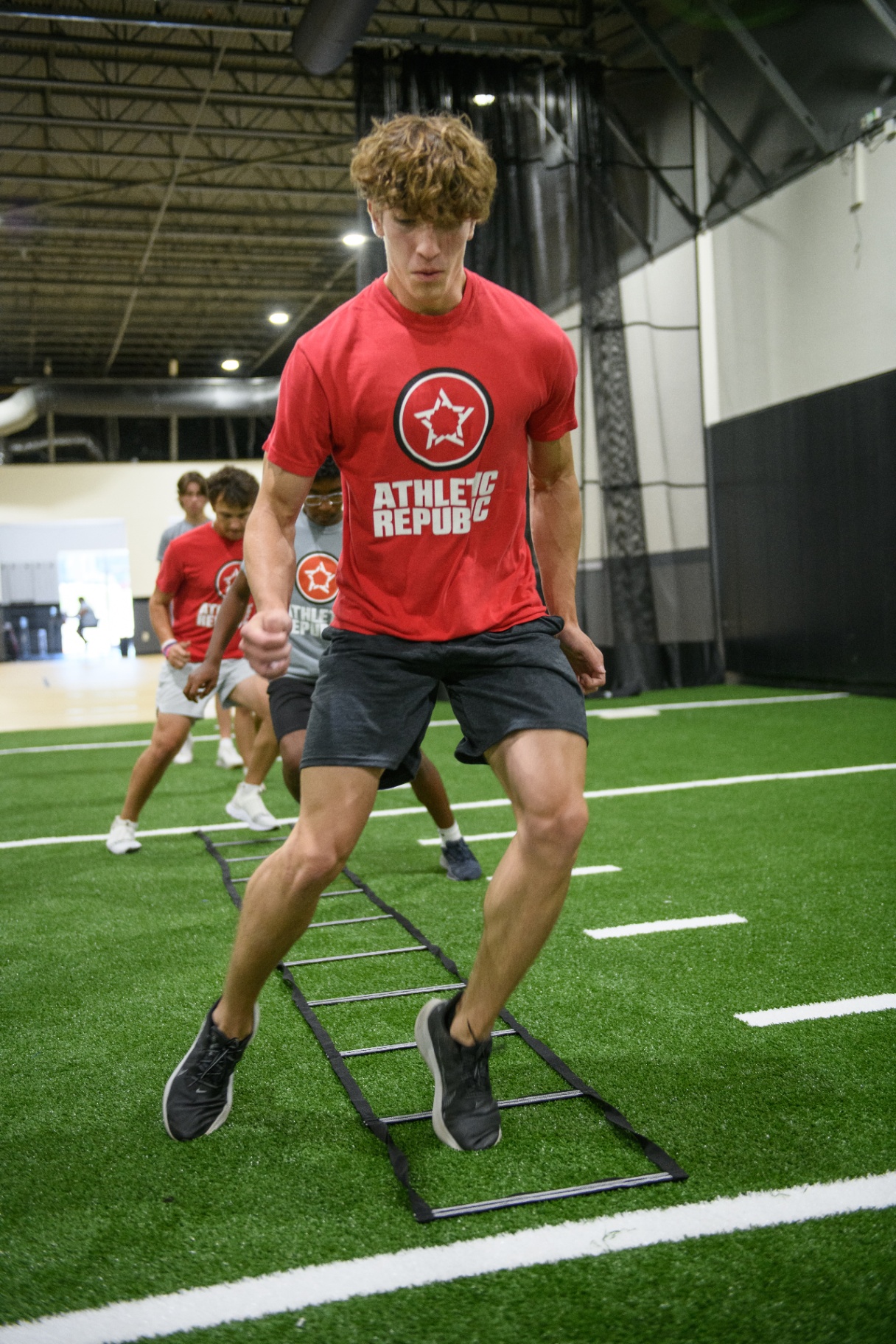
At Athletic Republic Knoxville, certified trainers use science-based training protocols and coach athletes through speed and agility work on turf. The 18,000-square-foot facility provides space to develop movement and conditioning in a structured setting. Training should complement, not pile on top of, team practices and games.

The reset routine for the next time you come off
When you’re substituted back out, try this quick sequence:
Breathe. Cue. Observe.
- Breathe: Take one slow exhale as you reach the sideline.
- Cue: Choose one word to focus your attention, ready, next or another word that works for you.
- Observe: Watch the player in your spot and take one thing from their game that you can use.
Then keep moving as appropriate, stay engaged with the team, and be ready for the next instruction. If you feel upset, that’s understandable. You don’t have to force a smile or pretend it doesn’t matter. You can feel disappointed and still choose a useful next action.
Strong shifts add up
A strong short shift matters. So does preparing your body to repeat high-intensity efforts, and keeping your attention and composure when a substitution doesn’t go the way you hoped. Over time, consistent shifts, appropriately trained repeated-sprint fitness and self-regulation can help turn limited minutes into a stronger case for more responsibility.
The honest part: training can support development, but no program can promise a starting spot or playing time. Coaches make those decisions based on what they see, what the team needs and the demands of the game. Your opportunity is to keep building the skills and habits you can bring to the next shift.
Want to keep developing your speed and agility with Athletic Republic Knoxville? Learn about student-athlete training or try a free class.