Sitting on the bench can be frustrating: especially when you know you have the skills, effort, and desire to contribute.
You may be doing everything your coach asks. You attend practice, learn the plays, support your teammates, and keep working. But when game time arrives, another athlete’s name is called first.
That does not always mean you lack talent. Often, the difference between watching and playing comes down to athletic qualities coaches can see immediately: a faster first step, better body control, sharper changes of direction, and the ability to make the same explosive movement repeatedly.
That is where the Acceleration program at Athletic Republic Knoxville can make a meaningful difference.
The goal is not simply to make an athlete “work harder.” It is to develop speed, agility, power, and movement efficiency through science-based protocols: then measure progress so athletes and parents can see how the work is paying off.
Coaches Notice More Than Straight-Line Speed
When athletes think about becoming faster, they often picture a faster 40-yard dash. That can be useful, but coaches are usually evaluating something broader.
They are watching what happens in the first few steps:
- How quickly do you react when the play starts?
- Can you close space before an opponent gets comfortable?
- Do you create separation when you cut?
- Can you stop under control and accelerate again?
- Do you arrive in position consistently?
- Can you repeat those movements late in practice or a game?
In other words, coaches are not only looking for top speed. They are looking for usable athleticism.
A soccer player who reaches the ball first, a basketball guard who turns the corner, a football receiver who creates space off the line, or a softball player who gets to the next base is showing acceleration in a sport-specific way.
The Acceleration program helps athletes build the physical tools behind those moments.
The Real Advantage: Becoming More Reliable in Motion
Starting spots are often earned by athletes coaches trust.
That trust is built when an athlete consistently makes the right play at game speed. It comes from being able to defend without losing balance, run a route with conviction, recover after a mistake, or beat an opponent to a loose ball.
Those moments depend on more than effort. They depend on how efficiently your body produces and absorbs force.
At Athletic Republic Knoxville, training may address:
- Acceleration and short-distance speed
- Explosive power
- Change-of-direction ability
- Balance and stability
- Sprint mechanics
- Lower-body strength
- Reaction and movement skills
- Conditioning for repeated high-intensity efforts
This combination helps athletes move with more confidence and control. Instead of arriving late, reaching awkwardly, or slowing down during a cut, they can begin to arrive earlier and move more decisively.
That is the kind of change a coach can see during practice.
Training That Connects the Numbers to Movement
A major part of the Acceleration program is understanding where an athlete is starting and how they are progressing.
Athletes are tested at the beginning of a training program to help identify areas for improvement, including movement patterns and symmetry. At the end, they can be tested again to measure results.
That test-train-retest process matters because progress should not be based only on how tired you feel after a workout. It should be connected to measurable performance.
Depending on the athlete and goals, progress may show up through improvements in:
- Sprint times
- Jump performance
- Agility or change-of-direction testing
- Movement quality
- Power and strength
- Running efficiency
- Ability to repeat explosive efforts
The numbers do not tell the whole story, but they provide valuable feedback. They help trainers adjust the program and give athletes a clear target to work toward.
For parents, measurable progress also provides a better picture of what training is accomplishing. For athletes, it can turn “I think I’m getting better” into “I can see exactly how I’m improving.”
Why Video Feedback Changes the Learning Process
Sometimes an athlete knows something feels off but cannot identify the problem.
Maybe the first step feels slow. Maybe the athlete is leaning too far back during a sprint. Maybe they are taking extra steps before changing direction. Maybe they are losing posture when fatigue sets in.
That is where video feedback can help.
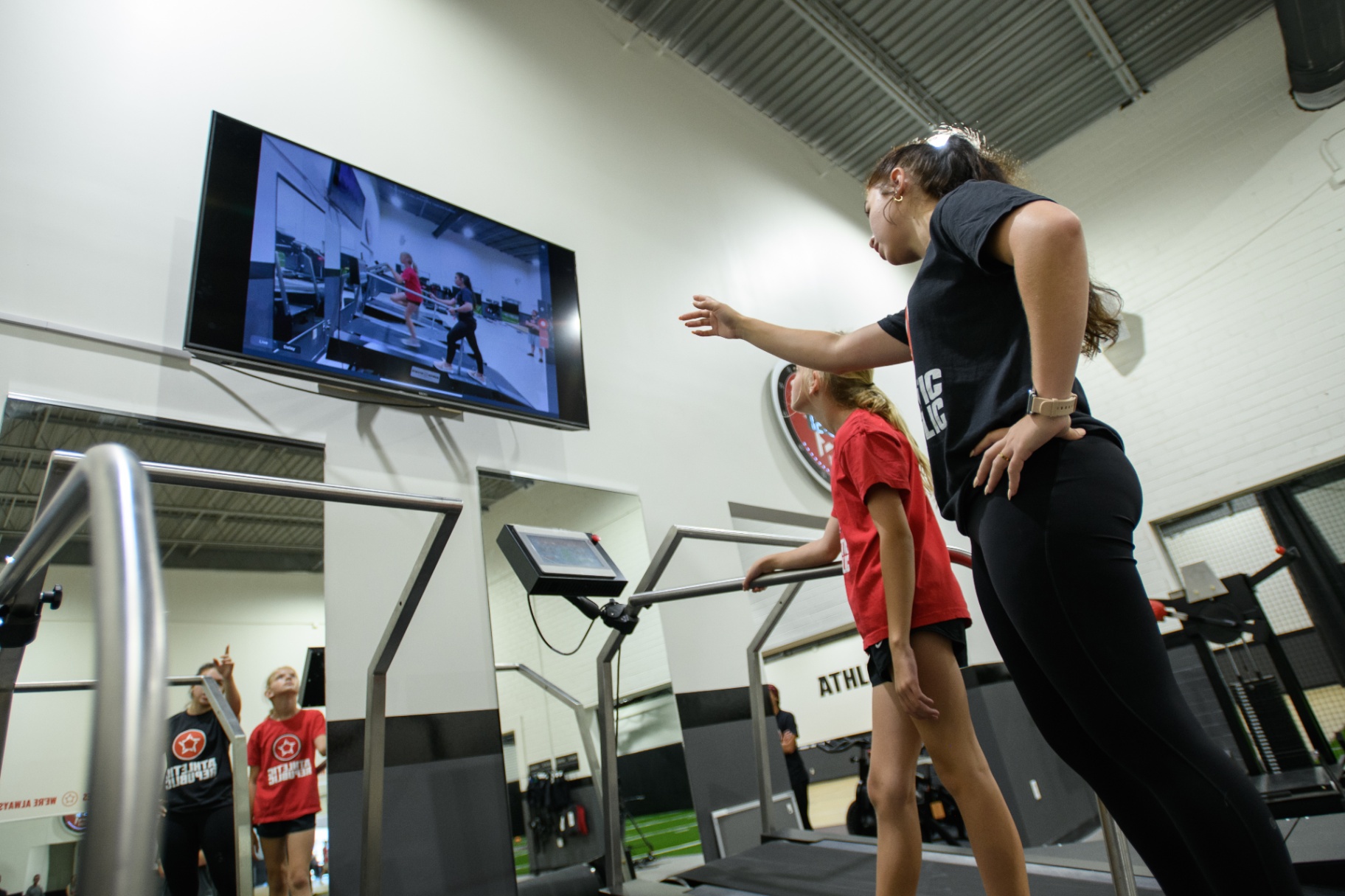
At Athletic Republic Knoxville, trainers can use video feedback to help athletes see their movement instead of relying only on verbal instructions. A certified trainer can point out details related to posture, foot placement, knee drive, stride mechanics, and body position.
For a young athlete, seeing the difference can make a coaching cue easier to understand. Rather than hearing “stay tall” or “push the ground away” without a visual reference, the athlete can connect the instruction to what their body is actually doing.
That creates a more personalized training experience: and better awareness when the athlete returns to team practice.
Building the First Three Steps
In many sports, the first few steps are the most important.
They determine whether an athlete wins space, closes space, or gets left behind. The Acceleration program uses specialized equipment and progressive training methods to develop these short, powerful bursts.
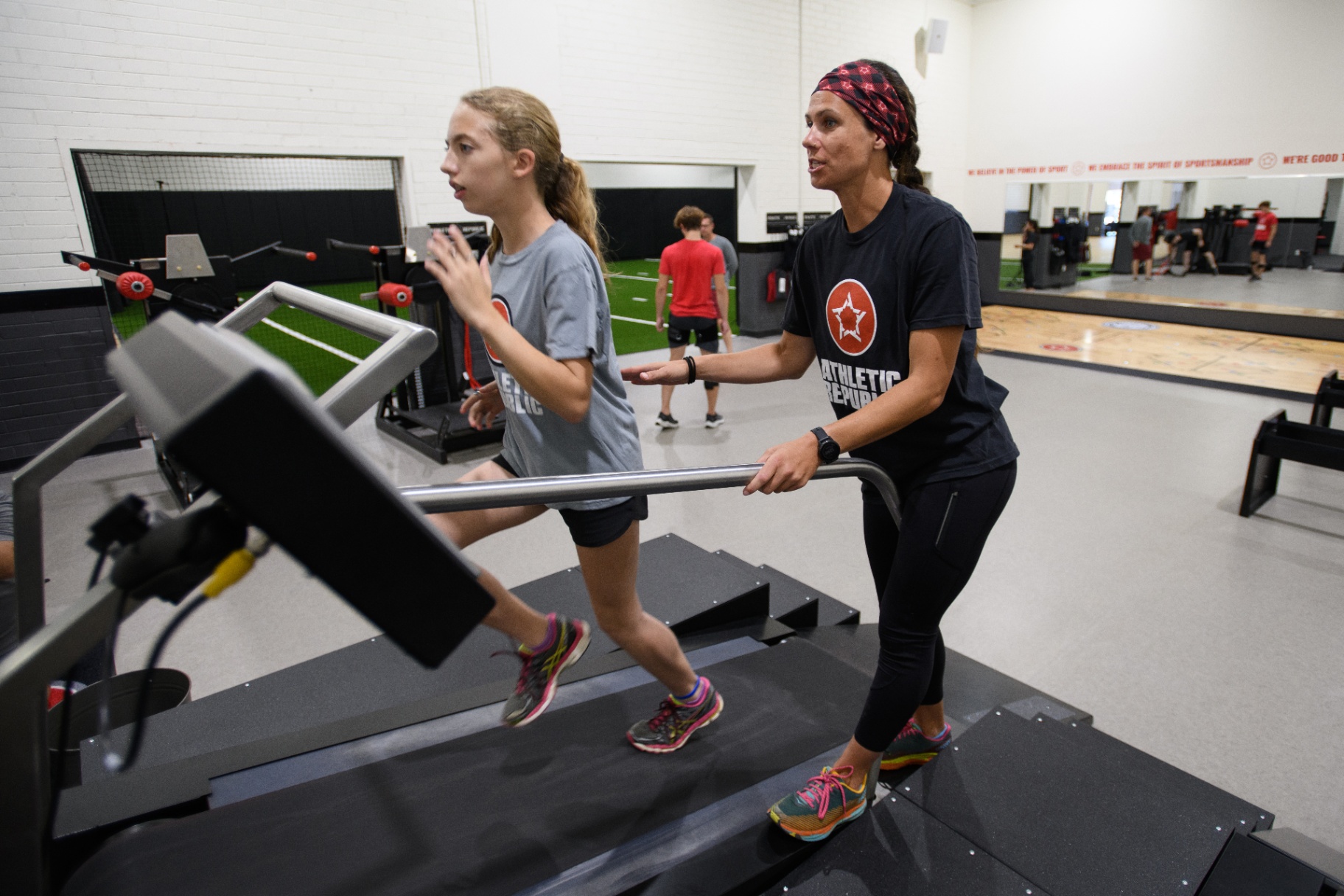
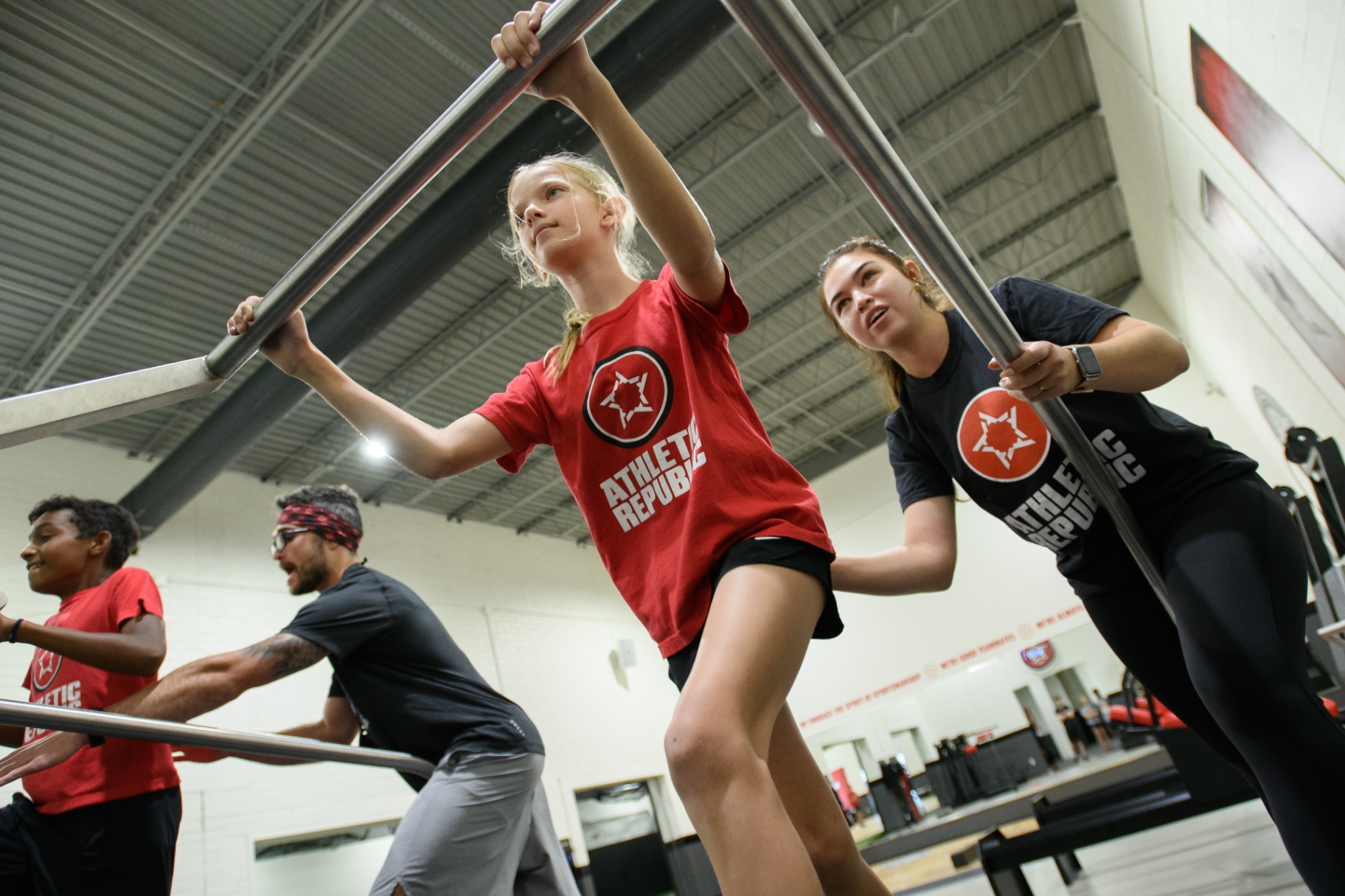
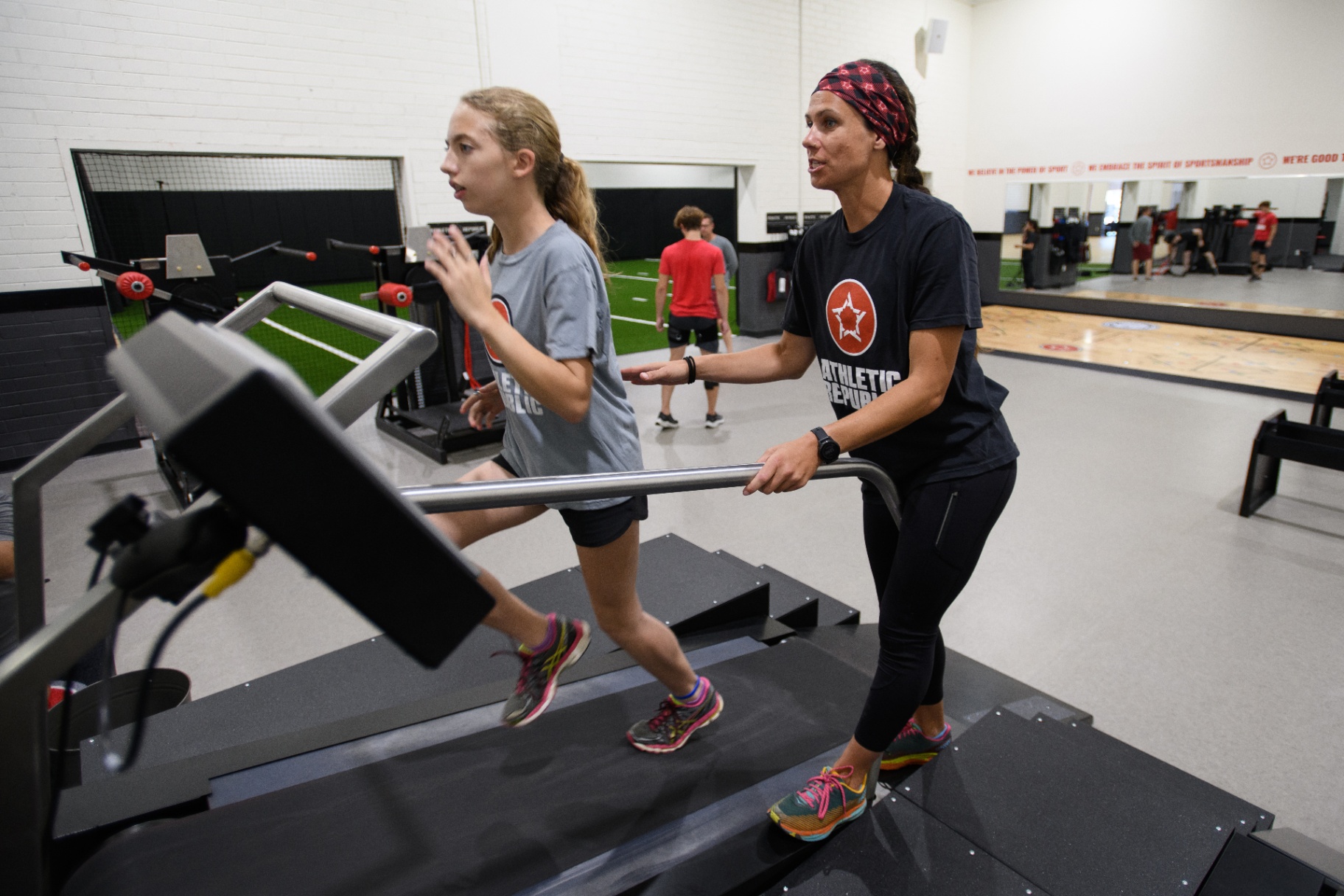
The Super Running Treadmill allows athletes to work on running mechanics and speed in a controlled setting while receiving instruction from a trainer. Athletes can focus on producing force, maintaining posture, and learning how to move efficiently.
The goal is not to chase speed without control. It is to help the athlete learn how to apply speed in a way that transfers to competition.
For example, a faster first step might help an athlete:
- Get open before a defender can react
- Close out on a shooter
- Beat a midfielder to a 50/50 ball
- Create separation at the line of scrimmage
- Start a breakaway
- Recover into defensive position
These are the moments that make athleticism valuable to a team.
Agility Means More Than Fast Feet
A player can be quick in a ladder drill and still struggle to change direction during a game. Real agility requires the ability to accelerate, decelerate, plant, redirect, and accelerate again.
That is why the Acceleration program includes movement training on agility surfaces and through plyometric drills.

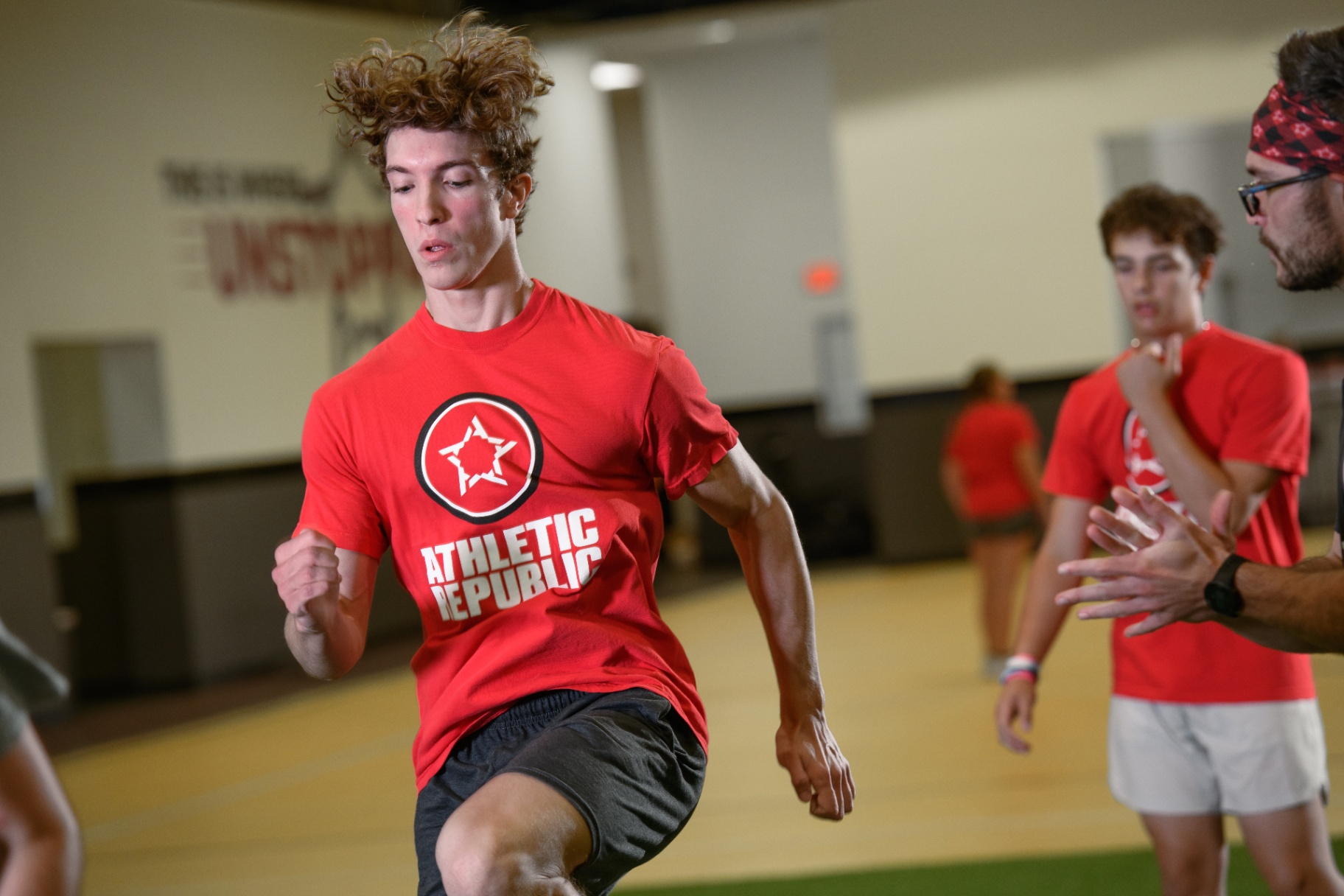
Athletes learn how to control their center of mass, manage force, and maintain balance while moving in multiple directions. This can help them become more efficient in defensive slides, cuts, shuffles, transitions, and sport-specific movement patterns.
Coaches notice when an athlete can change direction without taking unnecessary steps. They notice when an athlete stays under control instead of reaching, stumbling, or standing upright through a cut.
Better agility can make an athlete look more prepared: even before they touch the ball.
Power That Shows Up in Competition
Acceleration and agility are supported by power.
Power is what helps an athlete push into the first step, elevate for a rebound, drive through contact, or explode out of a cut. Plyometric training can help athletes improve how quickly they produce force while also developing coordination and body control.
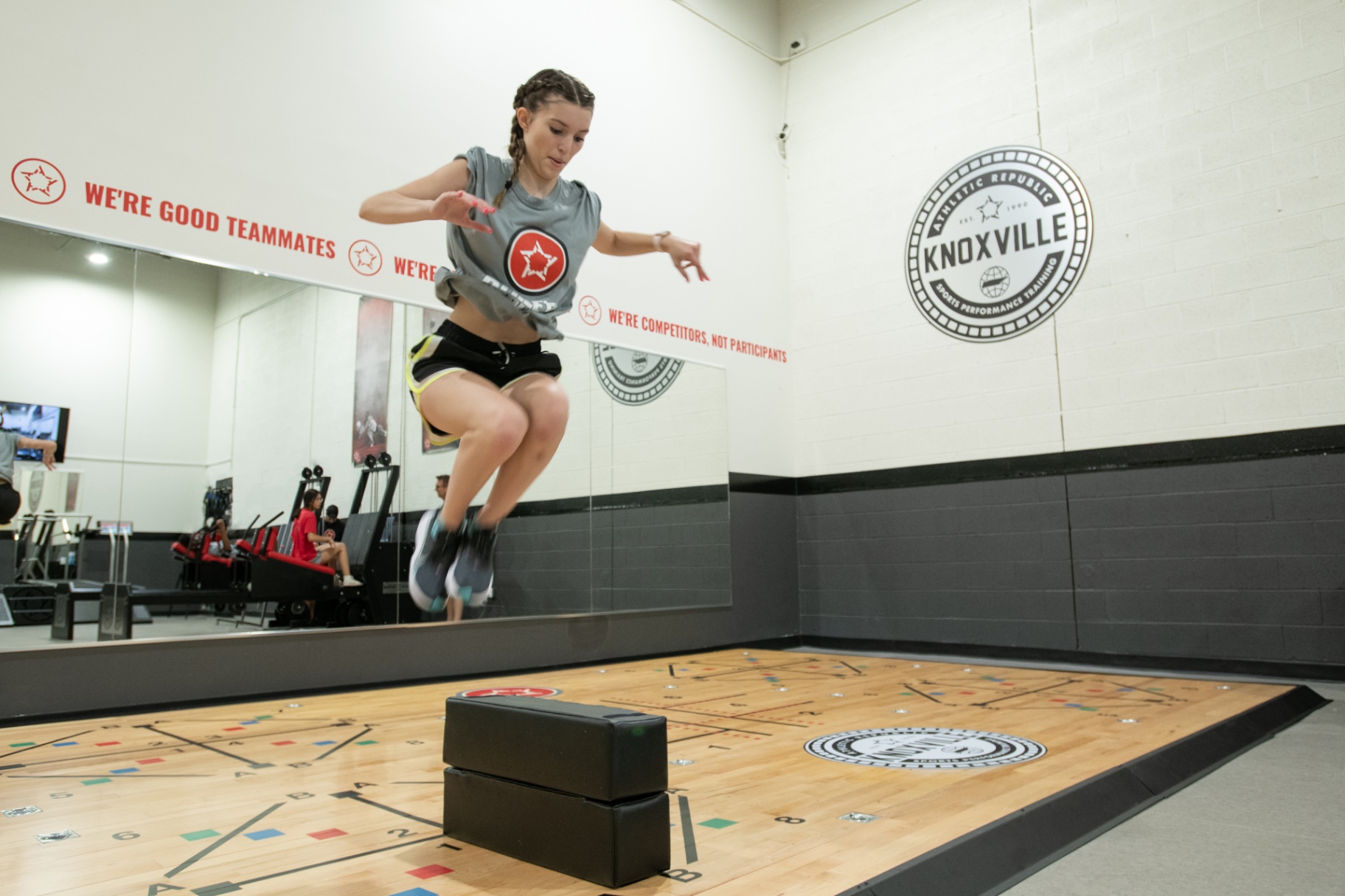
At Athletic Republic Knoxville, plyometric work is part of a larger training plan. The focus is not on performing random jumps until an athlete is exhausted. Drills are selected and progressed based on the athlete’s age, experience, goals, and movement needs.
That individualized approach is important. A younger athlete may need to build landing mechanics and foundational strength. A more advanced competitor may be ready for more demanding explosive movements and sport-specific applications.
The objective is always quality movement that supports long-term development.
Why the 18,000-Square-Foot Facility Matters
The training environment can influence how much an athlete is able to develop.
Athletic Republic Knoxville’s 18,000-square-foot facility gives athletes room to sprint, cut, jump, train, and work through different movement patterns without being limited to a small workout area. It also provides access to specialized equipment, performance surfaces, and space for trainer-led instruction.
But the facility is more than a large room. It is a focused environment built for athletes.
Athletes train alongside others who are working toward their own goals. Certified trainers provide instruction and adjustments. Progress is monitored. The atmosphere is supportive, but it also encourages athletes to take their preparation seriously.
That combination helps turn training into a consistent habit rather than a short-term reaction to being frustrated with playing time.
Training Can Open the Door: Preparation Helps You Walk Through It
No training program can promise a starting spot. Coaches make decisions based on many factors, including skill, decision-making, attitude, position needs, team dynamics, and consistency.
But athleticism can change what coaches see.
When you become quicker to the ball, more controlled in your cuts, more explosive in your first steps, and more reliable late in practice, you give your coach new reasons to trust you. You become better equipped to show your skills at game speed.
For athletes, the next step is to approach training with patience and consistency. For parents, it is to support the process without making every workout about immediate playing time. Development takes time, but progress becomes easier to maintain when the work has structure and purpose.
At Athletic Republic Knoxville, the Acceleration program is designed to help athletes build measurable athletic improvements in a supportive, trainer-led environment.
If you are ready to understand where your athlete is starting and how focused training can help them move forward, schedule a free workout. The first step toward a starting spot may begin with building the speed, agility, and confidence that coaches notice.