Some practices just don’t click. Passes go astray, footwork feels off, decisions come a beat late, and by the time you get home, your mind is replaying every mistake like it’s game film on repeat.
That replay can feel like preparation: If I think through everything I did wrong, I won’t do it again. But there’s a difference between learning from a rough practice and attacking yourself over it. A short, honest reset can help you take the lesson with you without carrying the whole practice into tomorrow.
Why a bad practice can stick
When a practice goes badly, it’s easy to move from a specific mistake (“I rushed that pass”) to a judgment about yourself: “I’m terrible.” Then the mind starts rewinding the moment, imagining what a coach or teammate thought, and predicting that tomorrow will go just as badly.
That repetitive replay is often called rumination. It doesn’t necessarily give you new information; it can keep you stuck in the same frustrating moment. And speaking to yourself in a way you’d never speak to a teammate isn’t automatically more motivating. Research on athletes has linked self-compassion with less self-criticism and rumination, and with more adaptive emotional responses after recalling sport failure. In one study, self-compassion was also associated with a more regulated physiological response while athletes recalled a failure. An interesting finding, though it does not mean a quick reset guarantees a specific physical or performance outcome.
Self-compassion is not pretending the practice went well. It means acknowledging what happened without turning one tough day into a verdict on your ability.
A reset for the night after a rough practice
Try this four-part routine after practice. It’s brief by design: enough reflection to identify a useful lesson, then a clear signal that you’re done reviewing for the night.
1. Name it honestly in one sentence
Start with a specific description, not a label about who you are.
- “My passing was sloppy today.”
- “I was late getting into position on a few plays.”
- “I lost focus after making a mistake.”
Keep it about the practice. “I’m useless” is not an observation; it’s a harsh conclusion. Naming the issue clearly gives you something you can actually learn from.
2. Spend five minutes on paper
Set a timer and write a few honest lines. Don’t worry about spelling, neatness, or finding the perfect answer. Treat it like game film on paper: notice what happened and look for one next step.
Use these prompts:
- What actually went wrong? Stick to what you could see or hear, rather than guessing what everyone else thought.
- What part was in my control? Maybe your first touch, communication, or the cue you were focusing on.
- What would I do differently next time? Make it an action: “I’ll check my shoulder before receiving,” or “I’ll reset my feet before the next pass.”
A 2025 study of competitive athletes tested a brief writing exercise after participants recalled a performance failure. The structured version asked athletes to identify a negative thought, reframe it as a learning opportunity, and consider what they would do differently. The intervention group showed a greater reduction in self-critical rumination than the neutral-writing group. That’s promising, but it’s not a guarantee that five minutes on paper will change your next performance. The practical value is that it turns a vague replay into a specific, manageable plan.
This kind of reflection also fits a Post-Event Reflection framework for athletes, which emphasizes self-awareness, self-monitoring, and self-regulation: notice what happened, understand your response, and choose how to act next.
3. Use your coach voice
Ask yourself: What would a good coach say to a teammate who had this practice?
Maybe: “That was frustrating, and there’s one thing to work on. You can take the next rep with a clear cue.”
This isn’t an excuse or a pep talk that says everything is fine. It’s a fair response: honest about the mistake, respectful toward the person who made it, and focused on what can happen next. Research by Doorley and colleagues, published in Psychology of Sport and Exercise, followed college athletes’ daily experiences. After athletes rated their practice performance below their own average, those with higher self-compassion tended to report better subjective performance the next day. Sport confidence did not predict that rebound in their analysis; grit and sport-specific hope also showed benefits.
The takeaway isn’t that one quality guarantees a good day. It’s that self-criticism is not the only way to hold yourself to a standard. Being kind to yourself and being serious about improving can belong in the same conversation.

4. Close the book for tonight
Once you’ve named the issue, written down what you can control, and chosen one action, call the review finished. If the thought comes back, remind yourself: “I’ve got my cue for tomorrow. I don’t need to solve it again tonight.”
That doesn’t mean you have to force yourself to feel cheerful or pretend you’re not disappointed. It means you’ve given the practice a useful amount of attention, and you’re not going to keep putting yourself on trial. A study published in Frontiers in Psychology examined athletes’ emotional and physiological responses while they recalled sport failures. Self-compassion was associated with fewer maladaptive thoughts and less negative affect. Another study of college athletes found a relationship between self-compassion, vagal reactivity, and better recovery from negative emotions after recalled failure. These findings support the idea of a steadier response to mistakes; they are not proof that one nighttime routine will make every athlete feel better by morning.
The next morning: start with one small win
Before the next practice or game, choose one simple action you can control. Keep it small enough that you can complete it without turning it into a test of whether you’re “ready.”
That might be:
- A few deliberate first-touch repetitions.
- A brisk walk-jog warm-up.
- A short set of focused footwork reps.
- One technical movement you identified in your notes.
The point is not to fix your whole game before you arrive. It’s to give yourself a clean first action and a little momentum, instead of walking in already bracing for another bad day.

How training can help put a bad rep in perspective
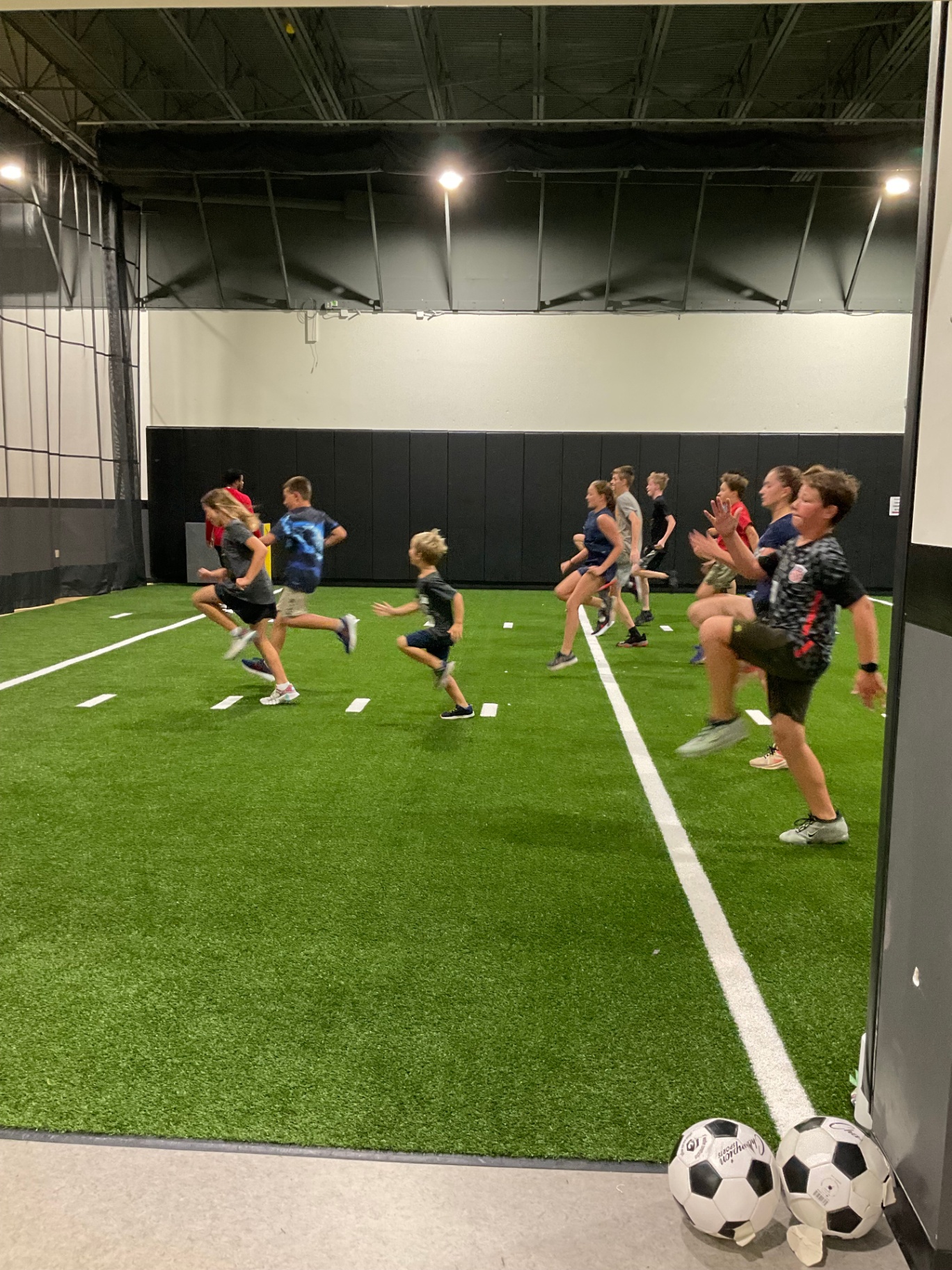
In an Athletic Republic Knoxville Acceleration session, a rough rep is information, not a label. Treadmills, timing gates, and video feedback can help make a broad thought like “I was terrible” more specific: What movement or measurable detail is there to work on? Certified coaches can help reframe the rep, choose a useful cue, and move into the next attempt. The goal is to learn from a bad rep in the session, rather than letting it follow you home as a judgment about your potential.
That coaching takes place within an 18,000-square-foot facility and science-based training protocols designed around athlete development. The purpose is steady, individualized progress, not a promise of a particular role on a team. Training can support an athlete’s development, but it cannot guarantee a starting spot, more minutes, or a specific result. Coaches make decisions based on many factors, and each athlete’s path is different.
If you’d like to learn more about student-athlete training at Athletic Republic Knoxville, you can explore the program details. Or try a free class and see what a coached session feels like.
A note for parents
After a bad practice, it can be tempting to ask for a full breakdown as soon as your athlete gets in the car. Try first to make room for the feeling without turning the ride home into another review session. A simple “That sounded frustrating. Do you want to talk about it now, or take a little time?” gives your athlete a choice.
If they do want to talk, help them stay with the specific event and the next controllable action. The goal isn’t to dismiss a disappointing practice; it’s to help your athlete learn from it without confusing one rough day with their worth or their future.
A bad practice deserves an honest look, but not an all-night replay. Name what happened, write down one lesson, answer yourself like a good coach, and close the book. Tomorrow, start with one small action you control. That’s a reset, not a promise that everything will go perfectly, but a practical way to show up ready for the next rep.