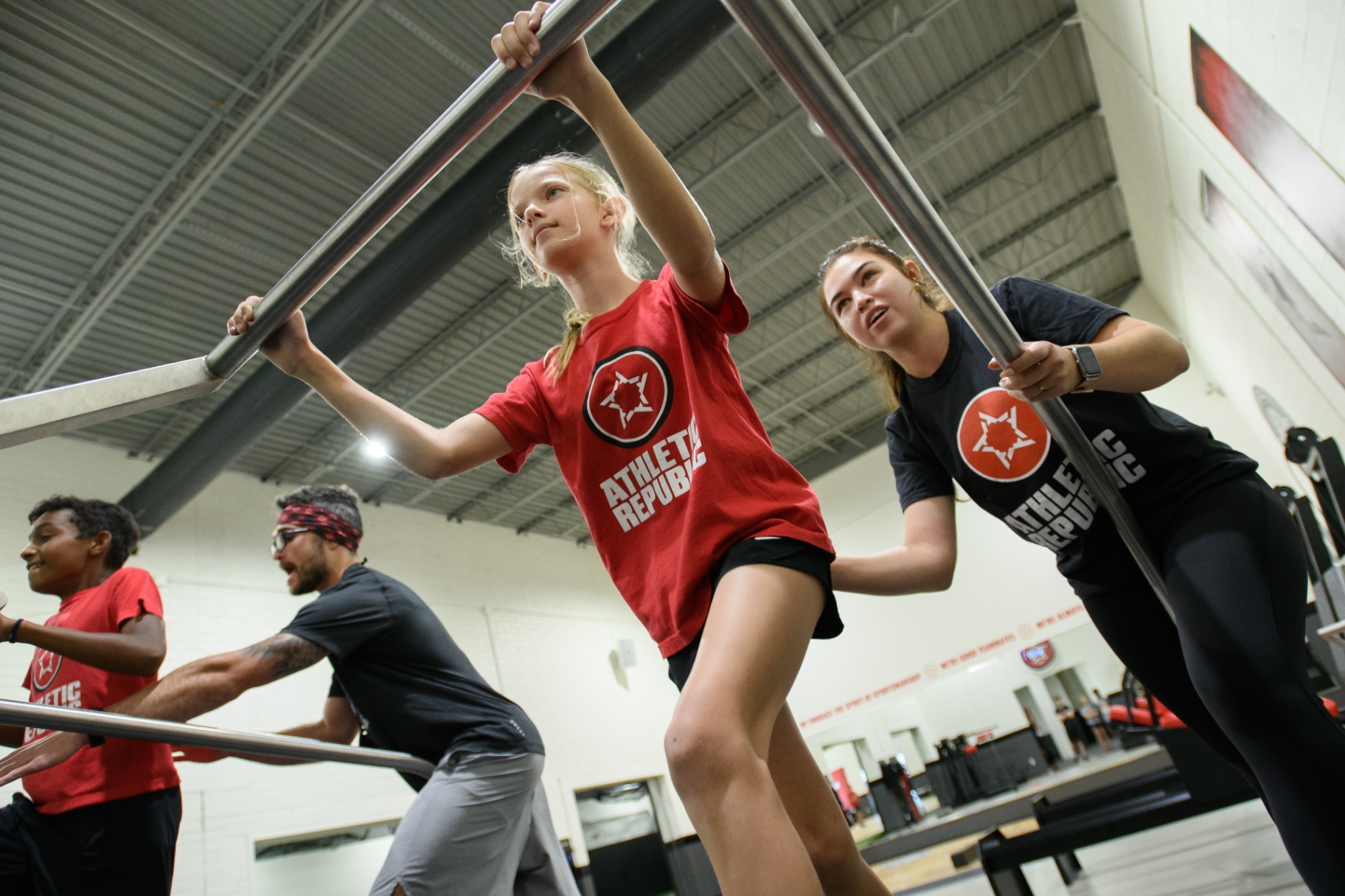
Sitting on the bench can be frustrating.
You may understand the plays, work hard at practice, and support your teammates every day: but still find yourself waiting for your name to be called. For parents, it can be difficult to watch an athlete work hard without seeing the playing time they want.
The good news is that today’s role does not have to define an athlete’s future.
A faster first step, sharper change of direction, better balance, and more repeatable effort can change how an athlete moves in practice. Those qualities can help coaches see a player as more prepared, more dependable, and more capable of contributing when the game speeds up.
That is the focus of the Acceleration Program at Athletic Republic Knoxville.
This is not a promise of a starting spot. Coaches make lineup decisions based on many factors, including skill, attitude, game awareness, teamwork, and consistency. But the Acceleration Program gives athletes a structured way to build the physical qualities coaches can trust.
The Difference Is Often in the Details
Athleticism is not just about being naturally fast or strong. It is about what an athlete can consistently do while moving, reacting, stopping, and competing.
A player may know exactly where to go but arrive a step late. A basketball guard may have good ball-handling skills but struggle to create separation. A soccer player may read the play correctly but lack the acceleration to win the next five yards. A football athlete may be strong but need better lateral movement to stay with an opponent.
The Acceleration Program targets those details through focused training in:
- First-step quickness
- Sprint mechanics
- Change of direction
- Deceleration and stopping control
- Lateral movement
- Plyometric power
- Balance and body control
- Coordination and foot speed
- Repeatable high-intensity effort
The goal is not to leave an athlete exhausted just for the sake of being tired. The goal is to help them move more efficiently and confidently when the pace of practice or competition increases.
What a Typical Training Session Looks Like
Acceleration training is built around purposeful repetitions. Each drill has a reason, and each movement is coached.
A session may begin with a dynamic warm-up to prepare the athlete’s joints, muscles, and nervous system for faster movement. From there, trainers may progress into sprint mechanics, agility work, jumps, strength exercises, or sport-specific movement patterns.
The exact session can vary based on the athlete’s age, training history, sport, goals, and current areas for improvement. But the process is always intentional.
1. Preparing to Move Well
Before an athlete is asked to sprint or jump, they need to be ready to move.
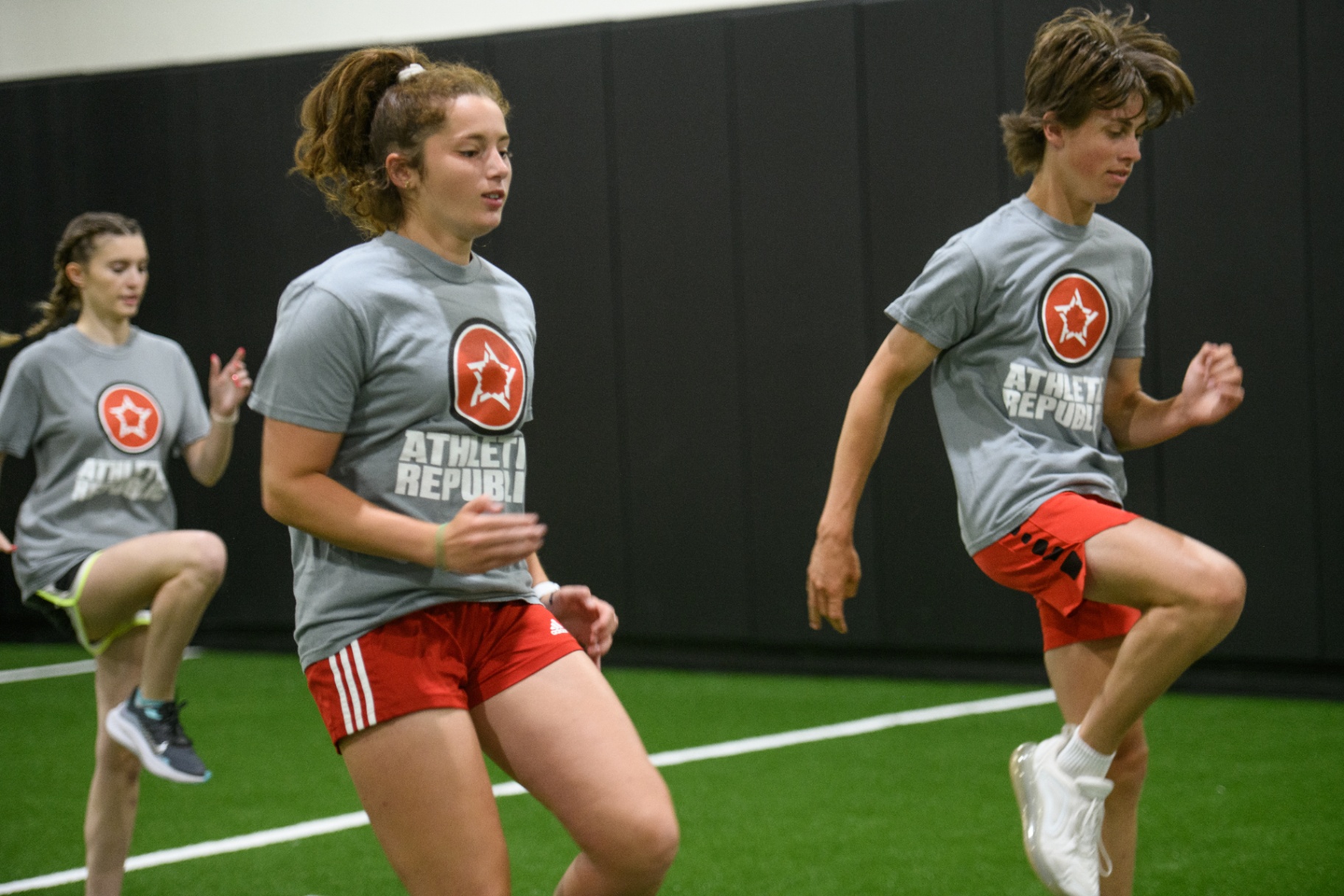
Warm-ups may include mobility work, controlled running patterns, balance exercises, and activation drills. These movements help athletes focus on posture, coordination, and body position before intensity increases.
For a young athlete, this might mean learning how to control the knees and hips during basic movement. For an experienced competitor, it may mean preparing for a demanding sequence of sprints, cuts, and jumps.
The goal is to make quality movement the starting point: not something an athlete tries to find after fatigue has already set in.
2. Training the First Few Steps
In many sports, the first few steps are the most important.
They determine who reaches a loose ball, closes down space, gets open, or starts a breakaway. Acceleration work teaches athletes how to project their body forward and apply force into the ground.
Certified trainers coach details such as:
- Starting posture
- Body angle
- Knee drive
- Arm action
- Foot placement
- Hip position
- Transition from acceleration to top speed
Athletes are not simply told to “run harder.” They learn how to organize their movement so that more effort can translate into more effective acceleration.
Over time, those changes can appear in practice as an athlete gets to spots sooner, responds more decisively, or creates space that was not available before.
3. Building Agility Through Real Movement
Agility is more than moving quickly through a ladder. Game movement requires an athlete to read a situation, slow down, plant, redirect, and accelerate again.
That is why Acceleration training includes multidirectional movement and deceleration work. Athletes practice the actions that happen repeatedly in competition:
- Sprinting forward
- Shuffling laterally
- Backpedaling
- Braking under control
- Planting and changing direction
- Reacting to a cue
- Re-accelerating after a cut
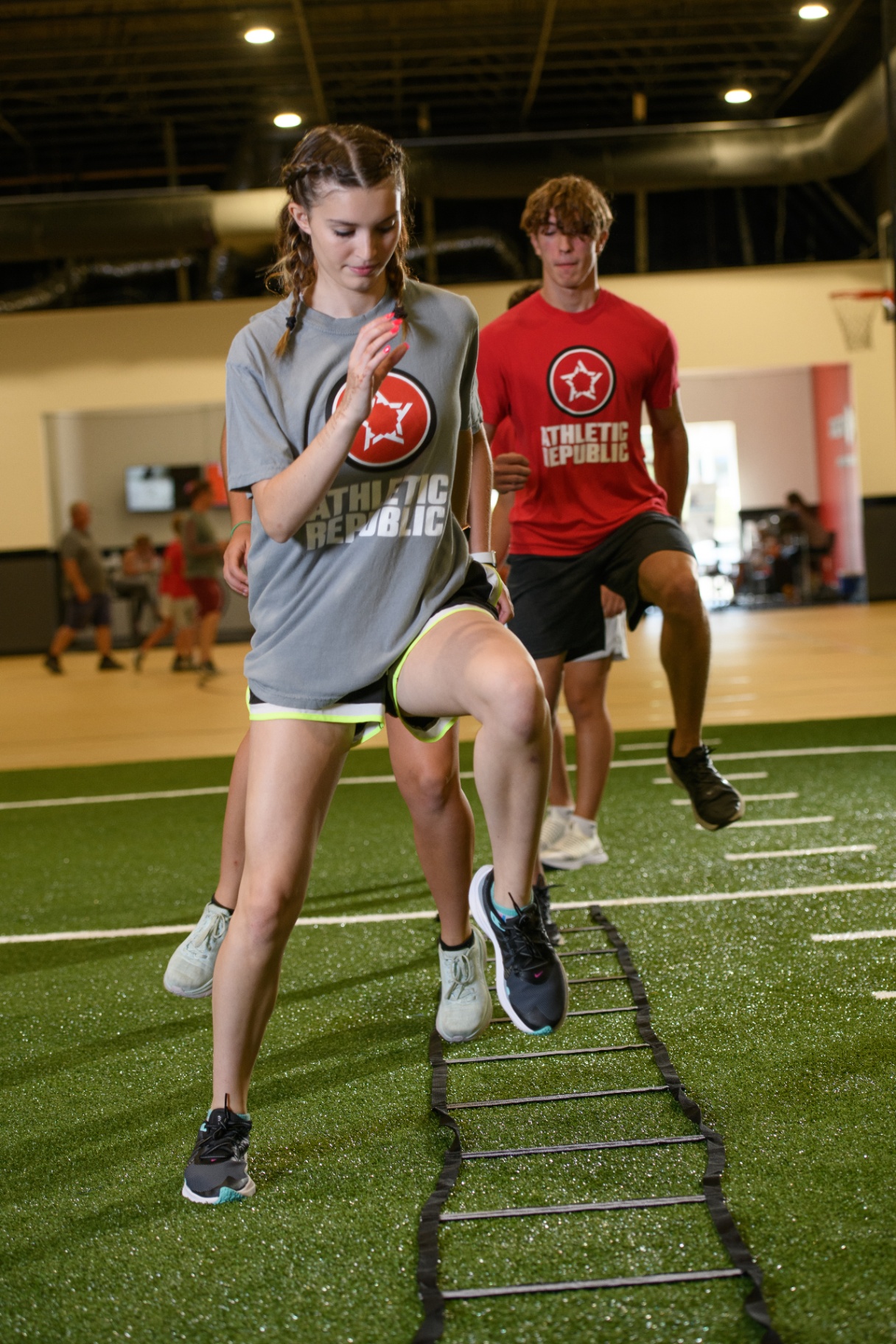
A basketball player may need to slide with an opponent before turning and sprinting. A soccer player may need to brake, change direction, and chase the ball. A defensive athlete may need to react to movement while maintaining balance.
These are not random footwork challenges. They are repetitions designed to help athletes control their center of gravity and move with less hesitation.
When athletes can stop and redirect efficiently, they can play faster without feeling out of control.
4. Turning Strength Into Power
Strength matters, but strength alone is not the same as power.
Power is the ability to produce force quickly: the quality athletes use when they sprint, jump, cut, or explode into a play. The Acceleration Program combines strength work with plyometric progressions to help athletes develop that ability.
Plyometric training can include jumping, landing, bounding, and other explosive movements. The focus is on producing force while maintaining sound mechanics and body control.

For younger athletes, plyometrics are introduced through age-appropriate movements that emphasize coordination and safe landing positions. For older athletes, training can progress toward more challenging power and sport-performance demands.
The objective is not to make every athlete train like a professional. It is to help each athlete improve from their current starting point.
A more powerful push-off can support a faster first step. Better landing control can help an athlete prepare for the next movement. Stronger hips and legs can help an athlete maintain position while cutting, jumping, or absorbing contact.
Why Baseline Testing and Retesting Matter
It is hard to improve what you never measure.
At Athletic Republic Knoxville, athletes are tested at the beginning of a training program to help identify strengths, areas for improvement, and movement or performance asymmetries. After consistent training, retesting helps show how the athlete has progressed.
Testing and retesting can give athletes and parents useful information beyond how difficult a workout felt. It helps answer questions such as:
- Has sprint performance improved?
- Is the athlete moving with better symmetry?
- Has power increased?
- Is change-of-direction control improving?
- Which qualities should receive more attention next?
Progress does not always happen in a straight line, and one test does not define an athlete. But objective feedback can help trainers adjust the plan and help athletes understand that their daily effort is building toward something measurable.
Training in an 18,000-Square-Foot Facility
The environment makes a difference, especially when an athlete needs to work on several qualities at once.
Athletic Republic Knoxville’s 18,000-square-foot facility gives athletes room to sprint, cut, jump, strengthen, and practice movement without being limited to one small workout area.
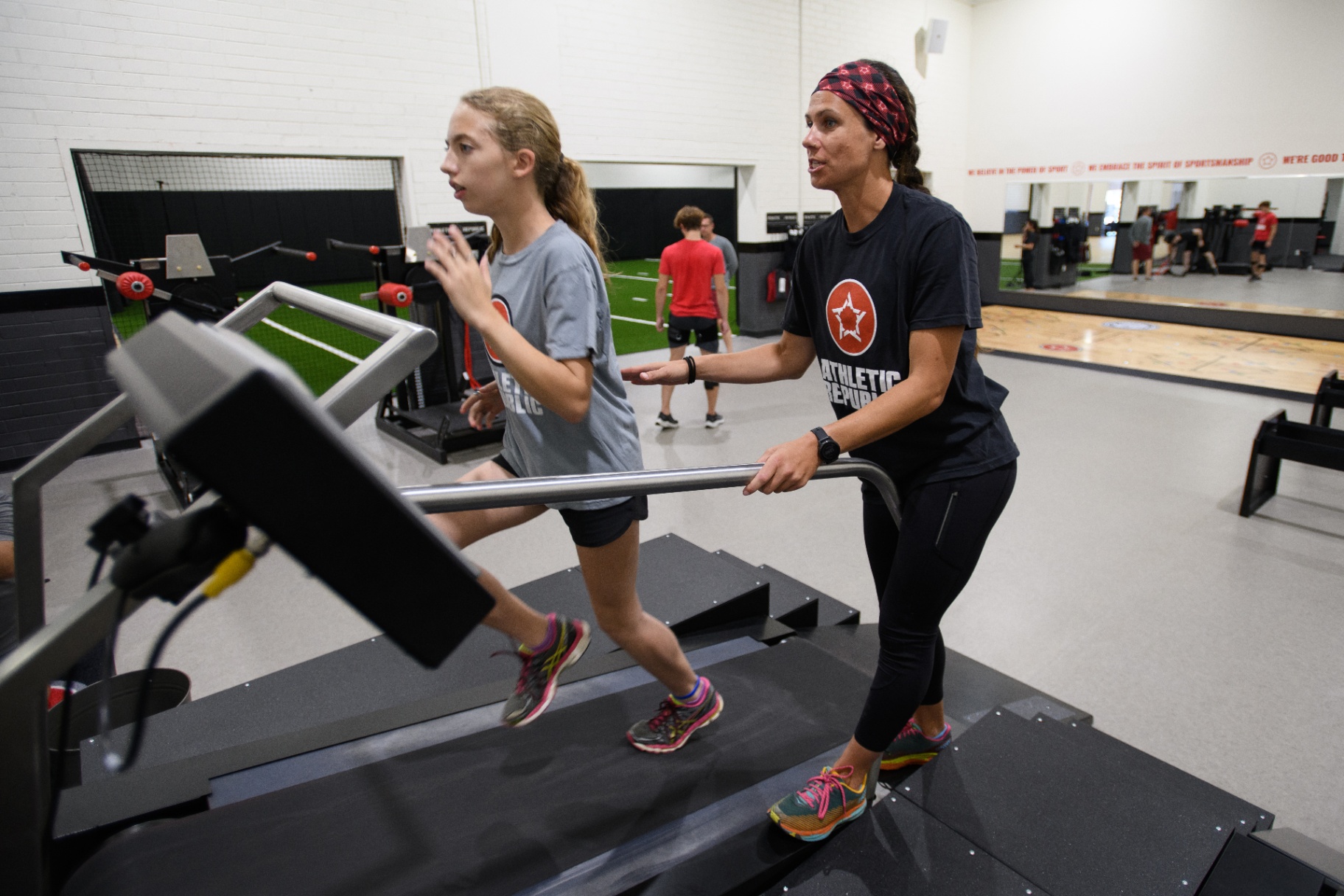
The facility includes indoor turf, dedicated plyometric space, performance equipment, and high-performance treadmills that support speed and running-mechanics training.

That variety allows certified trainers to build sessions around the athlete: not force every athlete into the same routine.
One athlete may need to focus on acceleration mechanics. Another may need to improve lateral control. Someone else may need to develop power or learn how to repeat high-quality efforts throughout a game.
Training in a small-group, trainer-led environment also gives athletes the energy of working alongside others while still receiving coaching and individual attention.
The Reps Continue Outside the Facility
Visible change in practice comes from consistency outside of practice, too.
Athletes need to show up for training, but they also need to recover, sleep, eat well, listen to coaching, and stay committed when progress feels gradual. The habits built away from Athletic Republic Knoxville help determine how well an athlete can use their training on the field or court.
Parents can support that process by focusing on controllable actions instead of demanding immediate results.
Ask questions like:
- What did you work on today?
- Which movement felt easier?
- What are you trying to improve this week?
- Did you notice anything different in practice?
- What is your next training goal?
Confidence grows when athletes recognize their own progress. A cleaner cut, stronger sprint finish, more controlled landing, or faster reaction can be an important step: even before it shows up on the scoreboard.
Building Qualities Coaches Can Trust
A starting spot is never guaranteed, and no training program can make that promise. But athletes can control how prepared they are when the next opportunity comes.
The Acceleration Program at Athletic Republic Knoxville helps athletes build the qualities that can make them more reliable contributors:
- Faster acceleration
- Sharper agility
- More powerful movement
- Better body control
- Improved coordination
- More efficient sprint mechanics
- Greater confidence at game speed
Coaches notice athletes who get into position, respond to mistakes, compete through fatigue, and consistently execute their responsibilities. The day-to-day repetitions in Acceleration training are designed to support those qualities.
If your athlete is ready to turn extra time into productive work, learn more about student-athlete training in Knoxville or explore the full range of sports performance training programs.
Then take the next step by scheduling a free workout at Athletic Republic Knoxville.
The next opportunity may not come tomorrow. But every focused rep can help an athlete become faster, more prepared, and more ready to earn it.