Wednesday can feel like the forgotten day of the sports week.
Monday brought the reset. Tuesday was about getting back into the rhythm of practice. Friday is game day: the day everyone is thinking about. But Wednesday? Wednesday is where the quiet work happens.
For athletes who are trying to earn more playing time, that midweek work matters. Coaches may not see every sprint, every footwork drill, or every extra effort in the moment. But they see the results when an athlete gets faster to the ball, changes direction more efficiently, stays balanced through contact, or creates separation during Friday’s game.
At Athletic Republic Knoxville, the Acceleration Program is built around that kind of progress. It helps athletes develop the speed, agility, power, and movement confidence that can turn practice-week effort into game-day opportunity.
The Midweek Grind Shows Up on Friday
A starting spot is rarely earned in one dramatic moment. More often, it comes from small improvements that add up:
- Getting off the line faster
- Taking a more powerful first step
- Reaching top speed more efficiently
- Cutting without losing balance
- Decelerating under control
- Recovering quickly between efforts
- Moving with confidence instead of hesitation
These qualities are important in nearly every sport. A soccer player needs to win a 50/50 ball. A basketball guard needs to stay in front of a defender. A football receiver needs to create separation. A softball player needs to explode out of the batter’s box. A volleyball athlete needs to react and move quickly into position.
The Acceleration Program focuses on the athletic qualities behind those moments. It is not about simply working harder until an athlete is exhausted. It is about using structured, science-based protocols to improve how the body produces and controls movement.
That distinction matters: especially for athletes who are already practicing several times a week.
Athleticism Is Trainable
Some athletes appear naturally fast. Others may feel like they are always a step behind. But speed and agility are not fixed traits. They can be developed with the right progression, coaching, and consistency.
At Athletic Republic Knoxville, athletes train in an 18,000-square-foot performance facility designed specifically for athletic development. The space gives trainers room to work on multiple parts of performance, including running mechanics, plyometrics, strength, foot speed, lateral movement, and change of direction.
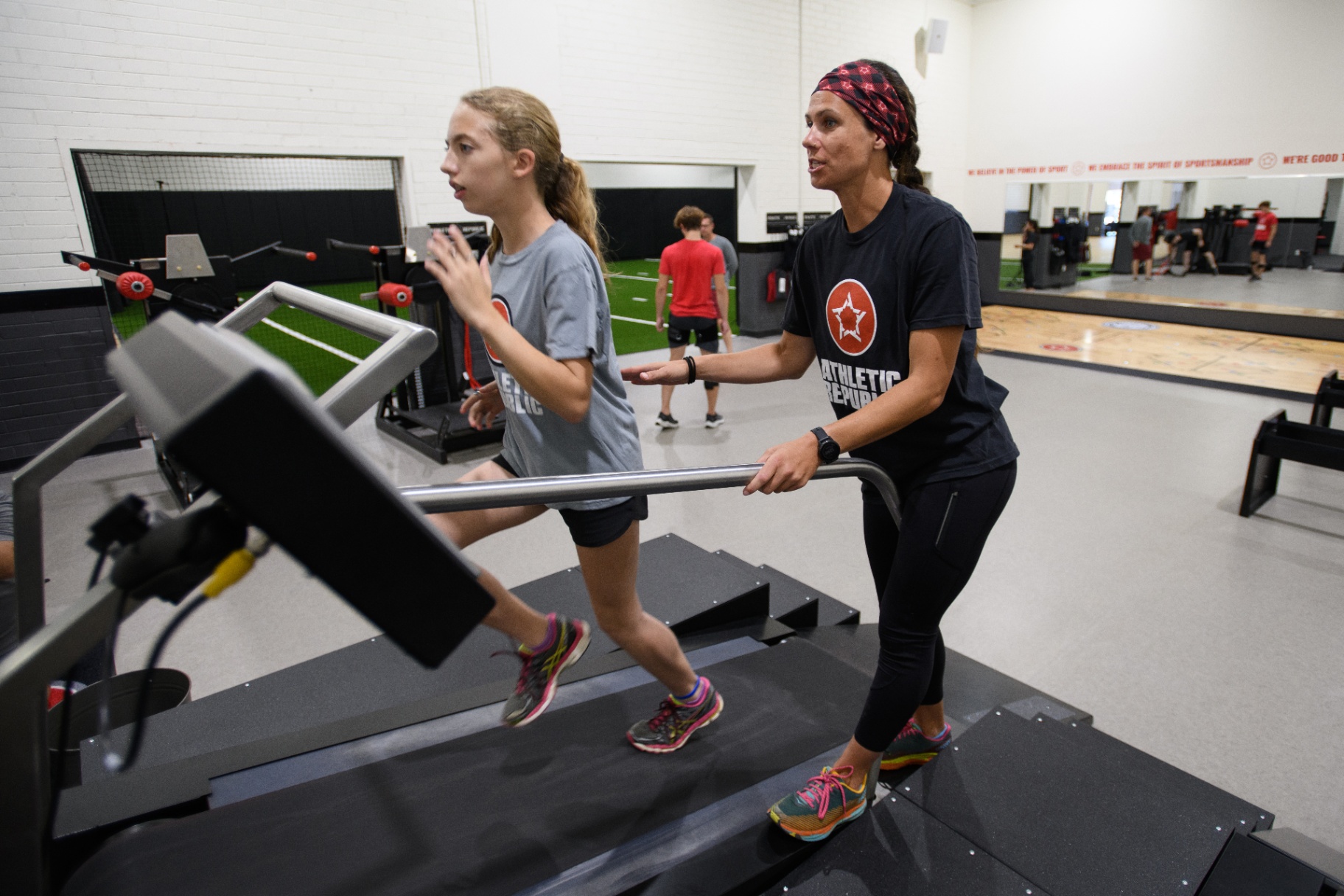
Athletes are coached through movements instead of being left to guess their way through a workout. Trainers can watch mechanics, provide immediate feedback, and adjust the challenge based on the athlete’s age, experience, goals, and current ability.
That personalized approach is especially valuable for athletes who are frustrated by sitting on the bench. The goal is not to compare one athlete to everyone else in the room. The goal is to identify what is limiting that athlete and build a plan to improve it.
Building a Faster First Step
In many sports, the first three steps matter more than a straight-line sprint.
The first step can determine who gets to the loose ball. It can create enough space for a pass, help an athlete close down an opponent, or allow a player to recover defensively. A faster first step comes from more than moving the feet quickly. It requires the right body position, force production, coordination, and confidence.
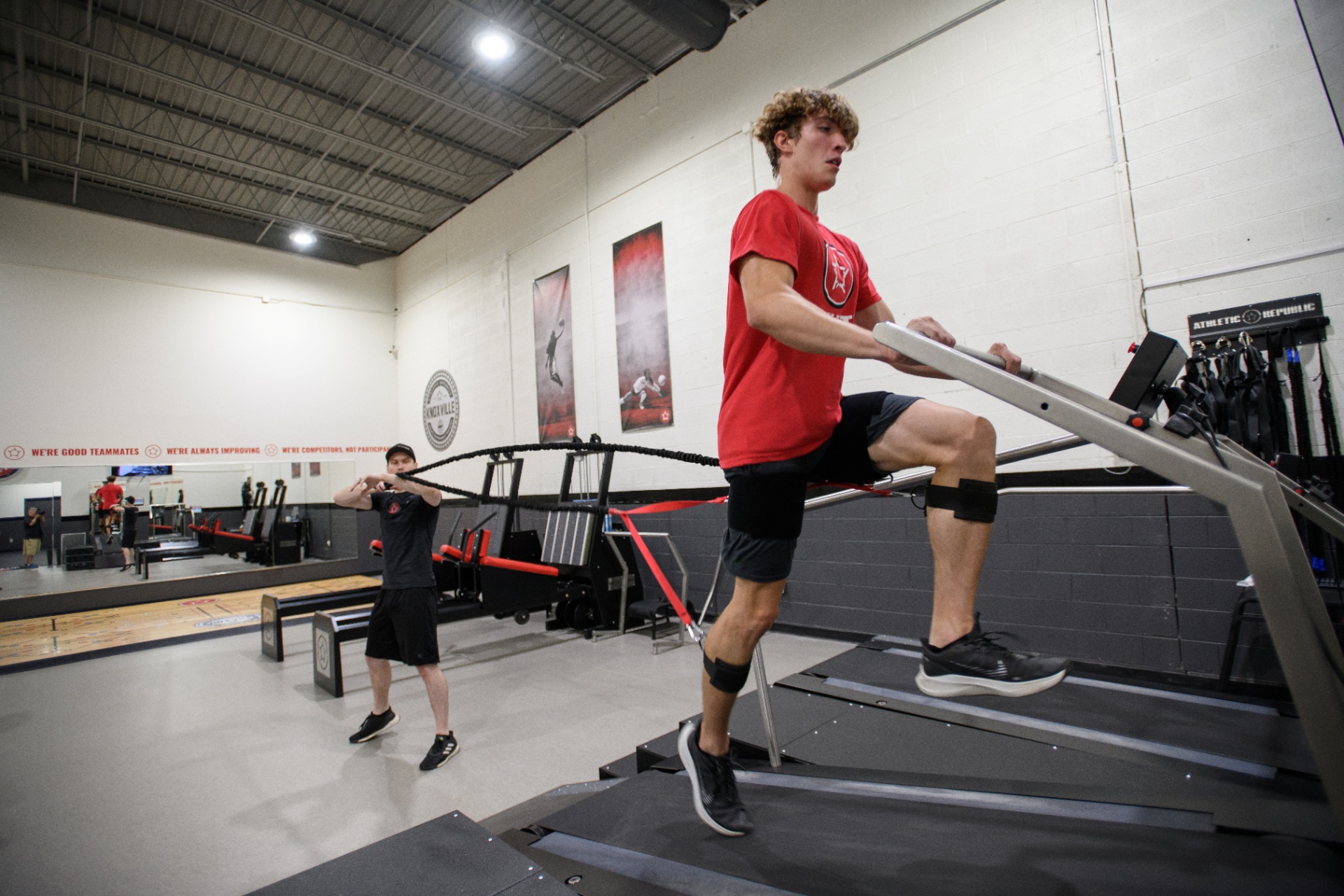
The Acceleration Program uses specialized equipment and drills to help athletes improve those qualities. Super Running Treadmill work can challenge running mechanics and power in a controlled environment. Trainers can focus on details such as knee drive, hip position, arm action, posture, and stride efficiency.
The purpose is not to make athletes run mindlessly at higher speeds. It is to help them learn how to apply force and move efficiently while receiving coaching throughout the process.

When those movement patterns become more consistent, an athlete may begin to feel a difference during team practice. The drill that once felt rushed becomes more manageable. The first step feels stronger. The athlete can react instead of hesitating.
Those changes may be subtle at first, but they can become noticeable when competition gets fast and physical.
Speed Is More Than Running Straight Ahead
Game speed is rarely just straight-line speed.
Athletes must stop, start, shuffle, cut, backpedal, rotate, and react. They need to control their bodies when momentum is working against them. They need to accelerate again after slowing down. That is why agility and deceleration are central parts of athletic development.
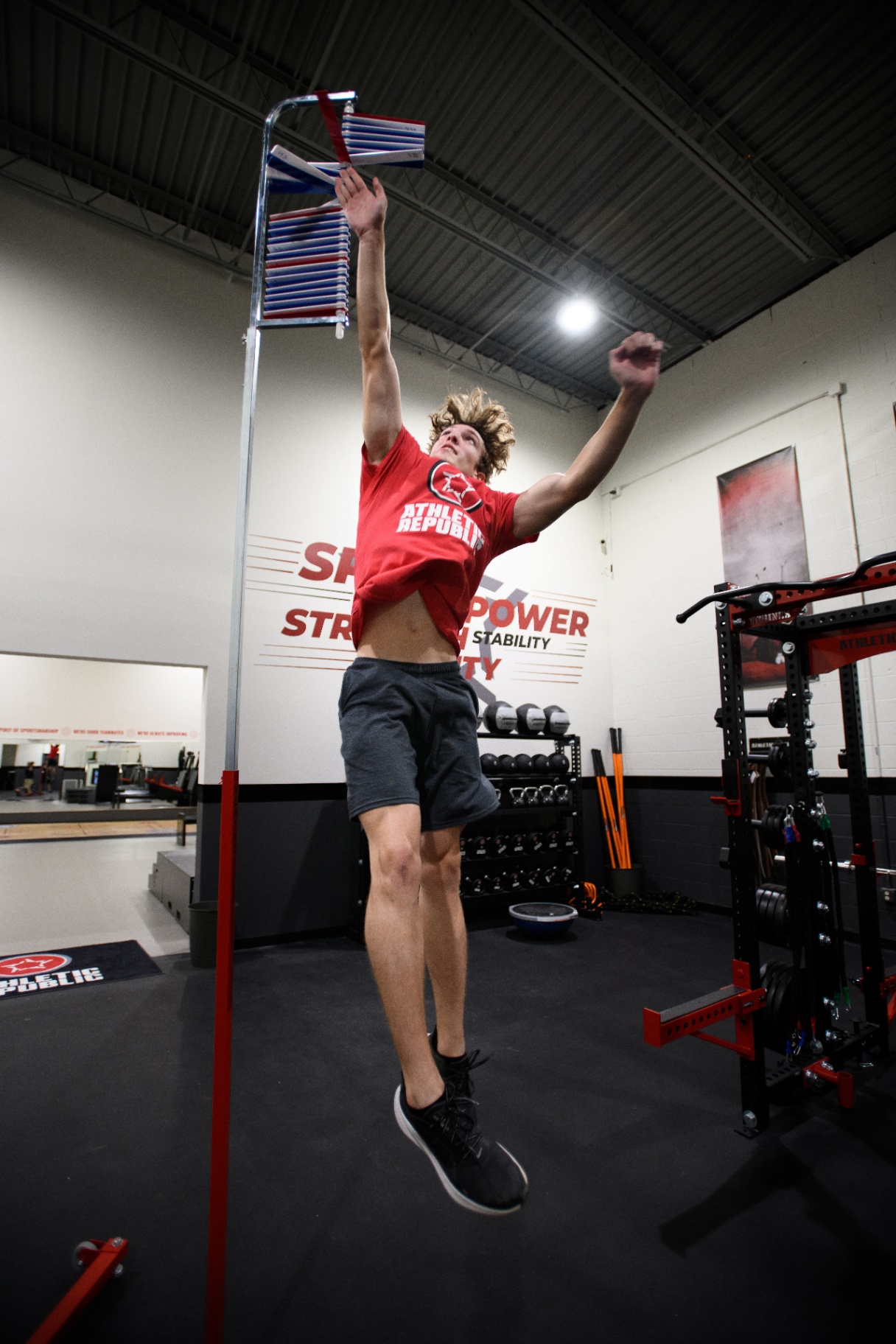
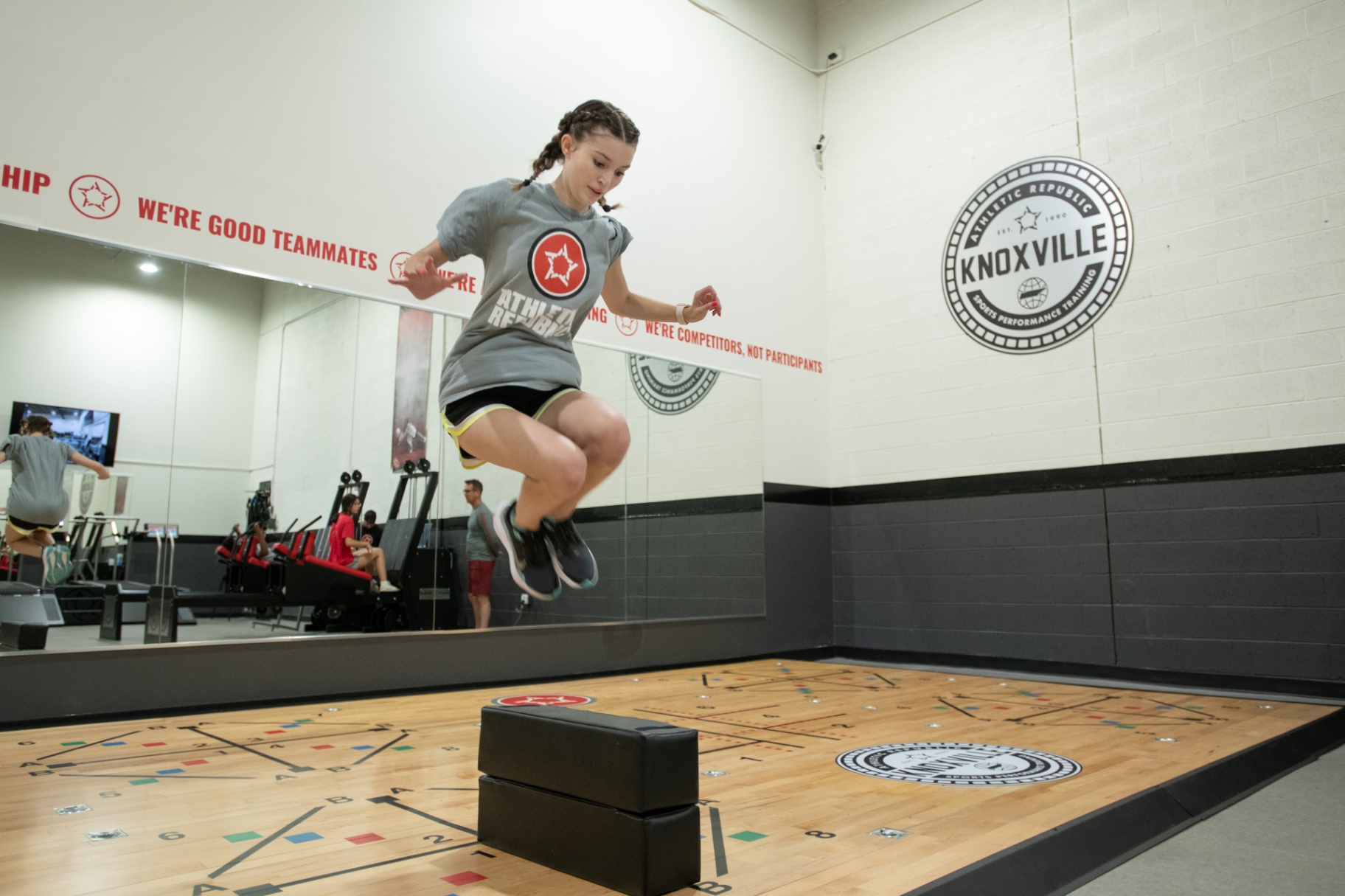
The Acceleration Program includes movement training that helps athletes build control in multiple directions. Plyometric work can develop explosive power and quicker ground contact. Agility drills can challenge foot speed, balance, and reaction. Strength training helps athletes produce force while improving their ability to handle it.
Learning how to slow down is just as important as learning how to speed up. An athlete who cannot control a stop may lose balance, take extra steps, or struggle to change direction. An athlete who learns proper deceleration mechanics can stay more prepared for the next movement.
For parents, this is one of the important differences between general exercise and sports performance training. The work is connected to how athletes actually move during competition.
Technology That Helps Athletes See What Trainers See
Sometimes an athlete knows something feels off but cannot identify the problem. Maybe the stride feels awkward. Maybe the hips drop during a sprint. Maybe the athlete is reaching too far in front with each step or losing posture late in a drill.
That is where video feedback can help.
At Athletic Republic Knoxville, trainers can use technology and real-time video to show athletes what is happening during movement. Seeing a sprint on a large screen gives the athlete something concrete to understand and correct.
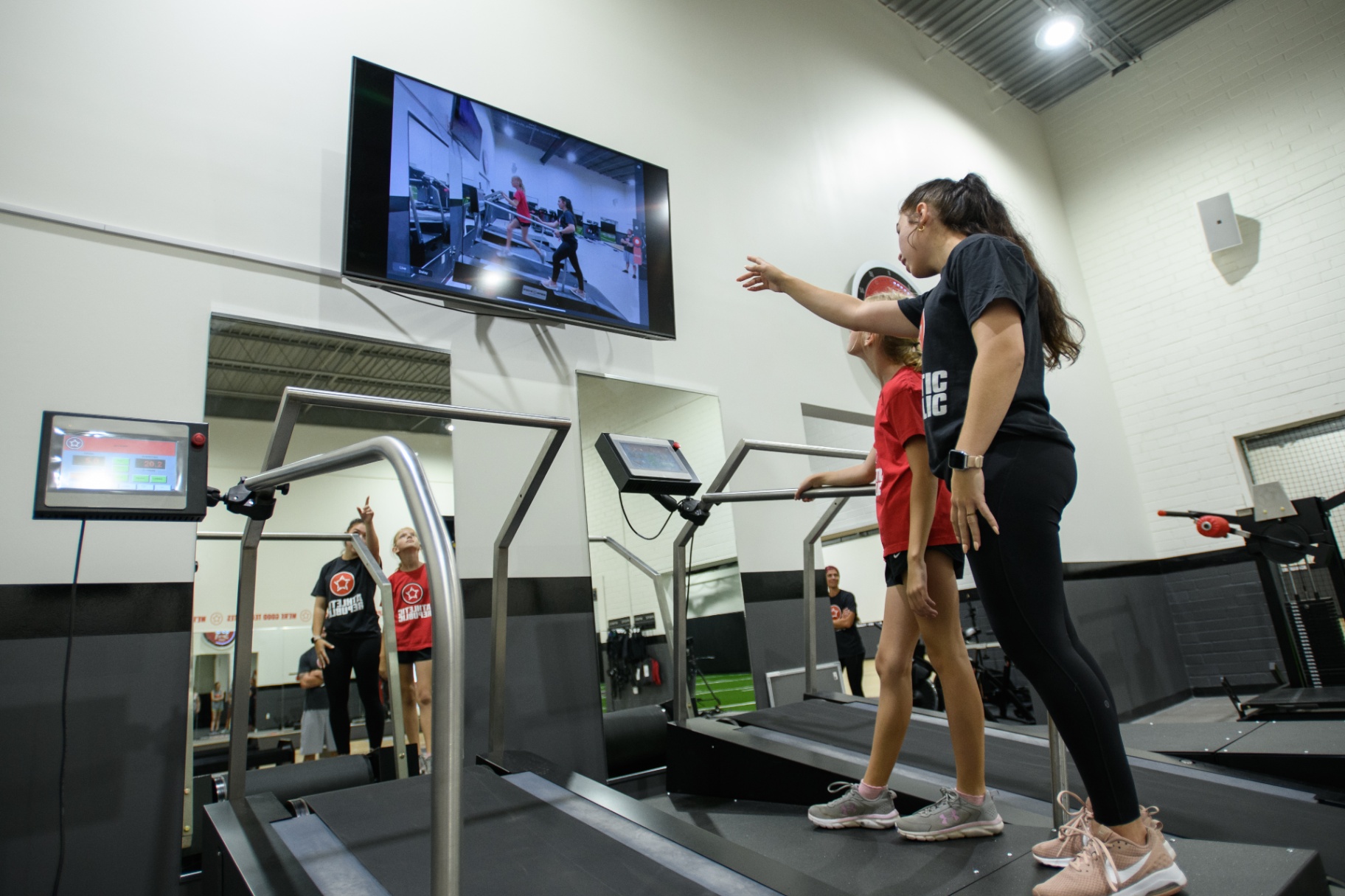
Instead of hearing, “Run better,” an athlete can receive a more useful coaching cue:
- Keep your hips taller.
- Drive the knee forward.
- Land beneath your center of mass.
- Stay controlled through the cut.
- Keep your arms working with your legs.
That feedback can make training more efficient. Athletes are not just completing repetitions; they are learning how to move with purpose.
Progress You Can Feel: and Measure
Confidence is important, but it becomes stronger when it is supported by progress.
The Acceleration Program uses assessments and performance observations to help identify areas for improvement. Depending on the athlete and program, trainers may look at qualities such as speed, agility, power, movement control, and symmetry.
That information helps guide training. It also gives athletes and parents a clearer picture of what is improving over time.
Progress may show up as a faster sprint, a cleaner change of direction, a higher jump, or better control during a demanding drill. It may also show up in less obvious ways: an athlete staying composed under pressure, moving more decisively, or continuing to make effective plays late in practice.
The goal is not to promise that every athlete will immediately become a starter. No training program can guarantee a coach’s lineup decision. But developing athleticism can give an athlete more tools to compete for that opportunity.
Parents: Look for Consistency, Not a Quick Fix
For parents, it can be difficult to watch a child sit out or receive limited playing time. It is natural to want immediate results.
But meaningful athletic development takes consistency. One Wednesday session will not transform an athlete overnight. A steady training routine, good recovery, quality nutrition, and ongoing communication with coaches all matter.
The encouraging part is that athletes do not have to wait for the next season to begin improving. The practice week is already happening. Wednesday is already available.
That is why the midweek grind is so valuable. It gives athletes a chance to work on the specific qualities that may not receive enough individual attention during team practice.
Make Wednesday Count
The athletes who earn more opportunities are not always the most naturally gifted athletes in the gym. Often, they are the ones who continue developing the details that make them more prepared when their moment arrives.
At Athletic Republic Knoxville, the Acceleration Program gives youth, high school, college, and competitive athletes a structured environment to build speed, agility, power, and confidence. In an 18,000-square-foot facility, athletes work with certified trainers, specialized equipment, and science-based protocols designed around long-term performance.
So if you are an athlete who wants to move from the bench into a bigger role, do not treat Wednesday like a throwaway.
Use it to build the first step.
Use it to improve your mechanics.
Use it to become harder to beat, harder to defend, and harder for a coach to overlook.
Friday’s lineup decisions may happen under the lights. But the work that influences them often starts in the middle of the week.
Schedule a free trial class with Athletic Republic Knoxville and take the next step toward becoming a faster, more confident athlete.