If you’re sitting on the bench, it can be easy to look at the starters and think, They were just born faster than me. Maybe they’re first to a loose ball, create separation in a sprint, or change direction before you can react. After a while, it can start to feel like a difference you can’t do much about.
But speed isn’t a simple “you have it or you don’t” trait. Genetics and growth can influence athletic development, but sprinting, agility, and explosiveness are also skills that can improve with well-planned, consistent training. A perceived talent gap may, in part, be a training gap, and training gaps can be worked on.
At Athletic Republic Knoxville, the Acceleration program helps athletes develop those physical skills with measured protocols, individualized coaching, and progress that can be tracked over time. It can support your development. It cannot guarantee a starting spot: that decision belongs to your coach. But you can take practical steps to become a more prepared, confident athlete.
Speed isn’t just a gift. It’s a skill
When people talk about being “fast,” they often picture top speed in a straight line. In a game, though, speed is much more than that. It’s the first few steps out of a stance, the ability to build momentum, the control to brake and change direction, and the power to accelerate again.
Those qualities involve several trainable pieces:
- Running mechanics: How you coordinate posture, arm action, and leg movement.
- Stride rate and force: How quickly and effectively you apply force to the ground.
- Power output: How much force you can produce, and how quickly.
- Deceleration: How well you slow down under control before a cut or stop.
- Change of direction: How efficiently you redirect your body and accelerate into the next movement.
Research supports the idea that youth athletes can improve through structured sprint, strength, plyometric, and speed-agility training. For example, reviews have found improvements in sprint, strength, jump, and change-of-direction measures, though results vary by athlete, program, and stage of growth. That’s why training should be progressive and suited to the individual, not based on a one-size-fits-all promise. You can read more in reviews of resistance and plyometric training in youth and speed-agility-quickness training.
Why more effort alone may not change your speed
Athletes already work hard at practice. The challenge is that team practice has to cover many things at once: plays, skills, team tactics, and competition. It may not leave much time to identify and train one athlete’s specific movement needs.
Running harder doesn’t automatically mean running more efficiently. A player might need to improve their first steps, build strength, get more comfortable controlling a landing, or learn how to brake before cutting. Another athlete may already have a strong first step but need better coordination at higher speed.
That’s where assessment matters. In the Acceleration program, athletes begin with objective testing to help identify strengths and areas to develop. Testing can give the athlete and trainer a clearer starting point than “I feel slow” or “I need to get quicker.” The results help inform an individualized plan, with progress checked over weeks and months.
What Acceleration training works on
The Acceleration program uses a small-group, trainer-led format to build speed, power, agility, and stamina. Training can bring together sprinting, strength work, plyometrics, and sport-relevant movement in a planned progression.
Sprint mechanics and speed development
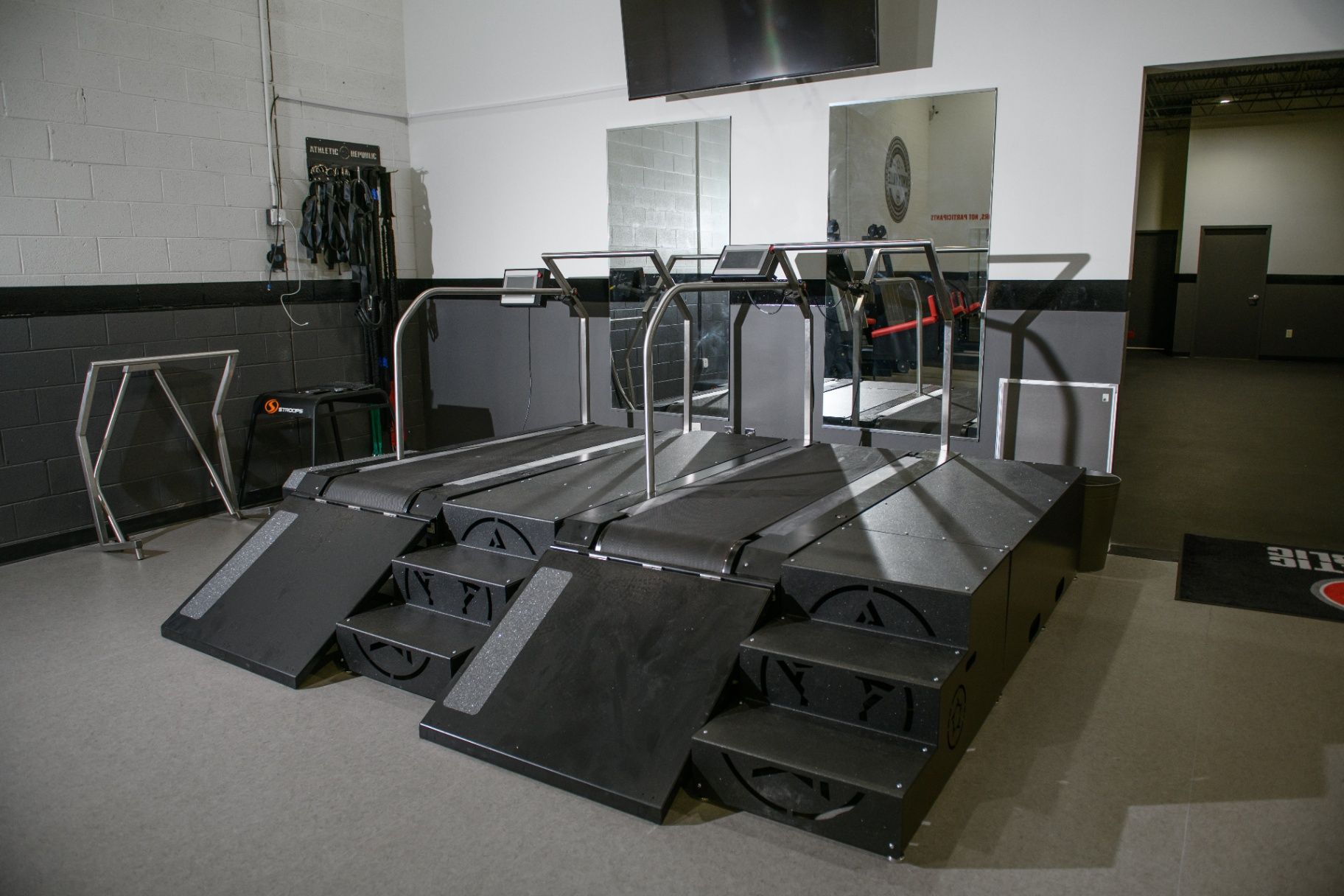
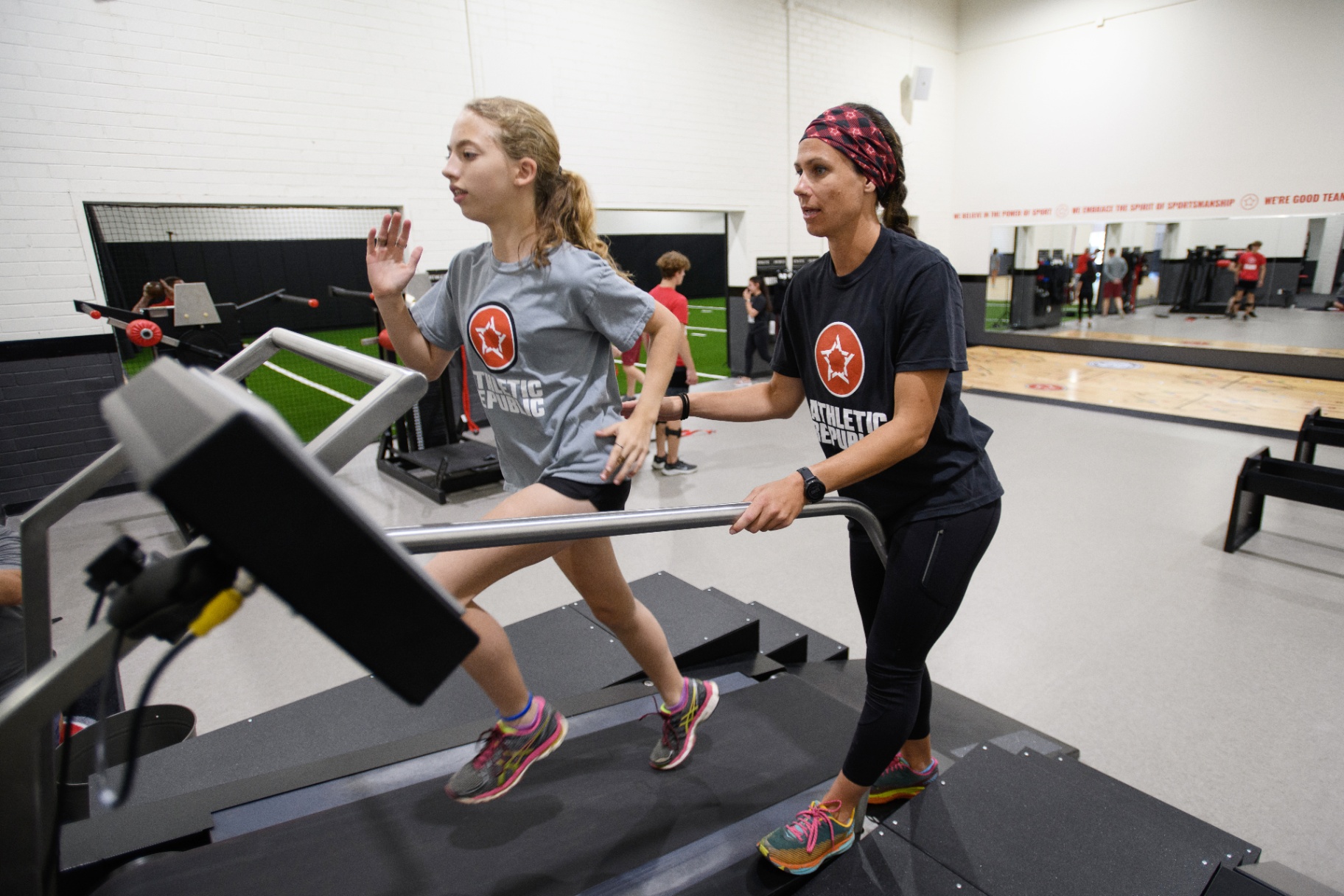
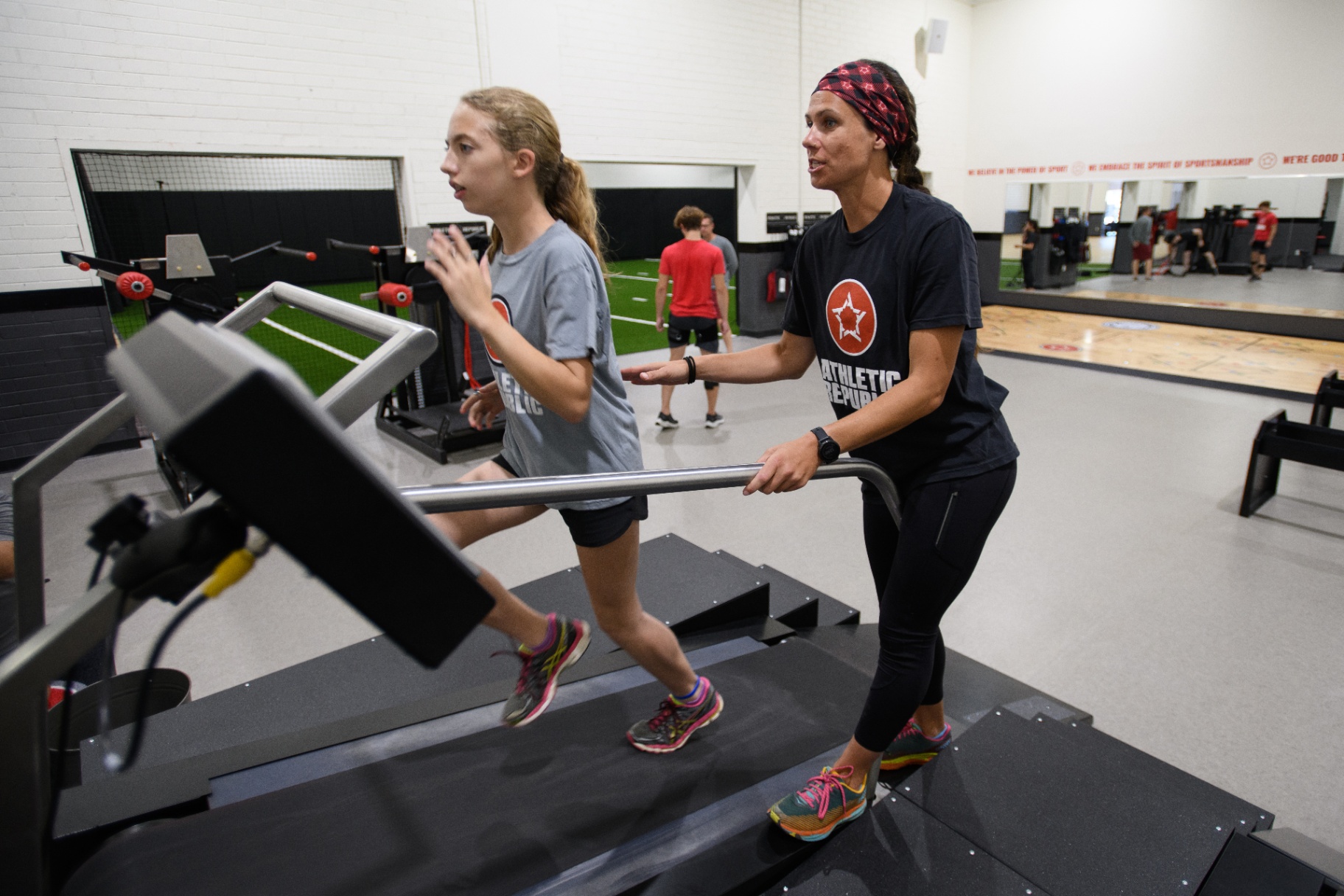
High-speed, self-powered treadmills give athletes a focused environment to practice running mechanics and build speed. Certified trainers provide coaching and measurable or visual feedback, helping athletes work on movement details such as coordination, posture, stride rate, and efficient force application.
The aim isn’t to chase a perfect-looking running style or compare every athlete to the same model. It’s to help each athlete move more effectively and build speed appropriate to their needs and readiness.
Power and strength
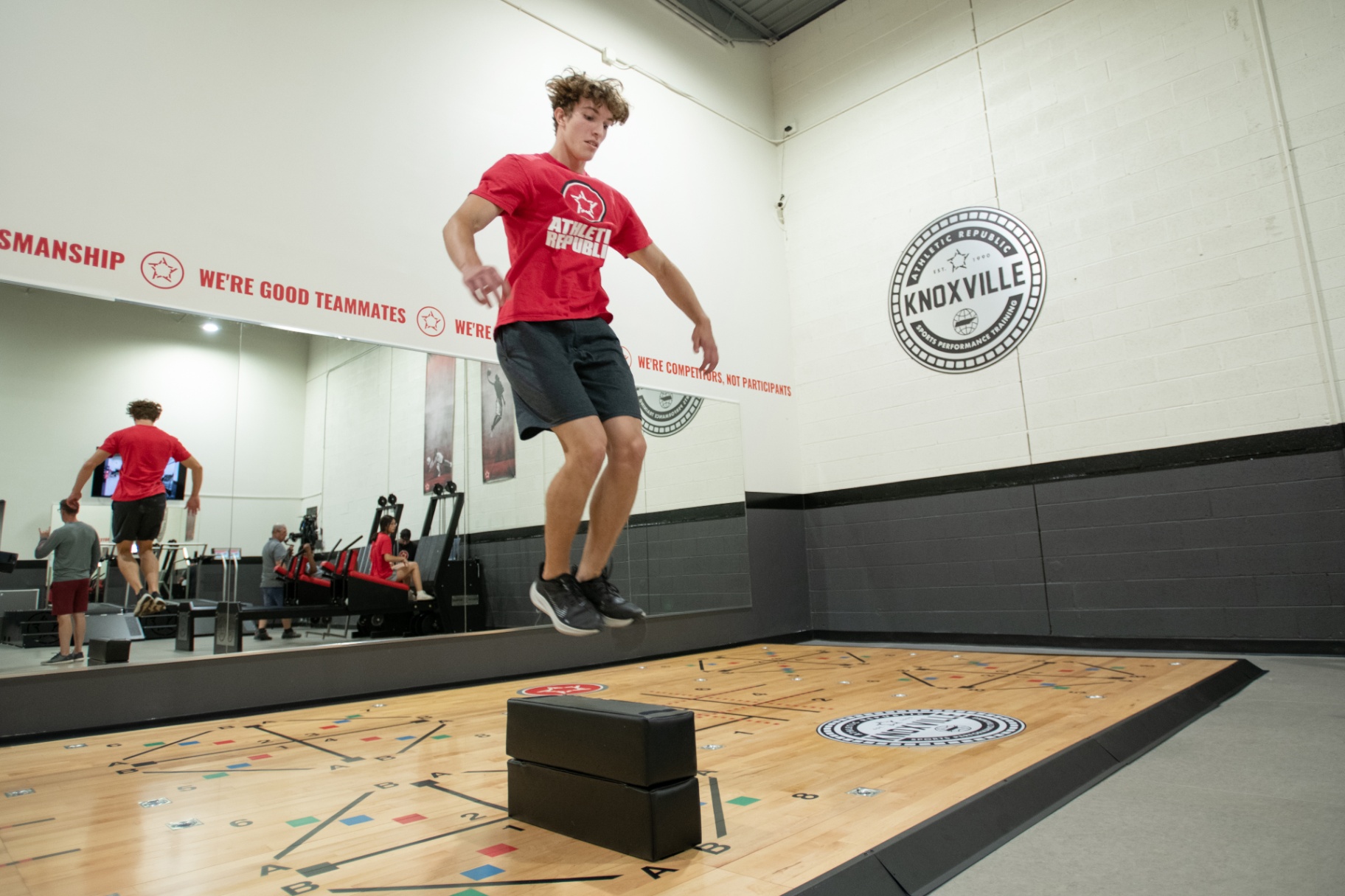
Plyometric exercises, such as jumping and landing drills, help athletes practice producing and absorbing force. Resistance training builds strength, which can support acceleration and athletic movement when coached appropriately. The right exercise and progression depend on the athlete’s experience, technique, and development.
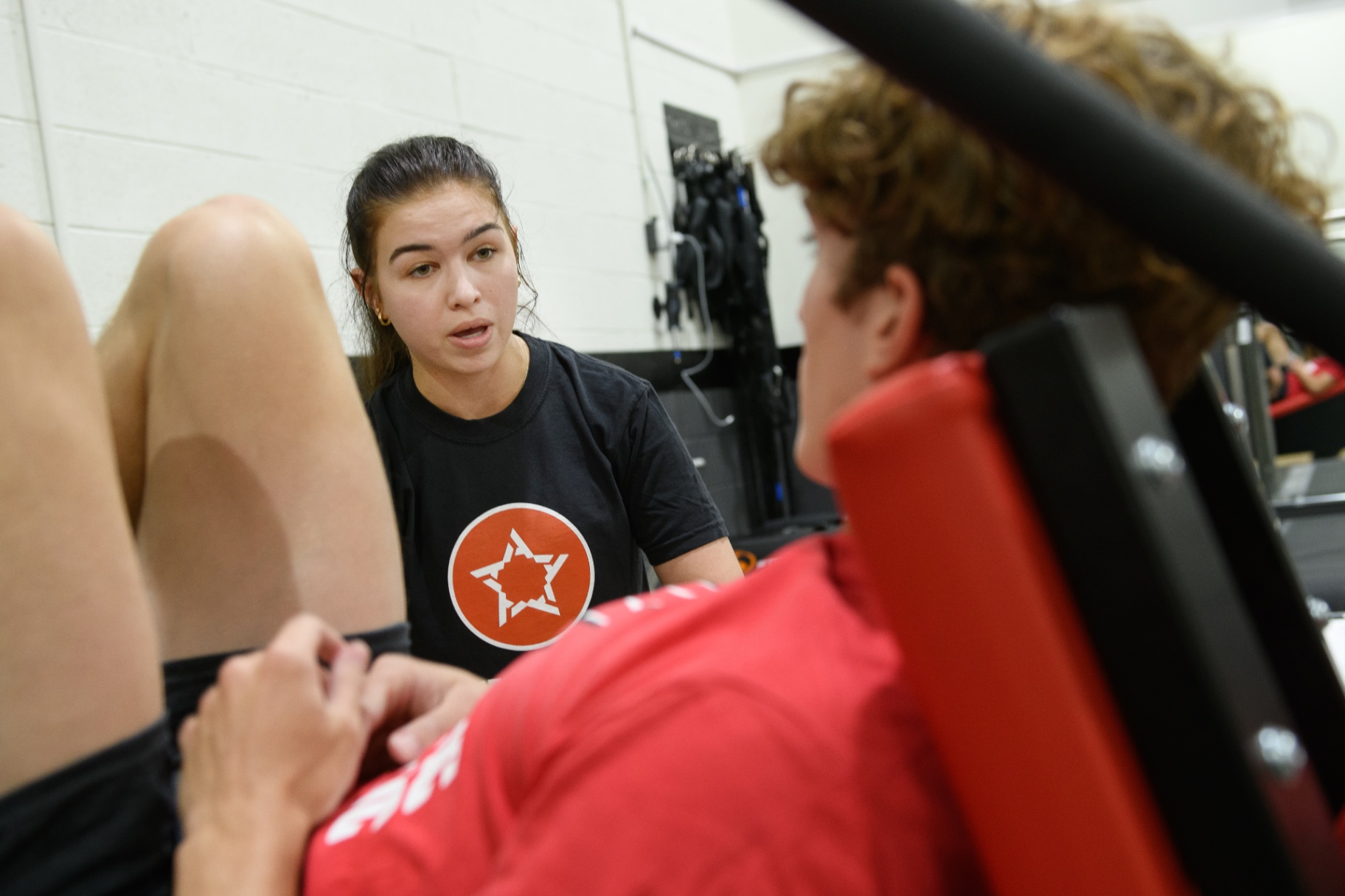
Braking, balance, and changing direction
Game-changing speed isn’t only about taking off quickly. Athletes also need to slow down, stay balanced, and redirect their movement. Training can help them practice these skills with control, then build toward faster and more complex movement patterns as their technique allows.
The space to train matters, too. Athletic Republic Knoxville’s 18,000-square-foot facility provides a serious training environment for athletes to work with specialized equipment and coaching. But equipment alone doesn’t make progress: the plan, instruction, appropriate effort, and consistency all matter.
Progress is more useful than comparison
It’s natural to compare yourself with the starter who seems to have an extra gear. But comparing your current performance with someone else’s doesn’t tell you what you can improve, or how far you’ve come.
A more useful question is: What can I develop next? Baseline testing and follow-up measures can help answer that. They give athletes and trainers information to guide the plan and recognize changes over time. Progress may show up as improved sprint performance, more controlled landings, stronger movement, or greater confidence executing a cut.
Some athletes may notice changes sooner than others. Growth, experience, training history, recovery, and the schedule of a sport season all shape development. The goal is not a guaranteed transformation by a certain date. It’s steady, well-coached work that builds skills and helps you understand your own progress.
From bench-sitter to more prepared athlete
If you’re the athlete watching from the sideline, being frustrated doesn’t mean you’re not capable. Use that feeling as information, not a label. You can keep building your sport skills with your team and work on physical qualities that may help you compete more confidently.
For parents, the best support is to focus on effort, learning, and sustainable progress, not pressure or promises about playing time. Encourage your athlete to ask their coach what would help them earn more opportunities, then consider whether additional speed and strength training could support those goals.
Training is one part of an athlete’s development. It does not replace sport skill, decision-making, teamwork, or the coach’s evaluation. And it can’t promise a lineup change. What it can do is provide a structured way to work on trainable qualities and build a clearer picture of progress.
If you’re ready to explore that process, learn more about student-athlete training at Athletic Republic Knoxville or schedule a free trial class. You don’t have to be the fastest athlete in the gym to get started. You just have to be willing to work on what comes next.